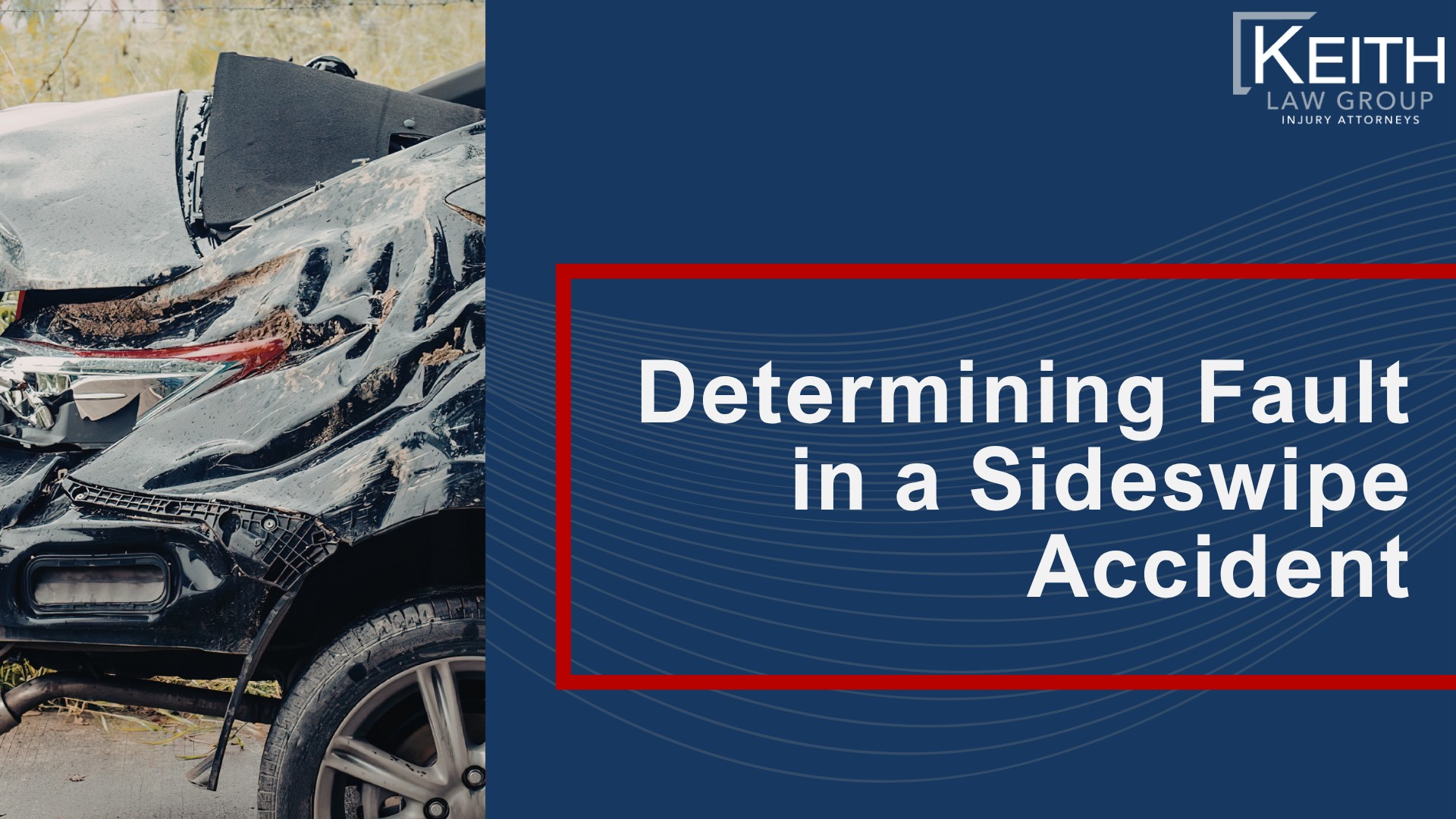
Fault in a sideswipe comes down to which driver left their marked lane unsafely, and the physical evidence usually shows whose car crossed.
Each driver owed the other a duty to hold their lane, so the case rests on which duty was broken and what the damage on the two cars proves.

An insurance adjuster or a jury then assigns each driver a share of fault, and that percentage controls how much the injured driver recovers.
Lane-Use Rule Under Arkansas Law
Arkansas sets out the lane-use duty in Ark. Code Ann. § 27-51-302, which requires a vehicle to stay within one marked lane and move only after the driver confirms the change is safe.
Drivers must remain entirely within a single lane unless it is safe to merge.
A driver who crosses the line in breach of that rule has broken a traffic statute, though a violation alone does not prove negligence in Arkansas.
In Cent. Okla. Pipeline, Inc. v. Hawk Field Servs., LLC, the Arkansas Supreme Court held that a statutory violation is only evidence of negligence and not negligence per se, so a lane-use violation becomes evidence a jury weighs and must be connected to the crash before it moves the fault percentage.
Merging onto a road raises that duty further.
The merging vehicle must yield to existing traffic at merging lanes.
A driver entering from an on-ramp must wait for a clear gap before crossing over, and one who forces in anyway has caused the crash.
Failing to yield right-of-way establishes fault in an accident.
That failure puts the merging driver at the center of the dispute the moment the two cars touch.
Four Elements of Negligence
Proving the other driver was at fault means proving all 4 elements of negligence, and a failure on any one defeats the claim:
- Duty of care: Every driver must operate the vehicle safely, follow the rules of the road, and hold a single marked lane, including checking the adjacent lane is clear before a move.
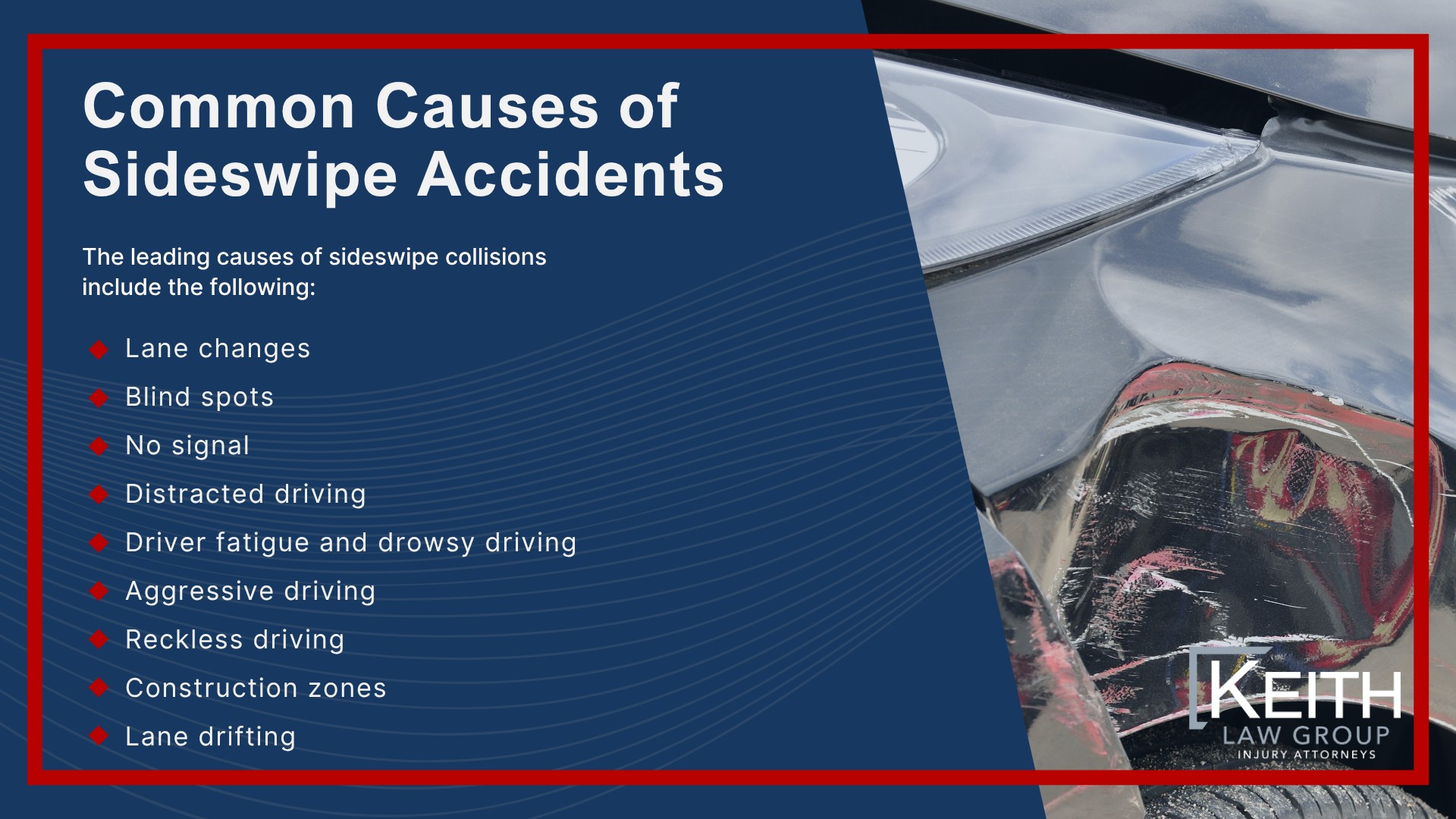
- Breach: The unsafe lane change, the drift across the line, or the move into an occupied lane, whether from a missed signal, a phone glance, or a blind-spot merge.
- Causation: The other driver’s lane departure has to be what caused the contact and the injuries, which the physical proof of whose vehicle crossed often decides.
- Damages: The crash has to produce measurable harm, from vehicle repair and medical bills to lost income.
Arkansas Comparative Fault Rule
Arkansas follows a modified comparative fault rule under Arkansas Code § 16-64-122, which decides how damages are divided when both drivers share blame for a sideswipe.
An insurance adjuster or a jury assigns each driver a percentage of fault, and that percentage reduces the injured driver’s car accident compensation by the same share.
Arkansas is also a fault-based, or tort, state, where the driver responsible for the crash pays the other driver through their insurer.
At-fault driver’s insurance covers property damage and medical expenses in tort states.
The 50% Fault Bar
The fault determined for each driver decides not just how much they recover, but whether they recover at all.
Comparative negligence rules govern compensation based on percentage of fault.
A jury or an adjuster assigns each driver a share of the blame adding up to 100%, and a driver who is 49% or less at fault recovers a reduced award, while one who reaches 50% or more recovers nothing.
On a $100,000 claim, a driver found 20% at fault recovers $80,000, while a driver found 50% at fault recovers $0, so one point, from 49 to 50, ends the claim entirely.
That line is why insurers press hard to put the injured driver at or above it in a disputed lane-change crash, where the share is open to dispute.
A defense also looks beyond the lane change for anything that adds to the injured driver’s share.