175 Reviews
5.0
★★★★★

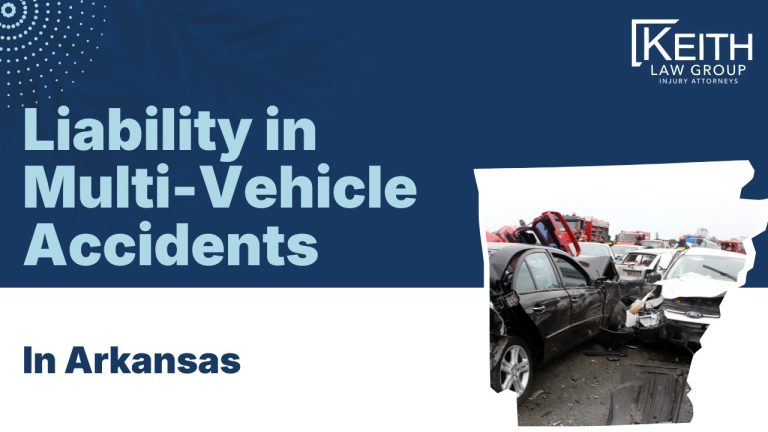
Liability in Multi-Vehicle Accidents in Arkansas

Determining Liability After a Multi-Vehicle Accident in Arkansas

Chain-reaction or multi-vehicle crashes often create some of the most disputed car accident claims because multiple drivers, multiple impacts, and multiple insurance companies may all be involved in the same collision.

In an Arkansas multi-vehicle crash, determining liability requires more than identifying the first vehicle that made contact, it requires examining how each driver responded before and after the collision sequence began.

Arkansas fault laws allow liability to be divided among several drivers, and even a small percentage of fault assigned to an injured person can affect the amount of compensation available.

Police reports, vehicle damage, witness statements, electronic data, and accident reconstruction evidence are often reviewed together to determine how the crash occurred and who is legally responsible.

Liability in Multi-Vehicle Accidents in Arkansas

Facing a Disputed Multi-Vehicle Claim? Contact an Arkansas Car Accident Lawyer

Fault in a multi-vehicle crash is often disputed within days of the collision.

Insurance adjusters may argue that another driver, not their policyholder, caused the chain reaction. They may also argue that the injured person reacted too late, followed the vehicle ahead too closely, or contributed to the crash in some other way.

Statements made at the scene or in early calls with adjusters can affect how the claim is valued before the evidence is complete.

If you or a loved one was injured in a multi-vehicle crash caused by the negligent conduct of another driver in Arkansas, you may be eligible to pursue a personal injury claim and seek compensation.

Contact Keith Law Group today for a free consultation with an experienced Arkansas car accident lawyer.

You can also use the chat feature on this page to find out if you qualify for a multi-vehicle accident claim and to get in touch with an experienced attorney.

How Multi-Vehicle Crashes Happen in Arkansas

A multi vehicle crash usually begins when one car loses control, stops suddenly, follows too closely, or fails to react to traffic ahead.

The most common type is a rear end crash that becomes a chain reaction collision.

The initial impact in a multi-vehicle accident can push one vehicle into others or cause cars to swerve into adjacent lanes, creating a domino effect that leads to extensive damage and multiple injuries.
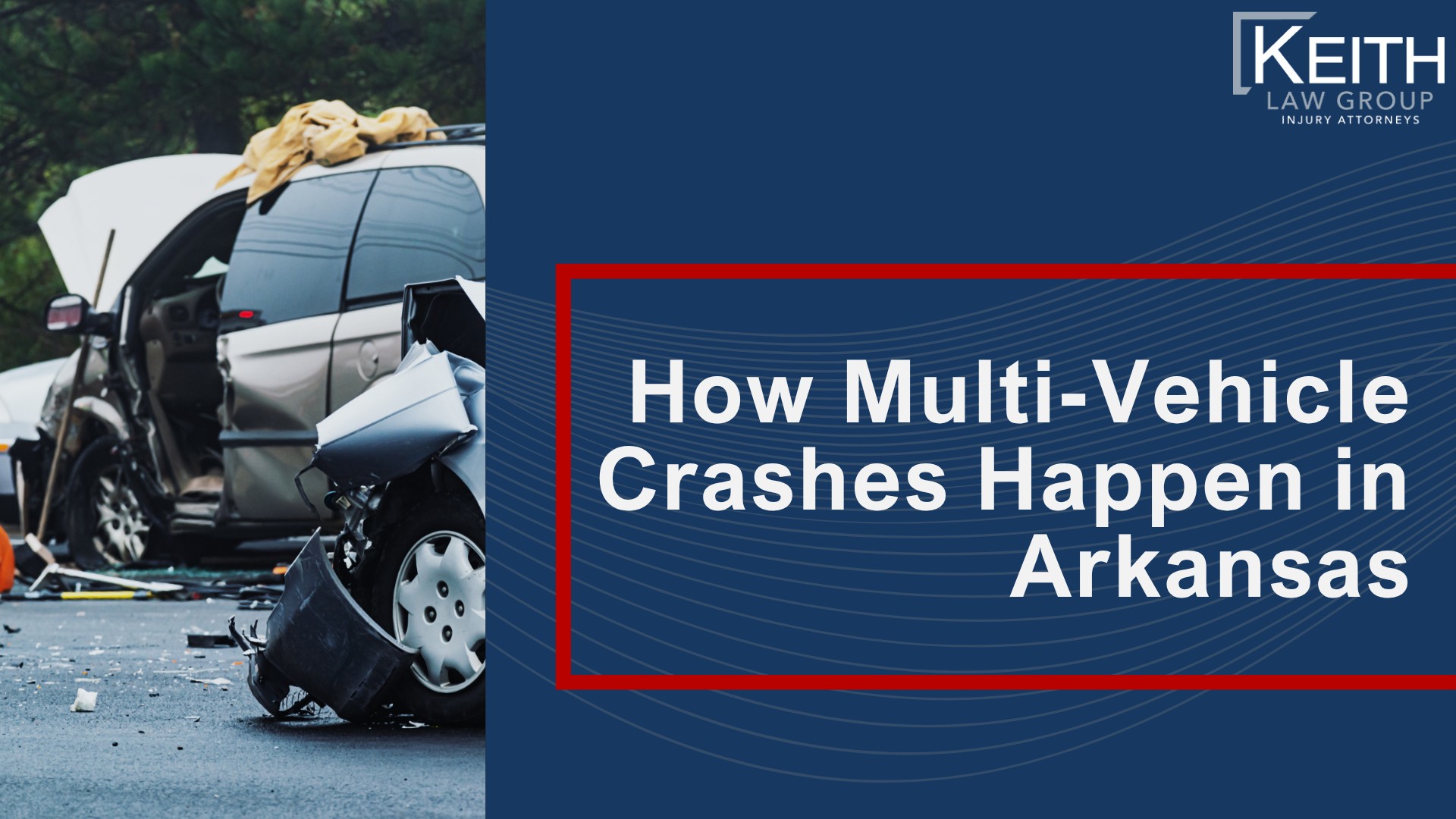
That sequence is what separates a multiple vehicle collision from a single rear end crash. One vehicle may hit the lead vehicle, then be struck by a third vehicle, while other vehicles swerve into adjacent lanes to avoid the initial collision.

The same sequence also changes liability. The negligent driver who caused the first crash may carry the largest share of fault, but that does not automatically decide responsibility for every later impact.

Each impact must be reviewed separately when three or more vehicles, several drivers, and several potentially responsible parties are involved in the same crash.
Common Causes of Multi-Vehicle Crashes in Arkansas

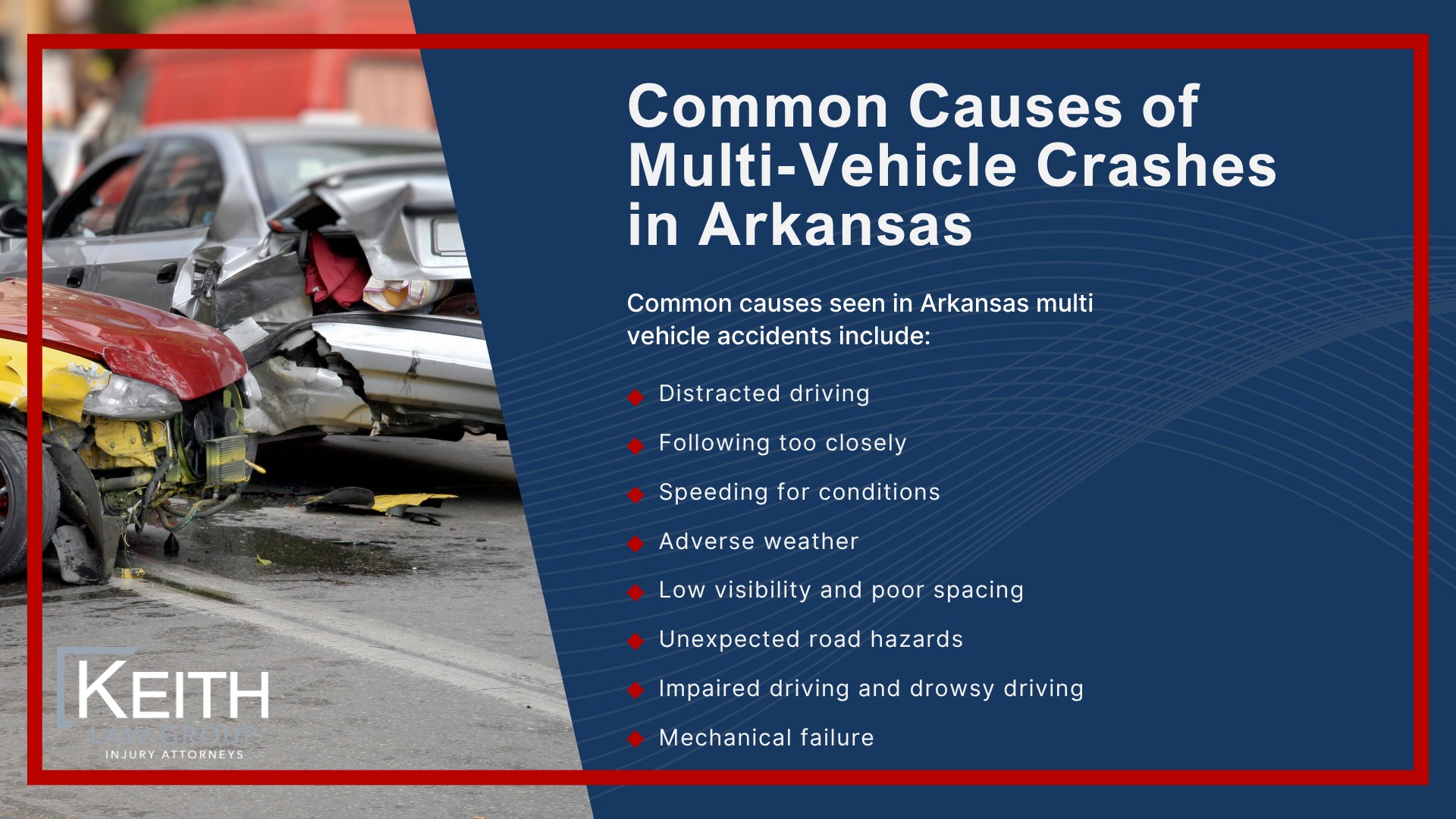
A large number of Arkansas multi car crashes begin with the same conduct: short following distance, poor speed control, distraction, impairment, or failure to adjust to weather conditions and road conditions.

Multi-vehicle accidents usually stem from a combination of human error, environmental hazards, and vehicle mechanical issues.

Distracted driving, poor weather conditions, tailgating, speeding, and impaired or drowsy driving are key causes of multi-vehicle accidents.

Common causes seen in Arkansas multi vehicle accidents include:

  • Distracted driving: A driver looking at a phone for 2 seconds at 70 mph covers more than 200 feet without scanning the road. Distracted driving becomes more dangerous when traffic is slowing and the vehicle ahead has already stopped.
  • Following too closely: Tailgating removes the reaction time needed to stop when traffic ahead changes. It is one of the most common driver behaviors in chain reaction crashes.
  • Speeding for conditions: A driver may be negligent even while driving at the posted speed limit if heavy rain, thick fog, black ice, traffic congestion, or slippery roads required a lower speed.
  • Adverse weather: Adverse weather conditions significantly reduce visibility and traction on the road, triggering multi-vehicle accidents, particularly during congestion.
  • Low visibility and poor spacing: Multi-vehicle collisions often occur in low-visibility conditions, where drivers are following too closely and unable to adjust to road conditions, leading to pile-ups.
  • Unexpected road hazards: Chain-reaction crashes can happen even in good visibility when unexpected road hazards, like black ice, are encountered, causing drivers to lose control.
  • Impaired driving and drowsy driving: Alcohol, drugs, and fatigue slow reaction time. Impaired driving can also prevent one driver from reacting when other cars brake or swerve.
  • Mechanical failure: Brake failure, tire blowout, steering defects, or poor maintenance can send one vehicle into other vehicles before the driver can regain control.

Common Injuries in Multi-Vehicle Crashes

A multi-vehicle crash can expose one occupant to front, rear, and side impacts within the same collision sequence.

Passengers in multi-vehicle accidents often experience catastrophic injuries from multiple directions, leading to traumatic brain injuries, spinal cord injuries, and fractures.

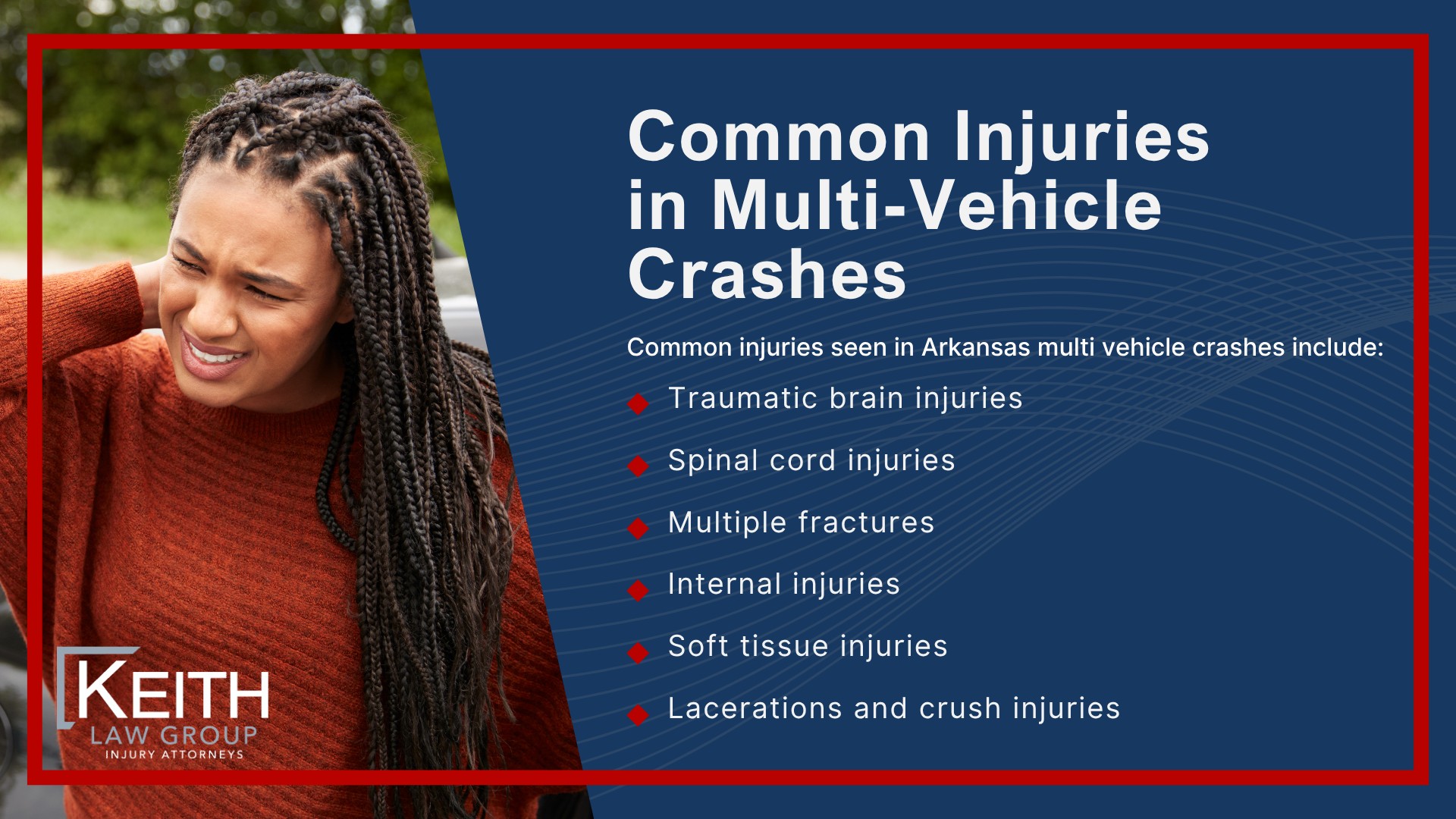
Common injuries seen in Arkansas multi vehicle crashes include:

  • Traumatic brain injuries: Head impact, rapid deceleration, or repeated movement inside the vehicle can cause concussion, bleeding, memory loss, or permanent cognitive injury.
  • Spinal cord injuries: High speed force and secondary impacts can damage the spine and cause paralysis, nerve pain, weakness, or loss of mobility.
  • Multiple fractures: Ribs, pelvis, arms, legs, and facial bones may fracture when several injuries occur in the same crash sequence.
  • Internal injuries: Seatbelt compression, airbag deployment, and vehicle intrusion can damage organs, blood vessels, or the chest wall.
  • Soft tissue injuries: Whiplash, ligament damage, and muscle tears may appear after the crash occurred, especially when the body was thrown in more than one direction.
  • Lacerations and crush injuries: Broken glass, metal intrusion, and collapsed vehicle frames can cause deep cuts, crush trauma, scarring, or infection risk.

Why Injuries Are Often Severe in Multi-Vehicle Crashes

Injury severity depends on the number of impacts, the speed of the vehicles, the angle of each collision, and whether safety systems had already deployed before the next impact.

Safety systems in vehicles, like airbags and crumple zones, may only work effectively once, leaving occupants vulnerable during secondary impacts.

The likelihood of a fatal outcome increases with every additional vehicle involved in a multi-vehicle accident, especially at high speeds.

Chain reaction crashes can be especially deadly because they involve both primary and secondary impacts, increasing the risk of injury and death.

A collision involved in a pile-up can also create extensive damage and property damage across several vehicles, even when the initial impact looked like a minor crash.

Arkansas Several Liability Law in Multi-Vehicle Accidents

Several liability controls how damages are divided among at fault drivers after liability percentages are assigned.

Arkansas applies several liability in personal injury and wrongful death actions. Under Ark. Code § 16-55-201, each defendant is responsible only for the percentage of damages allocated to that defendant.

For example, assume total damages are $500,000. If Driver A is 60% at fault, Driver B is 25% at fault, and Driver C is 15% at fault, each driver is responsible only for that assigned share.

That rule matters in multi vehicle accident claims when one defendant has low insurance limits, no insurance, or limited collectible assets. A plaintiff cannot automatically collect the unpaid share of one driver from another driver who had a smaller role in the crash.

The practical result is simple: every potentially responsible party must be identified early. That may include drivers, employers, commercial carriers, maintenance companies, vehicle manufacturers, or other parties whose conduct contributed to the crash.

Arkansas Modified Comparative Fault Rules

Modified comparative fault applies when the injured person is assigned part of the blame for the crash.

Arkansas applies modified comparative negligence under Ark. Code § 16-64-122. A plaintiff may recover only when the fault assigned to the plaintiff is less than the combined fault of the defendants.

The rule has 2 practical effects. A plaintiff assigned 49% fault can still recover, with the award reduced by 49%. A plaintiff assigned 50% fault cannot recover under Arkansas law.

In a multi-vehicle crash, that percentage can change as each impact is reviewed. One driver may start the chain reaction, another may worsen it by following too closely, and another may be blamed for braking late, changing lanes, or failing to react to traffic ahead.

For example, Driver A speeds into stopped traffic and causes the initial collision. Driver B follows too closely and adds a second impact. Driver C is injured, but the insurer argues Driver C braked suddenly without warning.

If a jury assigns 60% fault to Driver A, 25% to Driver B, and 15% to Driver C, Driver C may still recover with a 15% reduction. The 15% share assigned to Driver C is lower than the combined 85% fault assigned to the other drivers.

In states that follow comparative negligence laws, multiple drivers can be found at fault in a multi-vehicle accident, and each may be responsible for a percentage of the damages based on their level of negligence.

In Arkansas, the fault percentage assigned to the injured person is compared against the combined fault of the defendants, not just one driver.

Insurance adjusters often try to assign small percentages of fault to injured plaintiffs in chain reaction cases. A 10% or 15% shift can reduce recovery, while a 50% finding can eliminate recovery entirely.

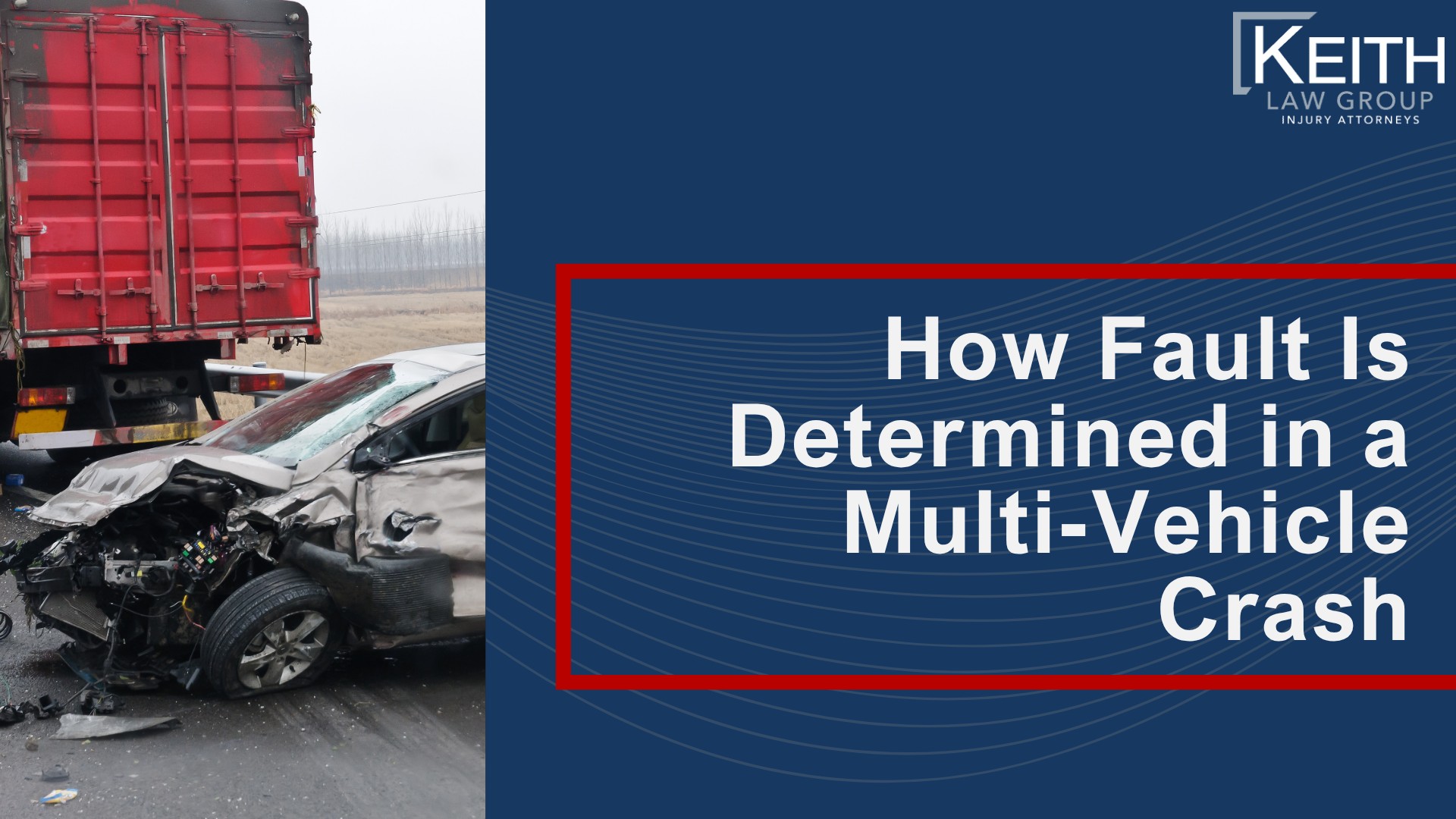
How Fault Is Determined in a Multi-Vehicle Crash

Determining fault in a multi-vehicle accident isn’t always straightforward, as multiple parties may share liability due to simultaneous mistakes or reactions to another driver’s negligence.

The investigation begins with the order of impacts. That means identifying the lead vehicle, the vehicle ahead of the injured person, the third vehicle or trailing vehicle, and every impact that happened after the initial collision.

In multi-vehicle accidents, the driver who caused the initial crash is often held primarily responsible, but other drivers may share liability if they contributed to the accident through negligence.

Fault analysis usually looks at speed, braking, following distance, lane position, visibility, traffic flow, the posted speed limit, weather conditions, and whether the crash occurred in heavy rain, thick fog, black ice, or another reduced visibility condition.

Examples of conduct that may affect fault include distracted driving, impaired driving, speeding for conditions, unsafe lane changes, sudden stops without warning, or following the vehicle ahead too closely.

A multi vehicle collision often requires separate fault findings for each impact. Each impact must be reviewed to determine whether other cars created avoidable secondary collisions.

Evidence Used to Establish Fault in a Multi-Vehicle Accident

Fault evidence must show the order of impacts and the conduct of each driver before each impact.

The strongest cases compare the police report with vehicle damage, scene photographs, witness accounts, electronic data, and expert analysis.

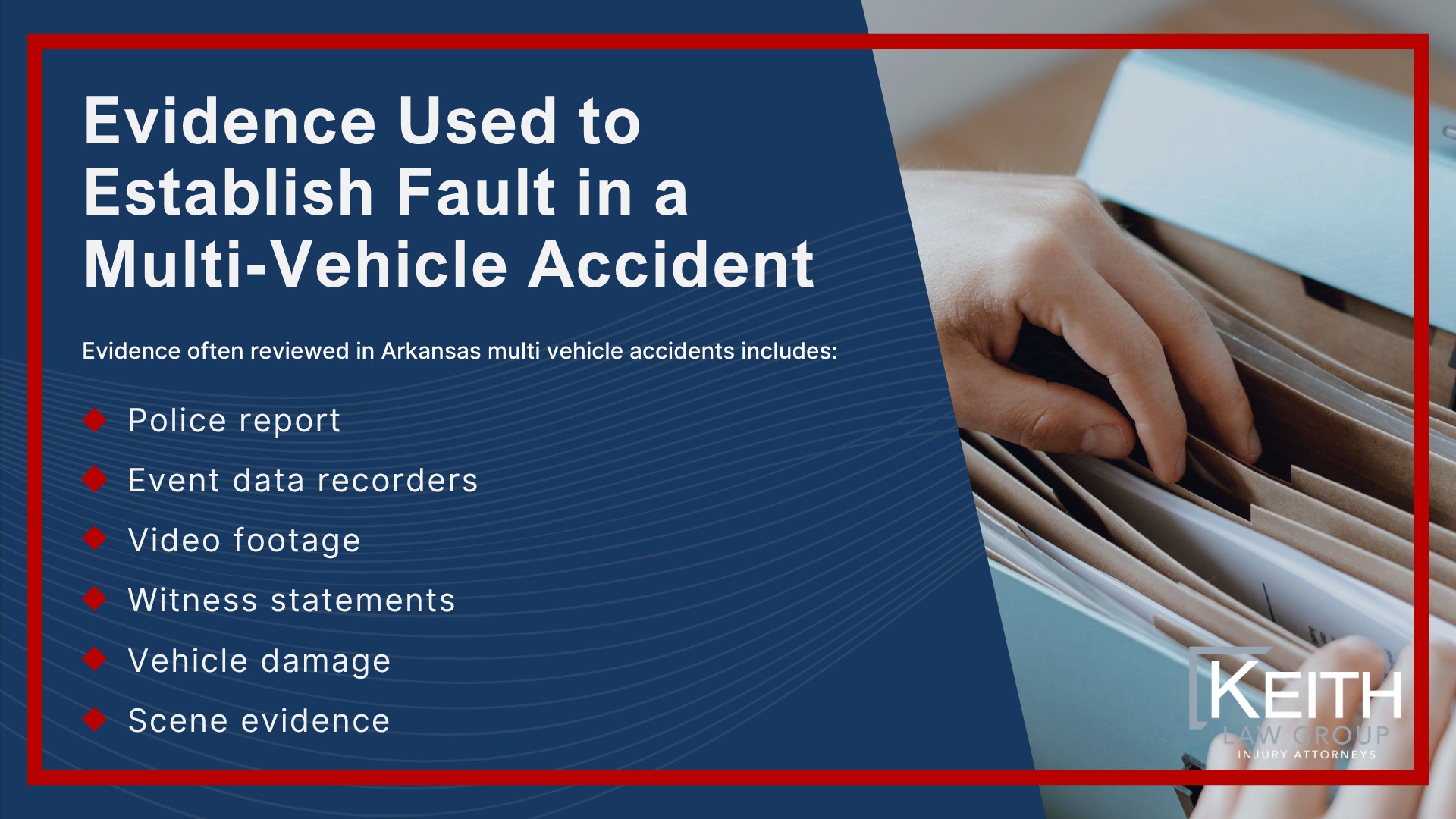
Evidence often reviewed in Arkansas multi vehicle accidents includes:

  • Police report: The first official record of vehicle positions, citations, weather conditions, and where the accident occurred.
  • Event data recorders: Electronic data may show speed, braking, throttle position, seatbelt use, and steering activity before impact.
  • Video footage: Dashcam, traffic camera, or business surveillance footage can show braking, lane movement, following distance, and the vehicle ahead.
  • Witness statements: Independent witnesses can help separate the initial collision from later impacts involving other vehicles.
  • Vehicle damage: Crush patterns, damage direction, and point of impact help identify which vehicles collide first and which were pushed forward.
  • Scene evidence: Skid marks, debris fields, road gouges, and final resting positions often disappear after the road is reopened.

In disputed cases, accident reconstruction experts apply physics and engineering to calculate vehicle speed, stopping distance, and impact sequence.

Their analysis becomes important when three or more vehicles are involved and every driver claims another car pushed them forward.

Parties That May Be Held Liable in a Multi-Vehicle Accident

Before liability can be allocated, every party that contributed to the chain reaction must be identified.

That review starts with the negligent driver who triggered the initial collision, but it does not stop with one driver.

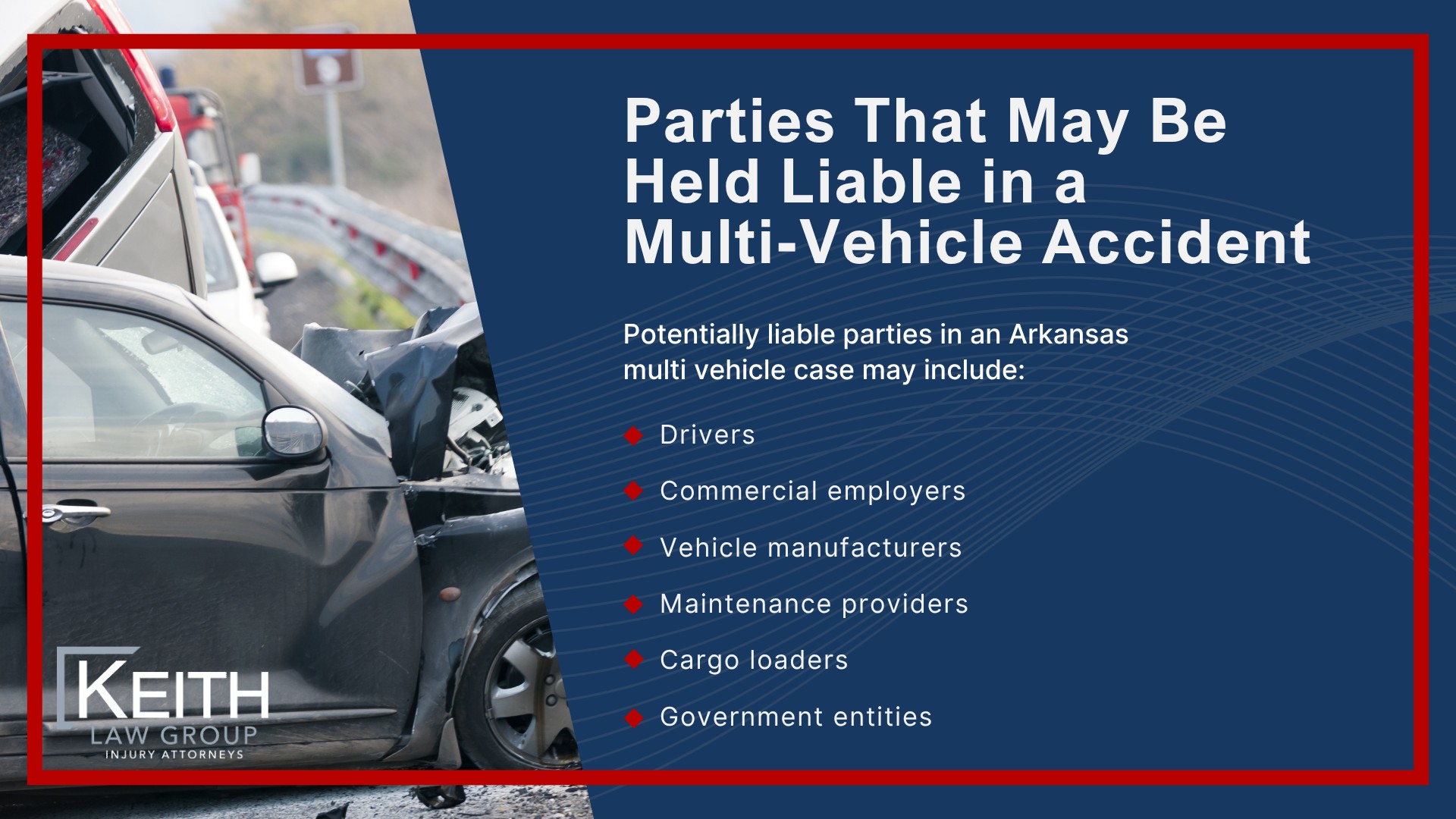
Potentially liable parties in an Arkansas multi vehicle case may include:

  • Drivers: Any driver whose conduct contributed to the chain reaction through tailgating, speeding, distraction, unsafe lane changes, impaired driving, or failure to control the vehicle.
  • Commercial employers: A trucking company, delivery company, rideshare company, or other employer may be liable when the driver was acting within the scope of work.
  • Vehicle manufacturers: A defective brake, tire, steering component, or safety system can make one vehicle lose control and strike other cars.
  • Maintenance providers: Poor repair work or missed maintenance can contribute to brake failure, tire separation, steering loss, or lighting failure.
  • Cargo loaders: Shifting cargo can cause a truck or trailer to lose control and create a chain reaction.
  • Government entities: Road defects, missing signage, malfunctioning traffic signals, poor drainage, or dangerous work-zone layouts may contribute to the crash.

A personal injury attorney reviews each possible defendant before insurers finalize the fault allocation.

Insurance Coverage in Arkansas Multi-Vehicle Accident Claims

Insurance coverage becomes difficult in multi vehicle accident claims when several injured people are competing for limited policy limits.

Arkansas requires drivers to carry liability insurance under Ark. Code § 27-22-104. Minimum limits are $25,000 per person for bodily injury, $50,000 per accident for bodily injury, and $25,000 for property damage.

Those limits stay the same even when three or more vehicles are damaged.

A driver who causes a four-car pile-up with minimum coverage has one $50,000 bodily injury pool to divide among multiple people injured in the crash.

Additional recovery sources often reviewed include underinsured motorist coverage, uninsured motorist coverage, umbrella policies, commercial policies, and personal assets of an at fault driver.

Coverage review matters when multiple people, multiple injuries, and several injuries compete for the same insurance limits.

How Fault Is Determined When the Middle Car Is Pushed Forward

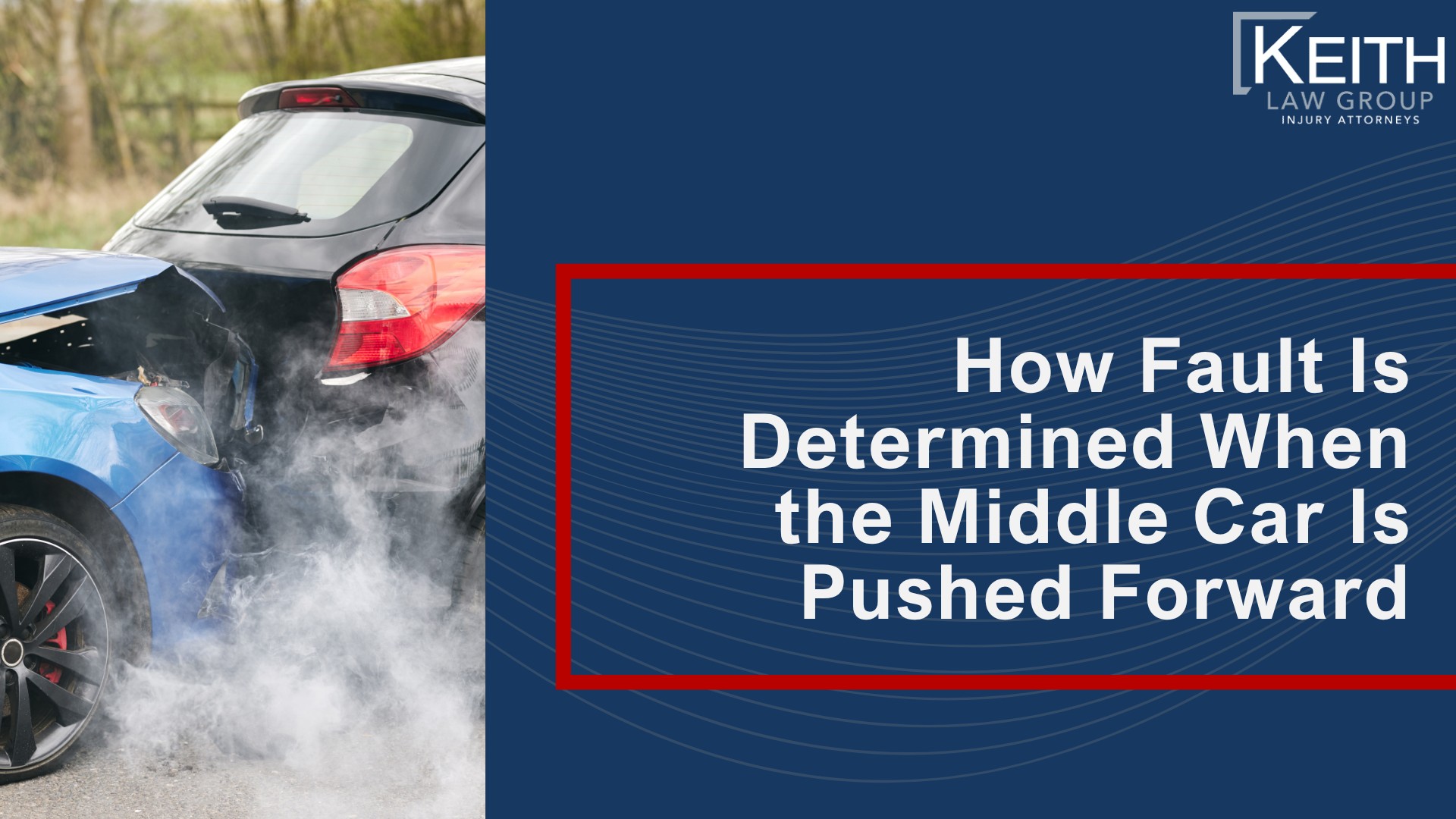
A common dispute in a multi car accident involves the middle driver who is struck from behind and pushed into the vehicle ahead.

The answer depends on what each driver was doing before the chain began.

If the middle driver was stopped or slowing appropriately and was pushed forward by the rear vehicle impact, fault for the secondary collision often rests with the rear driver.

The analysis changes if the middle driver had already hit the lead vehicle, was tailgating, was distracted, or failed to stop in time before being struck from behind.

In that situation, the middle driver may receive a percentage of fault for conduct that contributed independently to the harm.

The same principle applies when a third vehicle or fourth vehicle enters the chain. Each impact is analyzed under Arkansas comparative negligence rules.

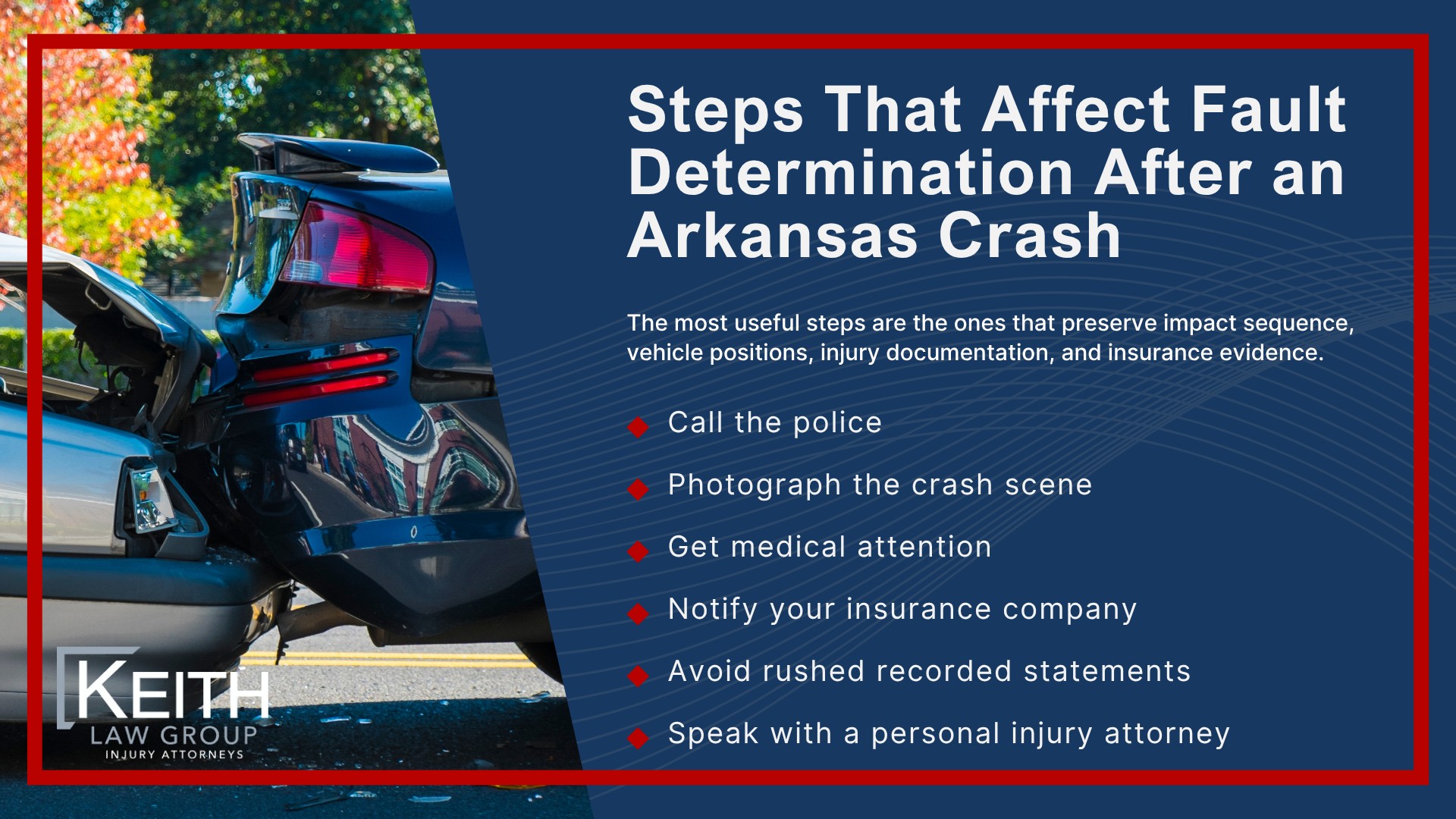
Steps That Affect Fault Determination After an Arkansas Crash

The hours after a multi-vehicle crash matter. Scene evidence disappears quickly, damaged cars are moved, and insurers begin building competing versions of fault.

The most useful steps are the ones that preserve impact sequence, vehicle positions, injury documentation, and insurance evidence.

  • Call the police: After a multi-vehicle accident, it is crucial to contact local law enforcement to obtain a police report, which will be important for determining fault and filing insurance claims.
  • Photograph the crash scene: Gathering contact information from other drivers involved in the accident, as well as taking photos of the scene and damages, can serve as vital evidence for insurance claims or legal proceedings.
  • Get medical attention: It is important to seek medical attention for any injuries sustained in the crash, even if they are not immediately apparent, as some injuries may take time to manifest.
  • Notify your insurance company: Filing a claim with your insurance company should be done promptly after the accident, providing them with all necessary documentation, including police reports and photographs.
  • Avoid rushed recorded statements: Insurance adjusters may request statements before the police report, photographs, medical records, and vehicle data are complete.
  • Speak with a personal injury attorney: Early legal review helps preserve surveillance footage, event data, witness accounts, and evidence from other cars.

Damages Available in a Multi-Vehicle Accident Claim

Damages in an Arkansas multi-vehicle case follow the same categories as other car accident claims, but totals are often higher due to the number of impacts, vehicles involved, and injuries.

Recoverable damages in an Arkansas multi vehicle accident claim may include:

  • Medical expenses: Emergency care, hospitalization, surgery, rehabilitation, medication, and future medical treatment.
  • Lost income: Missed wages during recovery and reduced earning capacity when injuries limit return to work.
  • Property damage: Repair or replacement value of the vehicle and personal property damaged in the crash.
  • Pain and suffering: Physical pain, treatment burden, and the long-term effects of serious injuries.
  • Emotional distress: Anxiety, depression, sleep disruption, and trauma symptoms documented through medical care.
  • Loss of enjoyment of life: Limits on daily activity, family life, hobbies, and independence.
  • Loss of consortium: Losses suffered by a spouse when the injury affects the marital relationship.

When a multi-vehicle crash is fatal, surviving family members may recover under Ark. Code § 16-62-102 for funeral expenses, lost financial support, lost services, and mental anguish.

Role of an Arkansas Car Accident Attorney in a Multi-Vehicle Claim

Multi-vehicle claims rarely turn only on the instant of impact.

The investigation also covers the minutes before the crash, the conduct of multiple drivers, and the insurance coverage available across several policies.

A qualified personal injury attorney reviews crash reports, downloads event data recorder information where available, retains accident reconstruction analysts when liability is disputed, and identifies multiple defendants before insurers finalize their fault allocations.

The attorney also coordinates communication across multiple carriers, which matters when each insurer is shifting fault onto another driver to reduce its own exposure.

A multi-vehicle accident claim involves more than identifying the first driver who hit another car. Arkansas fault analysis looks at every driver, every impact, every available policy, and every piece of evidence that explains how the chain reaction developed.

The strongest claims connect the police report, vehicle damage, medical records, witness accounts, and reconstruction evidence before insurance adjusters lock in a version of fault.

Early legal involvement protects the evidence record, since scene photographs, surveillance footage, and electronic vehicle data are often lost within weeks if no preservation request is made.

The total claim value depends on how many policies are reachable, how liability is divided, and what each carrier contributes to the recovery.

Contact Keith Law Group After a Multi-Vehicle Crash

A multi-vehicle accident claim should be reviewed before insurers assign fault percentages that do not reflect the full crash sequence.

Keith Law Group reviews the police report, scene evidence, available insurance coverage, medical records, and the order of impacts to determine how the chain reaction developed.

The firm handles multi-vehicle crashes across Arkansas, including pile-ups on major highways, rear-end chain reactions, and intersection crashes involving multiple drivers.

Cases are handled on a contingency-fee basis, which means the firm collects a fee only if the case results in compensation.

If you were injured in a multi-vehicle crash in Arkansas, contact Keith Law Group for a free case review. Call (479) 326-7734 or use the chat feature on this page to find out whether your claim qualifies.

Frequently Asked Questions

Published by:
Share

This article has been written and reviewed for legal accuracy and clarity by the team of writers and attorneys at Keith Law Group and is as accurate as possible. This content should not be taken as legal advice from an attorney. If you would like to learn more about our owner and experienced injury lawyer, Sean T. Keith, you can do so here.

Keith Law Group does everything possible to make sure the information in this article is up to date and accurate. If you need specific legal advice about your case, contact us. This article should not be taken as advice from an attorney.

Other Car Accident Lawsuit Resources
All
FAQs
Injuries & Conditions
Legal Help
Other Resources
Settlements & Compensation
You can learn more about other Car Accident Lawsuit resources below:
15 Common Car Accident Causes in Arkansas & Prevention Tips
Arkansas Auto Accidents: How to File a Car Insurance Claim
Arkansas Car Accident Compensation Types & Laws to Know
Arkansas Car Accident Injury Claim Process
Arkansas Car Accident Lawsuit Guide: Tips for Success
Arkansas DUI Accident Lawsuits: Laws, Damages, & Safety Tips
Arkansas Hit and Run Accident Guide: Laws & Tips to Know
Average Arkansas Car Accident Settlements & Tips to Maximize Yours
Car Accident Damages in Arkansas: Potential Compensation
Car Accident Reporting in Arkansas
Car Accident Statute of Limitations Arkansas
Common Types of Accidents in Arkansas
Finding the Best Car Accident Attorney in Arkansas for Your Case
Hit and Run Car Accident Lawsuits in Arkansas
How Is Fault Determined in Arkansas Auto Wrecks?
How Much Can Someone Sue for a Car Accident in Arkansas
How Much Does a Car Accident Lawyer Cost to Hire in Arkansas?
How to File a Police Report After a Car Accident in Arkansas
How to File an Auto Accident Lawsuit in Arkansas
How to Get a Police Report After a Car Accident in Arkansas
Should I Get a Lawyer for a Car Accident?
Statute of Limitations: Car Accident Claims in Arkansas
Steps to Take After a Car Accident in Arkansas
T-Bone Car Accident Lawsuits in Arkansas: Things to Know
Types of Evidence in Arkansas Car Accident Cases
Understanding Car Accident Insurance Claims in Arkansas
Understanding the Arkansas Car Accident Settlement Process
Who Pays for My Medical Bills After a Car Accident in Arkansas

Other Car Accident Lawsuit Resources

All
FAQs
Legal Help
Other Resources
Settlements & Compensation