- Last Updated: June 10th, 2026

Attorney Sean T. Keith has been a personal injury lawyer for 30+ years, a nationally recognized Top 100 Trial Lawyer, and top car accident lawyer & motor vehicle accident lawyer in Arkansas.
Legally Reviewed
This article has been written and reviewed for legal accuracy and clarity by the team of writers and attorneys at Keith Law Group and is as accurate as possible. This content should not be taken as legal advice from an attorney. If you would like to learn more about our owner and experienced injury lawyer, Sean T. Keith, you can do so here.
Fact-Checked
Keith Law Group does everything possible to make sure the information in this article is up to date and accurate. If you need specific legal advice about your case, contact us. This article should not be taken as advice from an attorney.
Sean Keith's Accollades & Practice Areas He Specializes In
- Over $20 Million recovered in Medical Device Injury Lawsuits.
- Over $13 Million recovered in Car Accident Lawsuits and other Motor Vehicle Accident Lawsuits.
- Over $100 Million recovered in total on behalf of clients.
- Sean represents clients in cases involving personal injuries, car accidents, motorcycle accidents, truck accidents, wrongful death, slip and falls, nursing home abuse cases, nursing home elopement cases, and more.
Mental Health Lawsuits Filed Against Social Media Platforms: Do You Qualify?
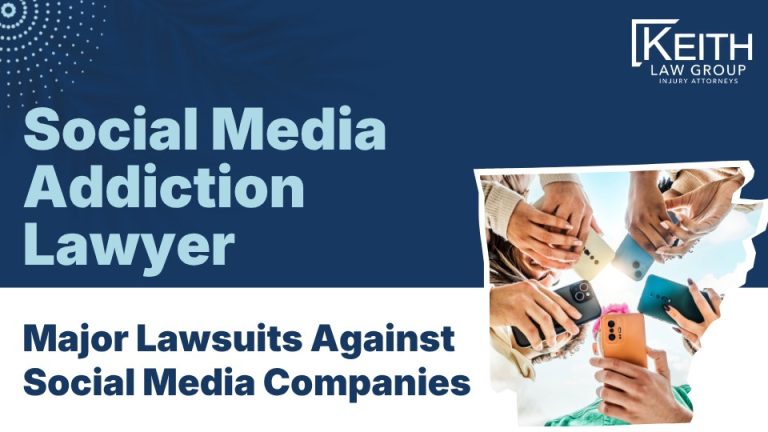
A social media addiction lawyer from Keith Law Group helps families pursue legal action when compulsive platform use is linked to serious mental health harm in children and teenagers.
These lawsuits allege that major social media companies designed their platforms in ways that encouraged prolonged use and contributed to emotional and psychological injury.
Keith Law Group is actively investigating these claims and reviewing cases for individuals and families who may qualify.
Mental Health Problems, Eating Disorders, and Other Serious Issues Linked to Social Media Use
Families across the country have filed lawsuits alleging that compulsive social media use has left children and teenagers with severe psychological harm.
These cases claim that social media giants and other tech companies built platforms around engagement systems that kept young users online longer, even as internal knowledge and public criticism grew.
The litigation now reaches beyond individual families and includes school districts that say student mental health crises have disrupted classrooms, counseling resources, and daily operations.
Plaintiffs argue that companies such as Meta failed in their duty to act on clear signs of danger, raising allegations of a broader failure to protect young users.
Public scrutiny has only intensified as Meta CEO Mark Zuckerberg and other industry leaders face growing questions about what these companies knew and when they knew it.
The lawsuits also describe repeated exposure to harmful content, including sexually explicit material, self-harm content, and other material allegedly pushed through platform design and recommendation systems.
Recent developments, including a social media addiction trial that ended in a landmark verdict of more than $5 million total and a state-initiated case resulting in a verdict of $375 million, have brought new attention to efforts to hold platforms accountable in courts across the country.
For families now dealing with depression, anxiety, self-harm, or other serious consequences tied to heavy platform use, these lawsuits represent a direct challenge to the design choices that allegedly fueled the crisis.
If you or a loved one suffered serious psychological harm after compulsive social media use, Keith Law Group can review your case and explain whether you may have grounds to hold the platforms involved accountable.
Contact us today for a free consultation and to get in touch with a social media addiction lawyer.
Use the chat feature on this page to find out if you qualify for the social media addiction lawsuit.
Table of Contents
What Is the Social Media Addiction Lawsuit?
The social media addiction lawsuit is a growing body of claims filed by families, governmental bodies, school districts, and other plaintiffs who allege that major platforms were deliberately designed to keep young people engaged for longer periods of time, even as evidence of mental health struggles continued to mount.
Public health authorities have warned that the youth mental health crisis cannot be separated from the digital environment children now grow up in.
The U.S. Surgeon General has said social media can pose a “profound risk of harm” to children and adolescents, and the advisory cites research linking heavy use to poor sleep, depression, body image problems, disordered eating, and other negative outcomes during a period of especially vulnerable brain development.
The American Psychological Association has likewise noted that appearance-based comparison and feedback on social media are linked to poorer body image, disordered eating, and depressive symptoms, especially teen girls.
That background is a major reason these cases have gained traction.
For years, parents, educators, and researchers argued that social media apps were not neutral tools, but products shaped by recommendation systems, autoplay, infinite scroll, notifications, and feedback loops that encouraged repeated use.
In the lawsuits, plaintiffs argue that these features were not accidental.
They say the entire industry increasingly competed for attention by building products around behavior patterns that could keep developing brains locked into constant checking, comparison, and reward-seeking.
The claims do not focus only on offensive or upsetting posts.
These lawsuits focus on the way major platforms allegedly used product design to promote harmful content, prolong screen time, and deepen compulsive use in children and teens.
Internal research and internal documents have added weight to those allegations.
One of the most widely cited disclosures came from documents reported in 2021 showing that Meta’s own research found Instagram could worsen body image issues for some teen girls.
State attorneys general later alleged that Meta’s own records described young users as a “valuable but untapped audience,” and a multistate complaint accused the company of knowingly deploying harmful features on Instagram and Facebook while contributing to the youth mental health crisis.
Those allegations have fueled broader scrutiny of technology companies and reinforced the argument that these platforms were not simply failing to react fast enough, but were accused of not protecting teens online while continuing to pursue youth engagement.
On March 25, 2026, a Los Angeles jury returned a landmark verdict against Meta and YouTube in a youth social media addiction case, finding that the platforms’ addictive design features were a substantial factor in causing harm and that the companies failed to provide adequate warnings.
That result does not end the broader litigation, and appeals are expected, but it marked the first major plaintiff verdict of its kind and gave public shape to arguments that had already been building across thousands of cases.
Plaintiffs in the social media addiction lawsuit generally allege that major platforms:
- Used addictive design features such as infinite scroll, autoplay, algorithmic reinforcement, and persistent notifications to increase compulsive use among young people;
- Knew from internal research and internal documents that their products could worsen mental health struggles, especially among teen girls dealing with body image issues;
- Failed to warn parents and users about the risk of depression, anxiety, sleep problems, eating disorder symptoms, and other forms of psychological harm associated with heavy use;
- Promoted or amplified harmful material through recommendation systems, including content tied to self-harm, appearance-based comparison, and other dangerous patterns of engagement;
- Prioritized engagement, retention, and youth growth over meaningful safety changes for children and teenagers;
- Contributed to a broader youth mental health crisis that has also affected school districts and public resources.
The lawsuit argues that the harm was not limited to isolated bad posts or poor parental controls.
Plaintiffs say the products themselves were built in ways that could predictably draw children deeper into unhealthy patterns of use.
That is why these cases now focus on design, warnings, internal knowledge, and corporate decision-making across the social media industry.
As the pending lawsuits continue moving through federal court and related state proceedings, they are testing whether courts will hold major platforms legally responsible for the role their products allegedly played in harming a generation of young users.
Is There a Social Media Addiction Class Action Lawsuit?
The social media addiction litigation is not a single class action, but a multidistrict litigation, or MDL, that brings together many lawsuits involving mental health harm into one coordinated federal proceeding.
An MDL allows courts to handle shared evidence, expert testimony, and pretrial issues in a single forum, rather than repeating the same process across dozens or hundreds of separate cases.
These cases are currently consolidated in federal court while still remaining individual claims, meaning each family’s experience and injuries are evaluated on their own facts.
This structure differs from a class action, where outcomes are typically grouped together and applied broadly to all members of the class.
In an MDL, plaintiffs can benefit from shared resources, coordinated legal strategy, and streamlined discovery without losing control over their individual case.
It also allows courts to move the litigation forward more efficiently, often through bellwether trials that test key legal issues and evidence.
For families, this framework provides a path to pursue claims tied to serious mental health harm while still preserving the ability to seek compensation based on their specific circumstances.
Which Social Media Platforms are Being Sued?
The social media addiction lawsuit targets several of the largest tech giants that operate widely used platforms among young people.
These cases focus on each social media site’s role in allegedly encouraging prolonged and compulsive use through design features built into the product.
Plaintiffs argue that these platforms are not passive tools, but actively structured environments that influence how users engage, scroll, and return throughout the day.
The litigation includes claims that these companies contributed to mental health harm by prioritizing engagement over user safety.
Many of these platforms are used daily by millions of children and teenagers, which has expanded the scope of the lawsuits.
As a result, the cases now involve a broad group of defendants tied to some of the most dominant companies in the tech industry, including Google’s YouTube.
Defendants named in the social media addiction lawsuit include:
- Meta Platforms, Inc. (Facebook and Instagram)
- TikTok and ByteDance Ltd.
- Snap Inc. (Snapchat)
- Google LLC and Alphabet Inc. (including Google’s YouTube)
These companies are being named because the lawsuits focus on how their platforms were built and operated, not just the content users post.
Plaintiffs allege that design decisions shaped user behavior in ways that increased time spent on each social media site, particularly among young users.
The claims point to systems that continuously deliver personalized content, reinforcing patterns of repeated use over time.
Lawsuits also raise questions about how these platforms responded to known risks associated with prolonged use by children and teenagers.
In many cases, the allegations center on whether these tech giants took meaningful steps to reduce harm once concerns became clear.
The litigation ultimately seeks to examine whether the companies behind these platforms can be held responsible for the role their products allegedly played in causing harm.
What Are the Social Media Lawsuits Alleging?
The lawsuits allege that these platforms were built around specific product mechanics that could predictably keep minors engaged far beyond ordinary or intended use.
Rather than treating compulsive use as an unintended side effect, plaintiffs argue the companies repeatedly refined features that rewarded frequent checking, prolonged sessions, and emotional dependency.
The cases also allege that parents and young users were not adequately warned about the known risk of escalating mental health symptoms tied to prolonged use, algorithmic exposure, and repeated engagement loops.
In addition, plaintiffs claim the platforms functioned as defective products because their core design allegedly exposed children and teenagers to unreasonable risks that could have been reduced through safer alternatives.
That argument does not rest on one post, one video, or one isolated interaction.
It centers on the claim that the products themselves were structured in ways that made excessive use, harmful content exposure, and psychological deterioration more likely for young users.
The lawsuits generally allege:
- Addictive Design Features: Plaintiffs allege the platforms used product mechanics such as infinite scroll, autoplay, push notifications, algorithmic feeds, streaks, likes, and intermittent reward systems to encourage repeated checking and prolonged use. The argument is that these features were especially dangerous for minors because developing brains are more susceptible to compulsive behavior, reward-seeking patterns, and emotional dependency.
- Failure to Warn: The lawsuits claim the companies did not provide clear or meaningful warnings to parents and users about the risk of depression, anxiety, sleep disruption, eating disorder symptoms, self-harm ideation, and other forms of psychological harm tied to prolonged youth use. Plaintiffs also argue that the platforms failed to adequately warn families that recommendation systems could drive vulnerable users toward increasingly harmful content.
- Defective Product: Plaintiffs argue the platforms were defectively designed because their core structure allegedly exposed children and teens to unreasonable and foreseeable risks of harm. These claims often rest on the idea that safer alternative designs were available, such as stronger age-based protections, limits on repetitive notifications, different feed designs, or features that interrupted compulsive engagement rather than reinforcing it.
What Types of Harm are Families Reporting in these Lawsuits?
Families filing social media harm cases often describe a steady decline in a child’s emotional health, behavior, sleep, and ability to function day to day.
Many of these claims involve teen mental health issues that became more severe alongside heavy or compulsive platform use, sometimes extending into young adults who had used these apps for years.
The reported negative effects are not limited to mood changes alone, but can also include school problems, social isolation, crisis intervention, and other signs that the harm had become serious.
In some cases, families also describe physical harm tied to sleep deprivation, disordered eating, or self-injurious behavior that developed or worsened over time.
These lawsuits do not claim that every young user will experience the same outcome.
They focus on cases where families say the child’s condition became severe enough to require treatment, disrupt daily life, or create a clear pattern of measurable decline.
Families in these lawsuits commonly report:
- Depression
- Anxiety
- Sleep disruption
- Eating disorder symptoms
- Body image issues
- Self-harm
- Suicidal ideation
- Social withdrawal
- Loss of concentration
- Compulsive use patterns
Who May Qualify to File a Social Media Addiction Claim?
Individuals who may qualify to file a claim are typically minors, young adults, or families who can show a clear connection between prolonged platform use and documented harm.
These cases often involve a child or teenager who used one or more other social media platforms extensively before experiencing a noticeable decline in mental health or behavior.
In many situations, a parent or family members are the ones who recognize the pattern, especially when the child begins to withdraw, struggle in school, or require professional treatment.
Claims are generally stronger when there is medical or psychological documentation, such as therapy records, diagnoses, or evidence of intervention.
The timeline also matters, including when the platform use increased and when symptoms began or worsened.
Not every case will qualify, as courts will look for clear evidence that the harm was significant and tied to sustained use rather than occasional exposure.
Social media attorneys can evaluate whether the facts meet current legal standards and how the case may fit within ongoing litigation.
A case review can help determine whether a family has grounds to move forward based on the specific circumstances and available evidence.
Evidence in Social Media Addiction Cases
Social media addiction cases are built on detailed records that show both the extent of platform use and the severity of the resulting harm.
Lawyers typically look for patterns of long-term daily use alongside documented, diagnosed severe mental health issues that developed over time.
Lawyers gather evidence such as medical records, therapist notes, and expert testimony to establish a direct link between platform use and injuries.
The strength of a claim often depends on whether there is a clear timeline linking increased use to worsening symptoms.
Evidence is also used to show how the harm affected a child’s daily life, including school performance, relationships, and need for treatment.
In many cases, multiple types of documentation are reviewed together to establish a consistent and credible record of decline.
Common evidence in these cases may include:
- Medical records
- Therapy and counseling records
- Psychiatric evaluations and diagnoses
- School records, including attendance and performance
- Screen time data and app usage history
- Social media account activity
- Hospital or treatment center records
- Parent or family member observations
- Journals, messages, or communications showing behavioral changes
Potential Compensation in Social Media Lawsuits
In these cases, damages refer to the financial compensation sought for the harm a child or family experienced as a result of prolonged and compulsive social media use.
Lawyers assess damages by reviewing medical records, treatment history, severity of symptoms, and how the condition has affected daily life over time.
This often includes examining therapy needs, psychiatric care, hospitalizations, and the long-term impact on a child’s development and functioning.
Attorneys also evaluate non-economic harm, such as emotional distress and the broader effect on the child and family members.
In lawsuits involving mental health harm, the goal is to present a clear and documented picture of both the financial and personal consequences.
Through personal injury and mass tort claims, lawyers assist individuals in seeking financial compensation for mental, emotional, and physical damages tied to addiction-related harm.
Potential compensation in social media addiction lawsuits may include:
- Medical expenses
- Therapy and counseling costs
- Psychiatric treatment expenses
- Emotional distress
- Pain and suffering
- Costs related to inpatient or outpatient treatment
- Educational support or accommodations
- Long-term mental health care needs
Keith Law Group: Speak With a Social Media Addiction Lawyer
Social media addiction lawsuits are being filed across the country against major platforms like Facebook, Instagram, TikTok, and Snapchat, as families seek answers about the harm their children experienced.
These cases allege that social media companies failed to warn users about the mental and physical harm that could result from prolonged and compulsive use.
They are part of a broader effort to hold companies accountable for design choices that may have contributed to addiction and long-term harm.
For many families, the impact has required ongoing therapy, medical care, and significant changes to daily life.
Compensation from social media addiction lawsuits can help cover medical expenses, counseling, and other necessary treatment for affected children.
Keith Law Group is actively investigating these claims and can review your situation to determine whether you may have a case.
If your child suffered serious harm linked to prolonged social media use, contact Keith Law Group for a free consultation and learn how to take the next step toward holding these companies accountable.
Frequently Asked Questions
-
The social media addiction lawsuit is about claims that certain platforms were designed in ways that encouraged compulsive use, especially among children and teenagers.
Social media lawsuits allege that companies used features such as infinite scroll, autoplay, algorithm-driven feeds, and constant notifications to keep young users engaged for longer periods of time.
Plaintiffs claim that this prolonged use contributed to serious mental health issues, including depression, anxiety, sleep disruption, eating disorder symptoms, self-harm, and suicidal ideation.
The cases also allege that the companies failed to provide adequate warnings about the risks tied to heavy and prolonged use.
Many of these lawsuits focus on product design rather than user-generated content alone, which is one reason courts have allowed key claims to move forward despite arguments based on the Communications Decency Act.
In other words, plaintiffs are not just arguing that harmful content appeared on these platforms, but that the platforms themselves were built in ways that made harm more likely.
At the center of the litigation is the question of whether social media companies can be held legally responsible for design choices that allegedly contributed to addiction and serious psychological harm.
-
Families filing these cases often describe harm that reaches far beyond ordinary screen habits or the simple desire for more likes.
The concern in many lawsuits is that children and adolescents may be especially vulnerable because they are still developing emotionally, socially, and psychologically, including their sense of identity and self-worth.
Parents and researchers have raised concerns that heavy platform use can intensify insecurity, comparison, and emotional dependence at a stage when young users are less equipped to process those pressures.
That risk is reflected in broader public concern as well, with nearly half of teens saying social media has a mostly negative effect on people their age, and about one in five saying it harms their own mental health.
The alleged harm in these cases is often tied to deeper mental health decline, not just overuse in the abstract.
Lawsuits and related research have linked prolonged use to worsening emotional symptoms, including depression and suicide risk, especially in teens.
Mental health issues often reported by young users include:
- Depression
- Anxiety
- Low self-worth
- Body image problems
- Eating disorder symptoms
- Social withdrawal
- Sleep disruption
- Loss of concentration
- Self-harm
- Suicidal ideation
-
Several major technology companies are being sued in social media addiction cases involving alleged harm to children and teenagers.
These lawsuits target some of the most widely used platforms in the world, focusing on how their products were designed and operated.
Plaintiffs claim these companies played a role in encouraging prolonged use and exposure to harmful content.
The cases are part of a broader effort to examine responsibility across the industry.
Companies named in these lawsuits include:
- Meta Platforms, Inc. (Facebook and Instagram)
- TikTok and ByteDance Ltd.
- Snap Inc. (Snapchat)
- Google LLC and Alphabet Inc. (including YouTube)
-
The social media MDL refers to a multidistrict litigation that centralizes many similar lawsuits into one federal court for coordinated pretrial proceedings.
These cases have been consolidated in the Northern District of California under MDL No. 3047, where a single judge oversees shared legal issues, evidence, and discovery.
The purpose of the MDL is to streamline the process, avoid duplicate efforts, and move the litigation forward more efficiently. Although the cases are grouped together, each plaintiff maintains an individual claim with their own facts, injuries, and potential damages.
The court may also select certain cases for early “bellwether” trials to test how juries respond to the evidence and legal arguments.
The outcomes of those trials can shape the direction of settlement discussions and future litigation across the broader group of cases.
-
Yes, parents or legal guardians can often file a social media addiction lawsuit on behalf of a minor child.
In these cases, the parent typically acts as a representative of the child’s legal interests throughout the process.
Courts recognize that minors cannot file claims on their own, so a parent or guardian brings the case in their place.
These claims usually focus on documented mental health harm, behavioral changes, or other serious impacts tied to prolonged platform use.
A lawyer can review the child’s situation and explain how the claim may be filed and what evidence may be needed to support it.
-
No, there is not yet a global settlement in the social media addiction litigation.
Instead, the cases are still actively moving through both federal and state courts, including proceedings before a California federal judge overseeing the MDL and related cases in California state court.
Recent developments show the litigation is still being tested through trials rather than resolved through settlement.
In March 2026, a Los Angeles Superior Court jury returned a landmark verdict finding Meta and Google’s YouTube liable for harm tied to addictive platform design, awarding millions in damages.
In a separate case, a New Mexico jury found Meta and Google liable under the state’s consumer protection laws, resulting in significant financial penalties and adding further pressure on the companies.
These back-to-back jury decisions have not produced a global resolution but have increased momentum in thousands of pending cases.
Courts have also rejected attempts by companies to dismiss many claims outright, which continues to force Meta and other platforms to defend these lawsuits in court rather than settle broadly at this stage.
-
No, not every child who uses social media will have a valid legal claim.
These cases are generally limited to situations where there is clear, documented harm tied to prolonged and compulsive use of specific platforms.
Courts look for evidence of serious mental health issues, behavioral changes, or treatment that goes beyond typical or occasional use.
A claim is stronger when there is a consistent timeline showing that symptoms developed or worsened alongside heavy use.
It is also important to show that the harm had a meaningful impact on daily life, such as school performance, relationships, or the need for medical care.
A lawyer can review the specific facts to determine whether the situation meets the legal standards for filing a claim.
-
Yes, many of these lawsuits argue that social media platforms should be treated as defective products rather than just communication tools.
Plaintiffs claim that companies like Meta and YouTube deliberately built their platforms to be addictive, and that executives knew these design choices could harm young users but failed to act.
The cases focus on specific product features, including infinite scroll, constant notifications, autoplaying videos, and beauty filters, which are described as creating an experience similar to a “digital casino.”
Lawsuits also allege that algorithms were designed to maximize screen time by continuously feeding users content likely to keep them engaged, often without meaningful warnings or safeguards for parents and schools.
These design choices are central to product liability claims, where the argument is that the platforms exposed children and teenagers to foreseeable risks of harm.
By framing the issue this way, the litigation is testing whether companies can be held responsible for building systems that prioritized engagement over the mental health, safety, and development of young users.
Practice Areas
You pay
Nothing
unless we win
Do You Have A Case?
Related Articles

Robyn Nance
Get Instant Evaluation Robyn Nance joined Keith Law Group in 2026, bringing nearly two decades of legal experience to the firm’s personal injury practice. Before

Choose Us For Your Personal Injury Case
- Available 24/7
- No Upfront Fees
- Free Case Evaluation
- No Fees Unless We Win!
The Award Winning Lawyers