175 Reviews
5.0
★★★★★

How Much Does a Car Accident Lawyer Cost to Hire in Arkansas?

Hiring a Lawyer for Car Accidents in Arkansas

On this page we will discuss How Much It May Cost to Hire an Arkansas Car Accident Lawyer, how contingency fees typically work, what steps to take after a crash, what to expect during the legal process, how fault and damages can affect a claim, and much more.

How Much Does a Car Accident Lawyer Cost to Hire in Arkansas

Lawyers for Arkansas Car Accidents

After an Arkansas car accident, many people want to know whether they can afford legal help before filing a claim.

Most car accident lawyers work on a contingency fee, meaning the attorney is paid only if compensation is recovered through a settlement or verdict.

The fee can vary based on the complexity of the case, with straightforward claims often involving lower fees than cases requiring litigation, expert review, or trial preparation.

This structure allows injured people to ask questions, review their options, and pursue a claim without paying upfront hourly fees.

Keith Law Group can explain how attorney’s fees and case costs are handled, review the facts of your crash, and help you understand the next steps before you sign an agreement.

Contact us today for a free consultation or use the chatbot on this page to instantly find out if you qualify for a car accident claim.

You can also use the chatbot on this page to see if you qualify today.

How Much Does It Cost to Hire an Arkansas Car Accident Lawyer?

Most car accident lawyers charge a contingency fee, which means they only get paid if they win your case or secure a settlement.

In car accident cases, contingency fees often range from 25% to 40% of the compensation recovered, depending on the fee agreement and the complexity of the claim.

A straightforward case may involve a lower percentage, while a disputed case involving litigation, experts, or trial preparation may involve a higher percentage.

The attorney’s percentage may be calculated from either the gross settlement or the net settlement after costs and expenses are deducted.

Most personal injury attorneys also cover litigation costs upfront, then deduct those costs from the final settlement before the remaining balance is sent to the client.

This structure allows injured people to pursue fair compensation without paying hourly legal fees while the case is pending.

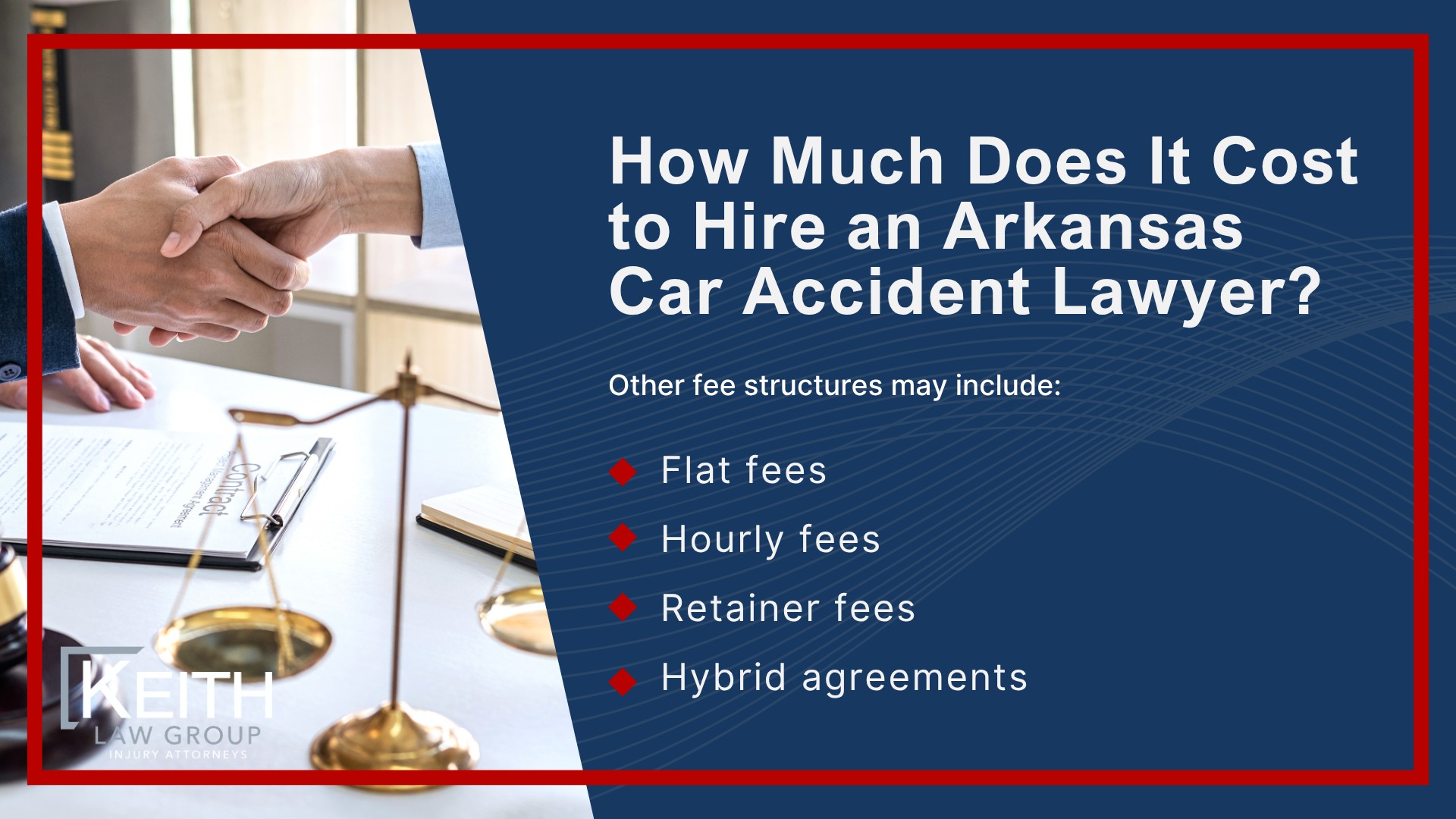
Other fee structures may include:

  • Flat fees: A fixed amount for a specific legal service, though this is less common in personal injury cases.
  • Hourly fees: A set rate for each hour the lawyer works, which can make total costs harder to predict.
  • Retainer fees: An upfront payment held in a trust account, with fees deducted as legal work is performed.
  • Hybrid agreements: A combination of payment methods, such as a reduced retainer plus a contingency fee.

Before hiring a lawyer, review the fee agreement carefully so you understand the percentage, how costs are handled, and when deductions are made.

Some lawyers may be willing to negotiate a lower percentage when a case is straightforward or likely to produce a large settlement.

The agreement should also explain whether the fee is calculated before or after case expenses are deducted.

A clear fee agreement helps prevent confusion when the case resolves and the settlement funds are distributed.

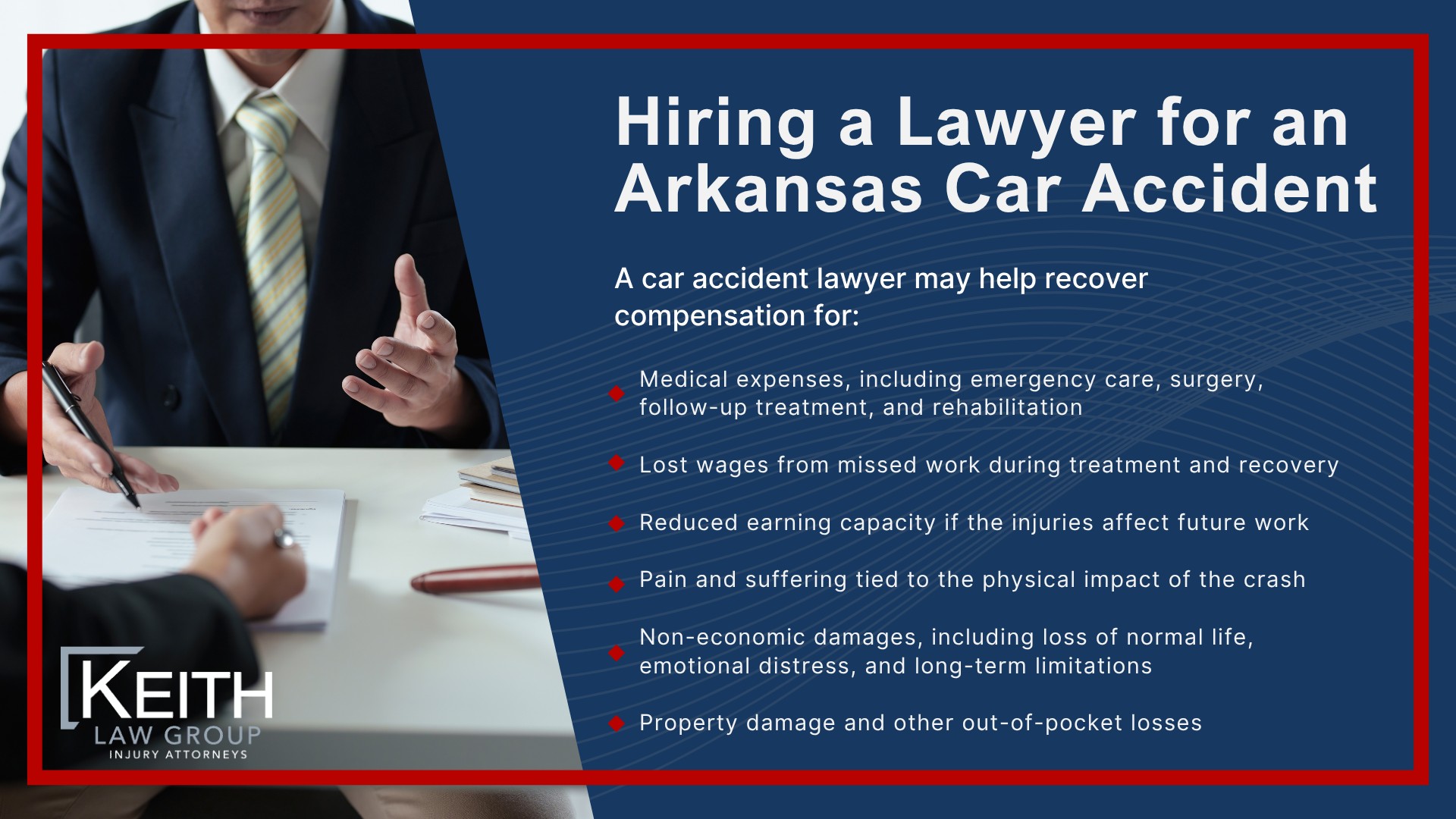
Hiring a Lawyer for an Arkansas Car Accident

Hiring a car accident lawyer after an Arkansas crash can affect how the claim is documented, negotiated, and valued. Most car accident cases are resolved through negotiations rather than trial, so legal representation can matter even when the facts appear straightforward.

Under a contingency fee arrangement, the lawyer is paid only if compensation is recovered through a settlement or verdict.

This allows injured people to pursue a claim without paying upfront attorney’s fees.

A lawyer can also reduce the stress of dealing with insurers, paperwork, deadlines, and settlement discussions while you focus on medical recovery.

The value of a claim often depends on whether all damages are identified, supported, and presented clearly.

A car accident lawyer may help recover compensation for:

  • Medical expenses, including emergency care, surgery, follow-up treatment, and rehabilitation
  • Lost wages from missed work during treatment and recovery
  • Reduced earning capacity if the injuries affect future work
  • Pain and suffering tied to the physical impact of the crash
  • Non-economic damages, including loss of normal life, emotional distress, and long-term limitations
  • Property damage and other out-of-pocket losses

Car accident lawyers understand the legal process and can negotiate with insurance companies that may dispute fault, minimize injuries, or undervalue future losses.

An experienced car accident attorney can help assess damages accurately so the claim includes medical costs, lost income, pain and suffering, and other recoverable losses.

Some cases also require litigation expenses, including court filing fees, medical record costs, deposition expenses, and expert witness fees.

Many personal injury firms advance those costs while the case is pending and deduct them from the final recovery if compensation is obtained.

The fee agreement should explain how attorney’s fees, case costs, and settlement deductions are handled before representation begins.

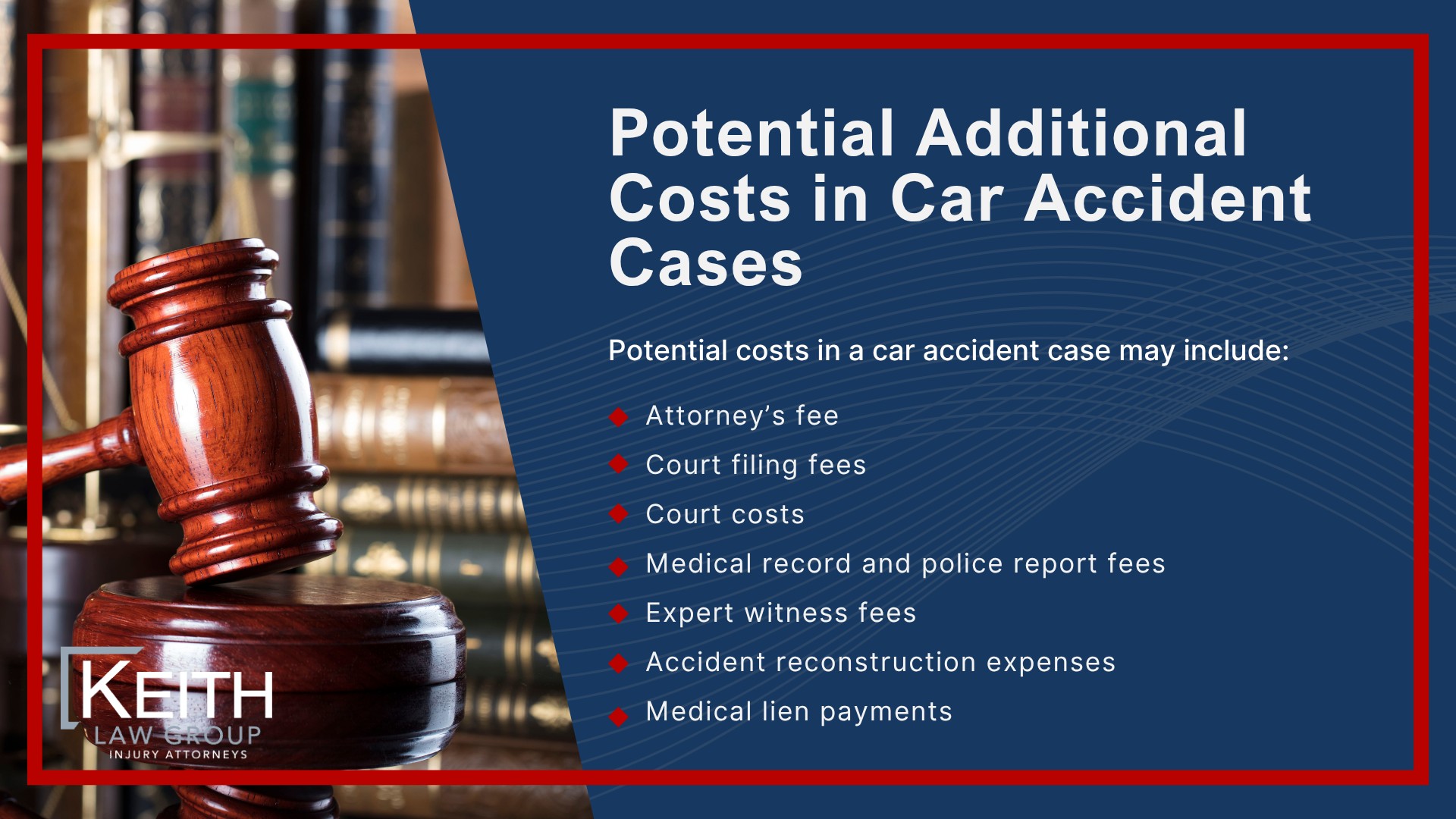
Potential Additional Costs in Car Accident Cases

Most Arkansas car accident lawyers use a standard contingency fee, meaning lawyer fees are paid only if compensation is recovered through a settlement or verdict.

Contingency fees can vary based on the case’s complexity, with straightforward claims often involving lower fees than cases requiring litigation, expert review, or trial preparation.

If the lawyer does not secure compensation, the client generally owes no attorney’s fee, but the attorney-client agreement should explain whether any additional costs remain the client’s responsibility.

Arkansas fee rules require contingency fee agreements to be in writing and to explain the fee percentage, litigation expenses, and whether expenses are deducted before or after the contingency fee is calculated.

Many lawyers advance litigation costs upfront and later deduct court fees, court costs, and other expenses from the final settlement or award.

Some local medical providers may also treat an injured person under a medical lien, which allows payment to be delayed until the case resolves.

Potential costs in a car accident case may include:

  • Attorney’s fee: Usually a percentage of the recovery under a contingency fee agreement.
  • Court filing fees: Charges required to file a lawsuit or other court documents.
  • Court costs: Litigation-related expenses, including service fees, court reporter fees, deposition transcripts, and trial-related charges.
  • Medical record and police report fees: Costs for obtaining records needed to document injuries, treatment, and crash details.
  • Expert witness fees: Charges for medical experts, accident reconstruction specialists, economists, or other professionals.
  • Accident reconstruction expenses: Additional expenses that may be necessary when fault, speed, impact force, or causation is disputed.
  • Medical lien payments: Amounts owed to medical providers who agreed to wait for payment from the settlement.

Other different fee structures may include an hourly rate, flat fee, retainer payment, or hybrid fee, but those are less common in personal injury car accident cases.

The payment structure should be reviewed before signing because case expenses are often separate from legal fees.

At the end of the case, the lawyer should provide an itemized breakdown showing the recovery, attorney’s fees, expenses, lien payments, and the amount paid to the client.

A clear fee agreement helps injured people understand how costs affect the final recovery while pursuing maximum compensation supported by the evidence.

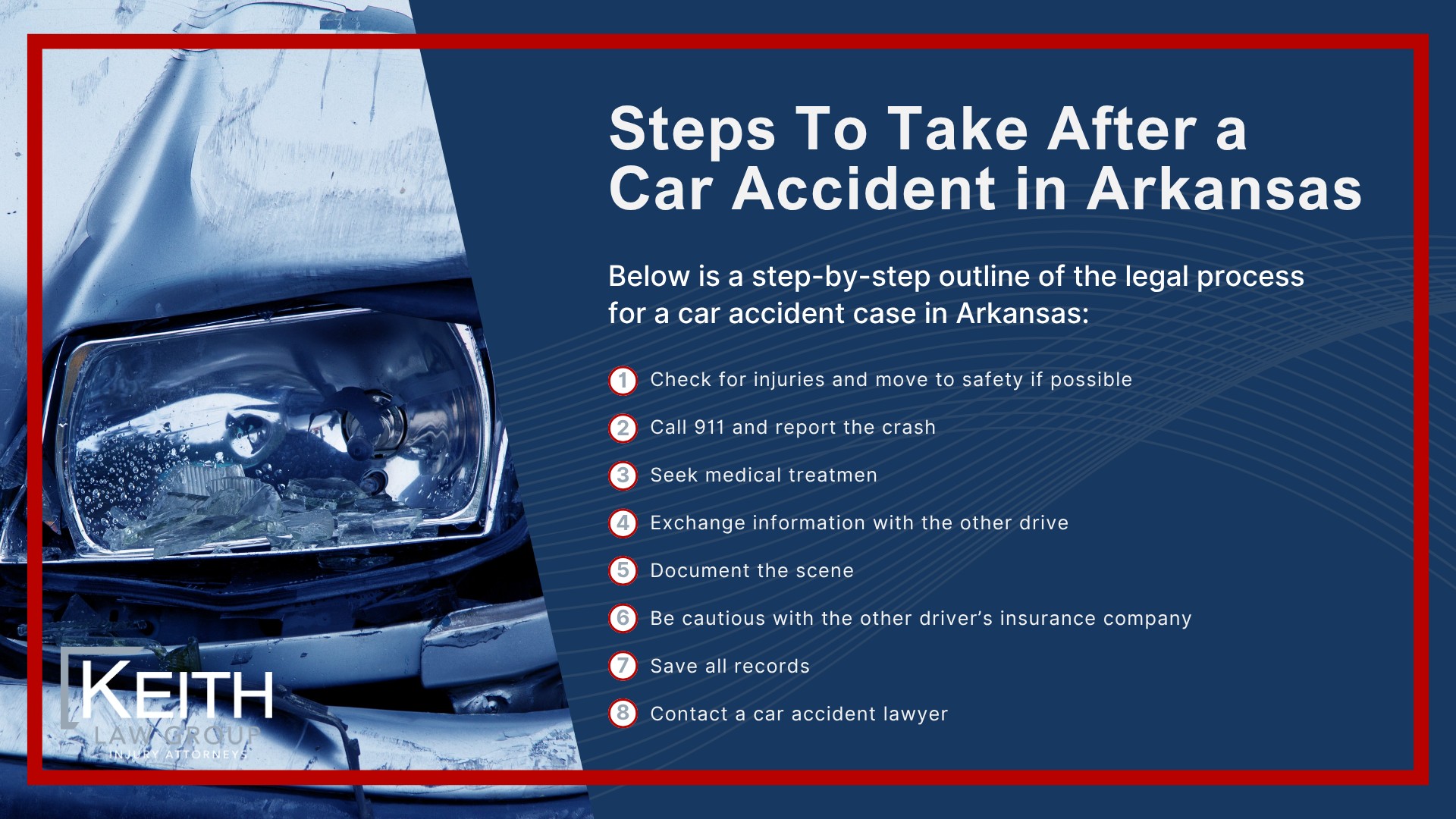
Steps To Take After a Car Accident in Arkansas

The decisions made after a crash can affect medical care, insurance disputes, and whether the evidence is strong enough to support a future claim.

Steps to take after a car accident include:

  1. Check for injuries and move to safety if possible. Get out of traffic only if it is safe and you can move without worsening an injury.
  2. Call 911 and report the crash. A police report can become important evidence if fault, injuries, or coverage are disputed.
  3. Seek medical treatment. Early medical records help connect the crash to the injuries suffered by car accident victims.
  4. Exchange information with the other driver. Get names, contact details, license plate numbers, and insurance information.
  5. Document the scene. Take photos of vehicle damage, road conditions, traffic signs, debris, visible injuries, and anything else that may explain how the crash occurred.
  6. Be cautious with the other driver’s insurance company. Avoid recorded statements or settlement discussions before the full extent of your injuries is known.
  7. Save all records. Keep medical bills, treatment notes, repair estimates, wage records, receipts, and insurance correspondence.
  8. Contact a car accident lawyer. Many law firms offer a free consultation and use a contingency fee agreement, which often means no upfront costs or upfront legal costs for attorney time.

These steps can help preserve evidence if the claim becomes disputed or develops into a personal injury lawsuit.

A lawyer can review the crash facts, explain the fee structure, and identify what records may matter most.

Legal review can also help prevent early mistakes with insurers while treatment and recovery are still ongoing.

Gathering Evidence for Car Accident Claims

Evidence often determines whether a claim succeeds and how much it may be worth.

Strong documentation can help establish fault, prove the seriousness of the injuries, and connect the crash to your financial and physical losses.

That is why gathering records early matters in many personal injury claims.

Useful evidence may include:

  • The police crash report
  • Photographs of the vehicles, roadway, debris, skid marks, and visible injuries
  • Witness names and contact information
  • Traffic camera footage, dashcam video, or surveillance recordings
  • Vehicle repair estimates and property damage records
  • Medical records, treatment notes, and diagnostic imaging
  • Prescription records and follow-up care documentation
  • Employer records or wage statements showing missed work and lost income

These materials can help show how the crash happened and how the injuries affected your life.

Records showing treatment, prescriptions, follow-up appointments, and ongoing symptoms may strengthen the connection between the collision and your damages.

If you miss work, wage statements or employer verification may help support a claim for lost wages.

In more complex cases, additional evidence may be needed.

Some claims require accident reconstruction, medical specialists, or economists to explain liability or damages.

Those cases may involve additional litigation expenses, including expert witness fees.

Most injury firms that work under a contingency model advance those case expenses and seek reimbursement from any recovery, but the exact fee arrangement should always be reviewed carefully.

People sometimes compare different billing structures before choosing counsel.

While a fixed fee may exist for limited legal tasks in some areas of law, it is uncommon in serious auto injury litigation.

Instead, many firms rely on a contingency structure, with the contingency fee ranging based on the case, the stage of litigation, or whether the matter settles before trial.

Reviewing the contract can clarify how attorney’s fees, expenses, and deductions will be handled.

That can also help answer practical questions about accident lawyer cost and whether a car accident lawyer worth hiring in a given case.

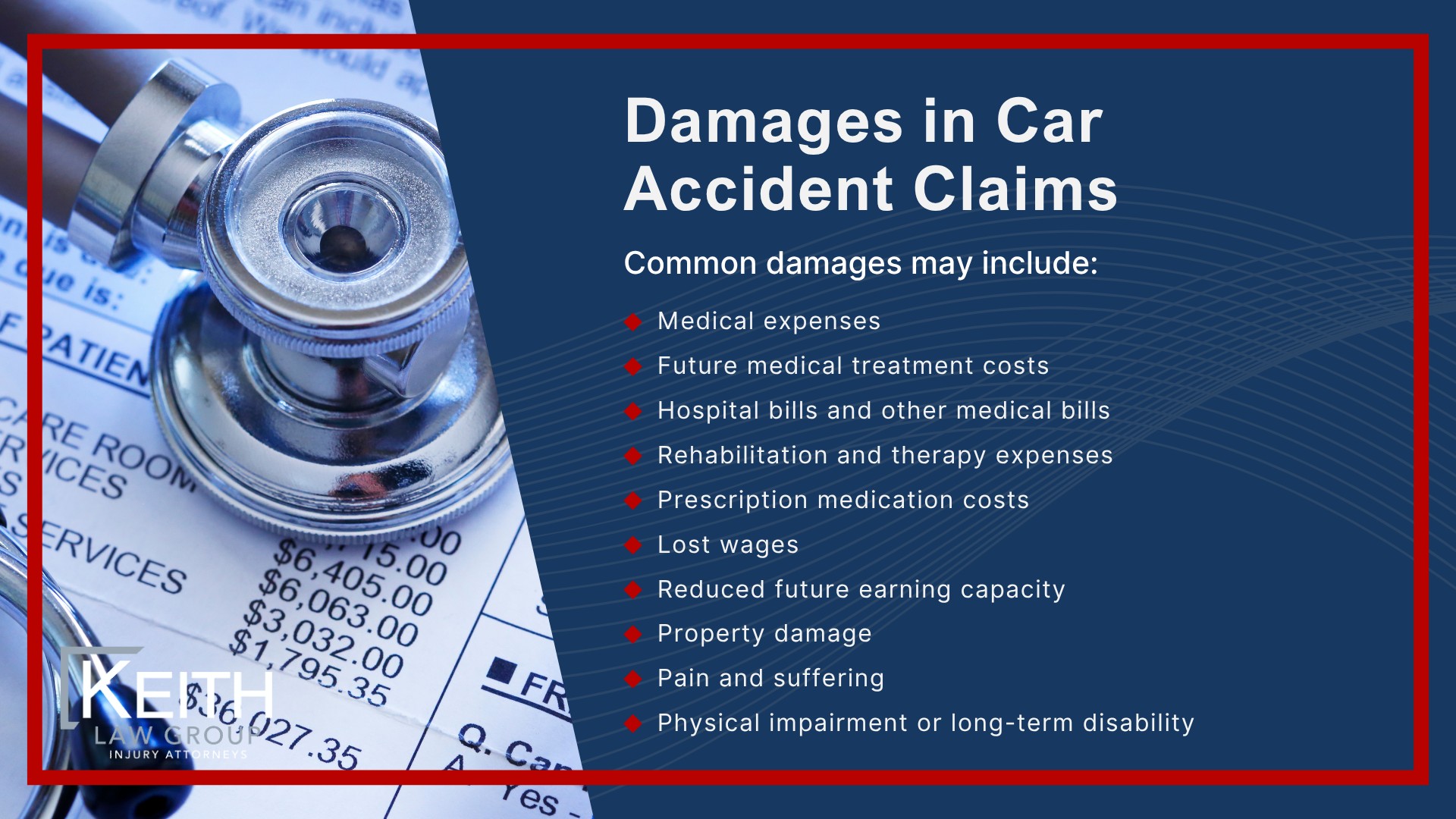
Damages in Car Accident Claims

Damages in a car accident claim are meant to reflect the losses caused by the crash.

In many cases, those damages include both financial losses and non-economic harm tied to the injury.

Common damages may include:

  • Medical expenses
  • Future medical treatment costs
  • Hospital bills and other medical bills
  • Rehabilitation and therapy expenses
  • Prescription medication costs
  • Lost wages
  • Reduced future earning capacity
  • Property damage
  • Pain and suffering
  • Physical impairment or long-term disability

A claim may include both current and future losses, depending on the severity of the injuries and the expected course of recovery.

Some damages are easier to calculate because they are tied to bills, receipts, or wage records.

Others, such as pain and suffering, require a more detailed review of how the injuries affected the person’s daily life, physical function, and long-term condition.

The amount available in a claim depends on the facts, the evidence, the insurance coverage, and whether liability is disputed.

A settlement should account for both immediate and future harm, not just the losses that have already been paid or documented.

That is one reason many injured people speak with a lawyer before resolving a claim.

Careful damages analysis can affect whether a settlement actually reflects the full impact of the crash.

The Legal Process for Car Accident Lawsuits in Arkansas

The legal process for Arkansas car accident lawsuits usually begins with an investigation of the crash, the injuries, and the available insurance coverage.

This often includes reviewing police reports, photographs, witness statements, medical records, and proof of financial losses such as lost income, treatment expenses, and vehicle repairs.

Even in seemingly straightforward claims, disputes can develop over fault, medical causation, or the value of damages.

After the initial investigation, the claim is typically presented to the insurance carrier for the driver or other at fault parties.

Negotiations with insurance adjusters may resolve some claims without a lawsuit, but others require formal litigation.

If settlement efforts fail, the injured person may file suit and move into discovery, where each side exchanges documents, takes depositions, and develops evidence.

In more serious cases, experts may be used to address medical issues, future losses, or crash reconstruction.

Many personal injury cases settle before trial, but some proceed to a judge or jury.

If the case is successful, compensation may come through a negotiated settlement or a court award.

The overall process can vary depending on the severity of the injuries, whether liability is disputed, and whether the claim involves long-term or ongoing medical care.

How Long Do I Have to File a Car Accident Claim in Arkansas?

In Arkansas, the statute of limitations for filing a car accident claim is generally three years from the date of the accident.

Missing that filing deadline can prevent you from pursuing damages in court, even if your injuries are serious and the other driver was clearly responsible.

That is why it is important to evaluate a claim early and avoid waiting until evidence becomes harder to obtain.

The timing of a claim can also affect settlement discussions.

Insurance carriers may delay or dispute claims when they know the filing deadline is approaching.

Acting early can help preserve records, locate witnesses, and build a stronger case before negotiations or litigation begin.

Because deadlines can depend on the facts of the case, the parties involved, and the type of claim being asserted, injured people should have the filing timeline reviewed as soon as possible after a crash.

Do You Qualify for an Arkansas Car Accident Lawsuit?

A person may qualify for an Arkansas car accident lawsuit if another party’s negligence caused the crash and resulted in measurable harm.

That harm may include physical injuries, medical treatment costs, lost income, property damage, or other legally recognized losses.

The strength of the case depends on factors such as fault, available evidence, the seriousness of the injuries, and the amount of insurance coverage involved.

A claim may be worth evaluating even if liability seems disputed or the insurer has already made a low offer.

Early legal review can help identify responsible parties, preserve evidence, and assess whether the current offer reflects the full value of the damages.

Keith Law Group: Arkansas Car Accident Lawyers

Keith Law Group represents injured people in Arkansas car accident claims involving serious injuries, disputed fault, and insurance negotiations.

The firm evaluates the evidence, addresses legal and factual issues, and works to document the losses tied to the crash.

That includes reviewing medical treatment, wage loss, and future damages where the injuries require ongoing care.

For people with questions about fees, case value, or next steps, an early case review can clarify the likely process, the applicable fee arrangement, and the issues that may affect recovery.

Understanding those details early can help injured people make informed decisions about their claim.

If you or a loved one has been injured in a car crash, don’t navigate the legal process alone.

Let our team of skilled accident lawyers handle the legal details while you focus on recovery.

Call us today or use our online chat feature for an instant case evaluation.

Frequently Asked Questions

Published by:
Share

This article has been written and reviewed for legal accuracy and clarity by the team of writers and attorneys at Keith Law Group and is as accurate as possible. This content should not be taken as legal advice from an attorney. If you would like to learn more about our owner and experienced injury lawyer, Sean T. Keith, you can do so here.

Keith Law Group does everything possible to make sure the information in this article is up to date and accurate. If you need specific legal advice about your case, contact us. This article should not be taken as advice from an attorney.

Other Car Accident Lawsuit Resources
All
FAQs
Injuries & Conditions
Legal Help
Other Resources
Settlements & Compensation
You can learn more about other Car Accident Lawsuit resources below:
15 Common Car Accident Causes in Arkansas & Prevention Tips
Arkansas Auto Accidents: How to File a Car Insurance Claim
Arkansas Car Accident Compensation Types & Laws to Know
Arkansas Car Accident Injury Claim Process
Arkansas Car Accident Lawsuit Guide: Tips for Success
Arkansas DUI Accident Lawsuits: Laws, Damages, & Safety Tips
Arkansas Hit and Run Accident Guide: Laws & Tips to Know
Average Arkansas Car Accident Settlements & Tips to Maximize Yours
Car Accident Damages in Arkansas: Potential Compensation
Car Accident Reporting in Arkansas
Car Accident Statute of Limitations Arkansas
Finding the Best Car Accident Attorney in Arkansas for Your Case
Hit and Run Car Accident Lawsuits in Arkansas
How Is Fault Determined in Arkansas Auto Wrecks?
How Much Can Someone Sue for a Car Accident in Arkansas
How to File a Police Report After a Car Accident in Arkansas
How to File an Auto Accident Lawsuit in Arkansas
How to Get a Police Report After a Car Accident in Arkansas
Should I Get a Lawyer for a Car Accident?
Statute of Limitations: Car Accident Claims in Arkansas
Steps to Take After a Car Accident in Arkansas
T-Bone Car Accident Lawsuits in Arkansas: Things to Know
Types of Evidence in Arkansas Car Accident Cases
Understanding Car Accident Insurance Claims in Arkansas
Understanding the Arkansas Car Accident Settlement Process
Who Pays for My Medical Bills After a Car Accident in Arkansas

Other Car Accident Lawsuit Resources

All
FAQs
Legal Help
Other Resources
Settlements & Compensation