Home » Guides » Arkansas Car Accident Lawsuit Guide: Tips for Success » Steps to Take After a Car Accident in Arkansas
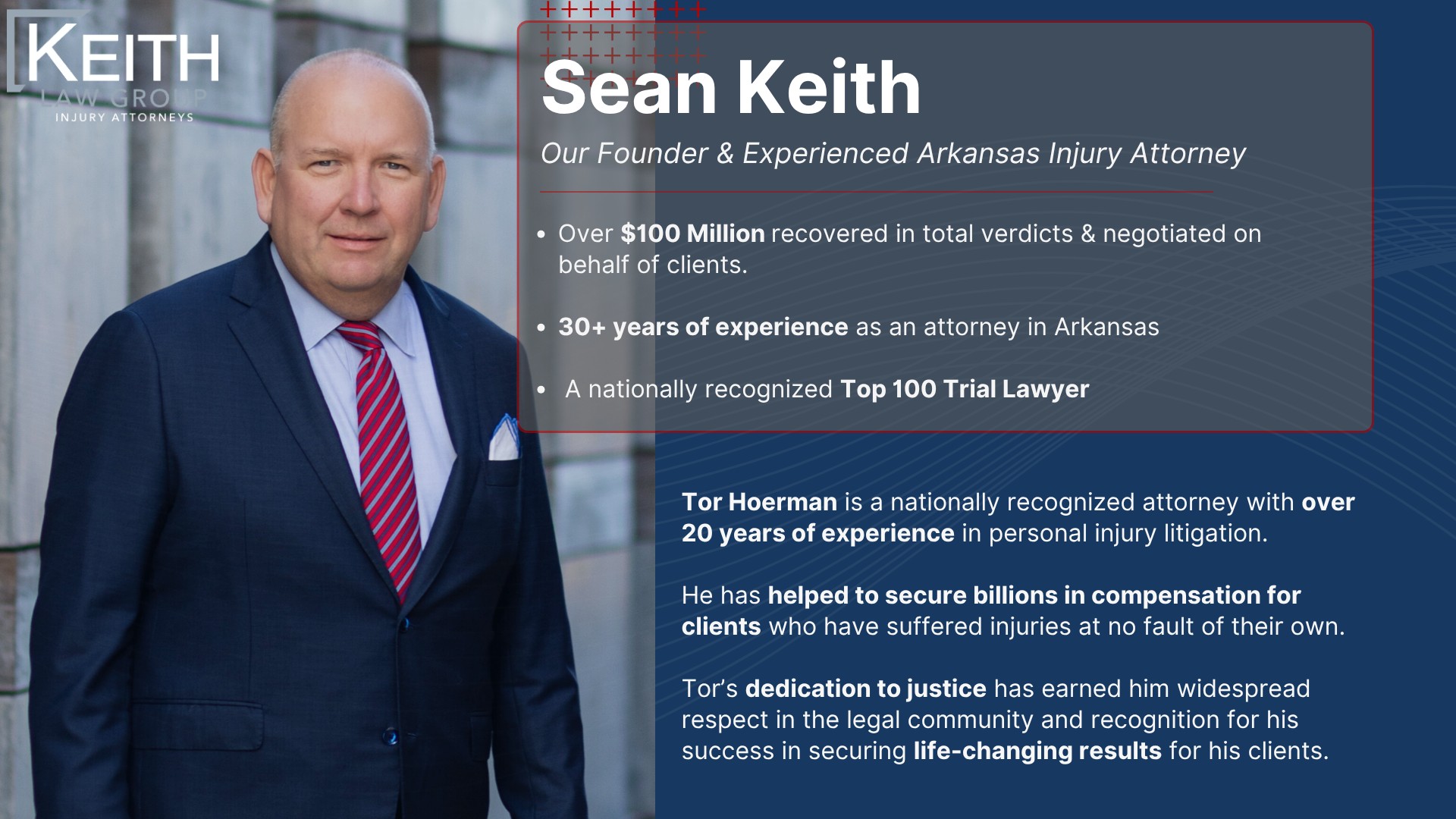
Attorney Sean T. Keith has been a personal injury lawyer for 30+ years, a nationally recognized Top 100 Trial Lawyer, and top car accident lawyer & motor vehicle accident lawyer in Arkansas.
This article has been written and reviewed for legal accuracy and clarity by the team of writers and attorneys at Keith Law Group and is as accurate as possible. This content should not be taken as legal advice from an attorney. If you would like to learn more about our owner and experienced injury lawyer, Sean T. Keith, you can do so here.
Keith Law Group does everything possible to make sure the information in this article is up to date and accurate. If you need specific legal advice about your case, contact us. This article should not be taken as advice from an attorney.
After an Arkansas car accident, what you do next can affect both your health and your ability to protect your claim.
Injuries can worsen after the adrenaline fades, and important evidence can disappear quickly as vehicles are repaired and witnesses move on.
Insurance companies may contact you early and push for a fast resolution before you understand the full impact of the crash.
On this page, we explain the practical steps to take after a car accident in Arkansas, how to prioritize medical care, what evidence to gather, what to avoid saying or signing, and when to involve a lawyer.
If you’re unsure what to do next, Keith Law Group can review the basics with you through a free case evaluation using our website chat or a call with our team.
A car wreck can leave you shaken, injured, and unsure who to call first.
In the rush of adrenaline, it’s easy to miss details that later become critical, like witness information, photos of the scene, or the exact words exchanged with the other driver.
Some injuries also don’t feel serious right away, which can lead people to delay care and create gaps in their medical records.
Insurance adjusters may reach out quickly and push for statements or early settlements before you know what recovery will require.
Having a clear plan helps you stay focused, protect your health, and avoid mistakes that can cost you later.
After a car accident in Arkansas, the next steps matter, both for your health and for protecting your rights.
If you’re unsure what to do after a car crash or need help understanding your options, contact Keith Law Group today for a free case evaluation.
You can also use the chatbot on this page.
Knowing the right steps to take after a car accident helps you protect your health and avoid preventable issues in the claims process.
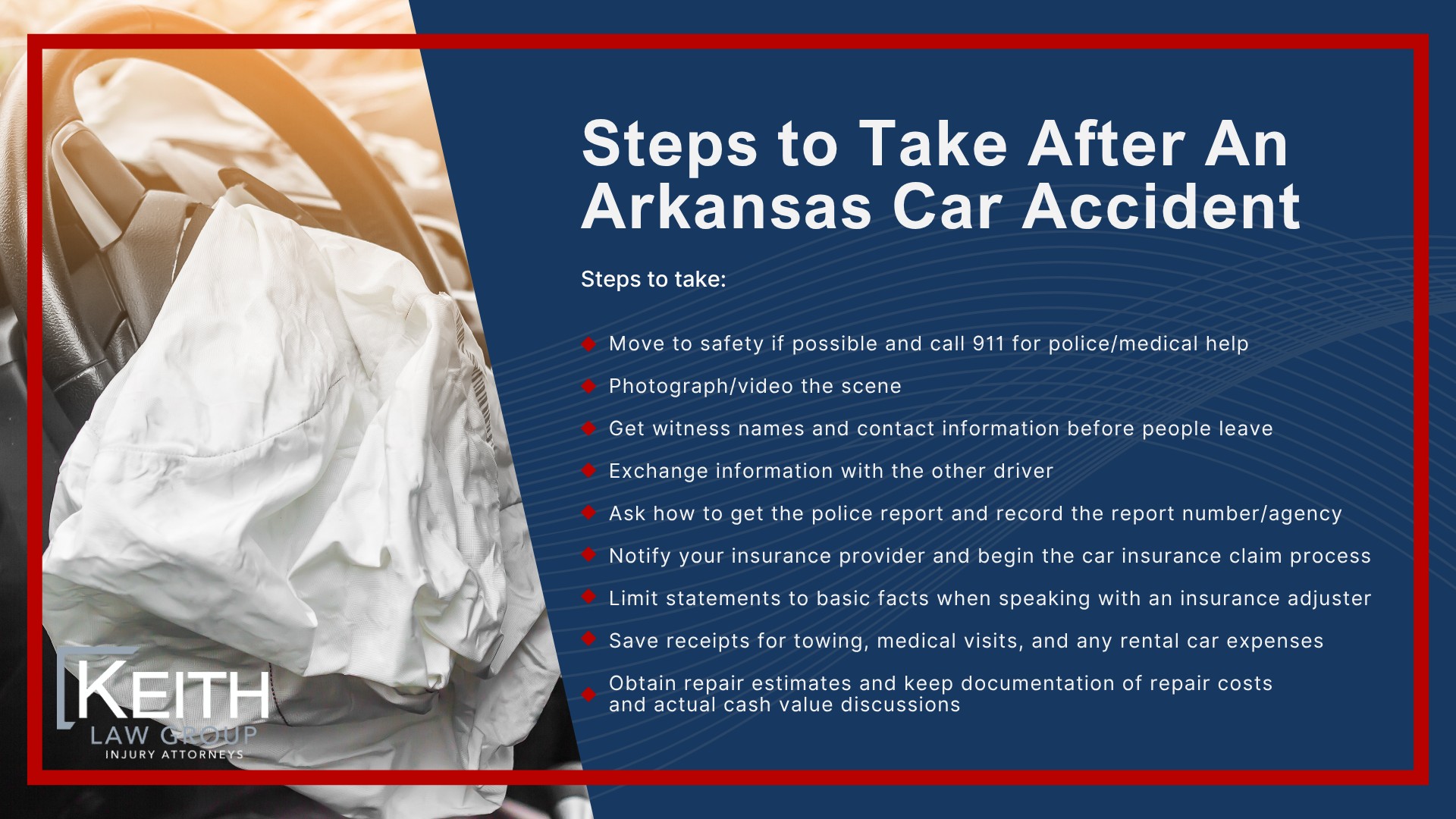
Start by getting to a safe location if you can and calling 911 so police and medical responders can document what happened at the accident scene.
While you’re still at the scene of the accident, take photos or video of vehicle positions, traffic signals, skid marks, debris, and visible vehicle damage before anything changes.
When it’s safe, exchange information with the other driver, including names, phone numbers, license plate numbers, and each person’s driver’s license number, along with their insurance information.
Ask the officer how to obtain the police report and write down the report number and responding agency.
Notify your insurance provider promptly and ask your insurance agent or the agent or insurance company what documents they need to open the car insurance claim and how to file a claim correctly.
Be cautious with recorded statements to an insurance adjuster.
Stick to the facts and avoid guessing about fault, since statements can affect legal liability.
Keep receipts and paperwork for towing, prescriptions, and a rental car, and get repair estimates so disputes over repair costs or actual cash value don’t catch you off guard.
Steps to take:
Most cases begin outside of court, with evidence gathering and insurance negotiations aimed at resolving the claim without a lawsuit.
Your side collects the police report, medical records, witness information, and documentation of losses, then presents a demand that explains fault and damages.
The insurance company reviews liability and may assign an insurance adjuster to investigate, inspect damage, and analyze coverage.
If property damage is involved, the insurer may evaluate whether to pay repair costs or declare the vehicle a total loss and offer actual cash value, sometimes while covering a temporary rental car depending on the policy.
If liability is disputed or the carrier refuses to offer fair payment, the case may move into litigation, where evidence is exchanged formally and a judge or jury can decide responsibility and damages.
Throughout, what you document early (scene photos, witness contacts, medical records, and communication logs) can shape whether the claim resolves quickly or turns into a contested case.
In Arkansas, the deadline to file a lawsuit for most car accident injury claims is generally three years from the date the claim accrues under the state’s limitations statute.
The safest approach is to treat the crash date as the start of your timeline and confirm your specific deadline as early as possible, especially if your injuries are serious or fault is disputed.
Also keep in mind that the court deadline is separate from insurer deadlines.
Your insurance provider may require notice, forms, or documentation much sooner to keep the car insurance claim moving.
Because evidence can disappear and delays can create problems with both liability and damages, it’s smart to begin gathering documentation and speaking with counsel well before the last day to file.
After a crash, the details that seem small at the scene can become the details that decide your claim, especially once the insurance company and policy review begins.
An Arkansas car accident attorney helps you protect evidence, organize records, and communicate with the insurer so your claim isn’t defined by an incomplete story or a rushed statement.
We can help you understand what to collect at the entire scene, how to request and correct an accident report, and how to document losses before a vehicle repaired decision changes the evidence.
If your crash happened in a parking lot or other private property location, liability can still be disputed, which makes documentation and witness information even more important.
We also help clients navigate property-damage disputes, like how the insurer values the vehicle, whether a car should be repaired, and what it means when an insurer references actual cash value or an appraisal provision in the insurance policy.
When multiple people are involved (other passengers, other parties, or additional vehicles), legal guidance can help keep the claim organized and prevent delays that can reduce leverage.
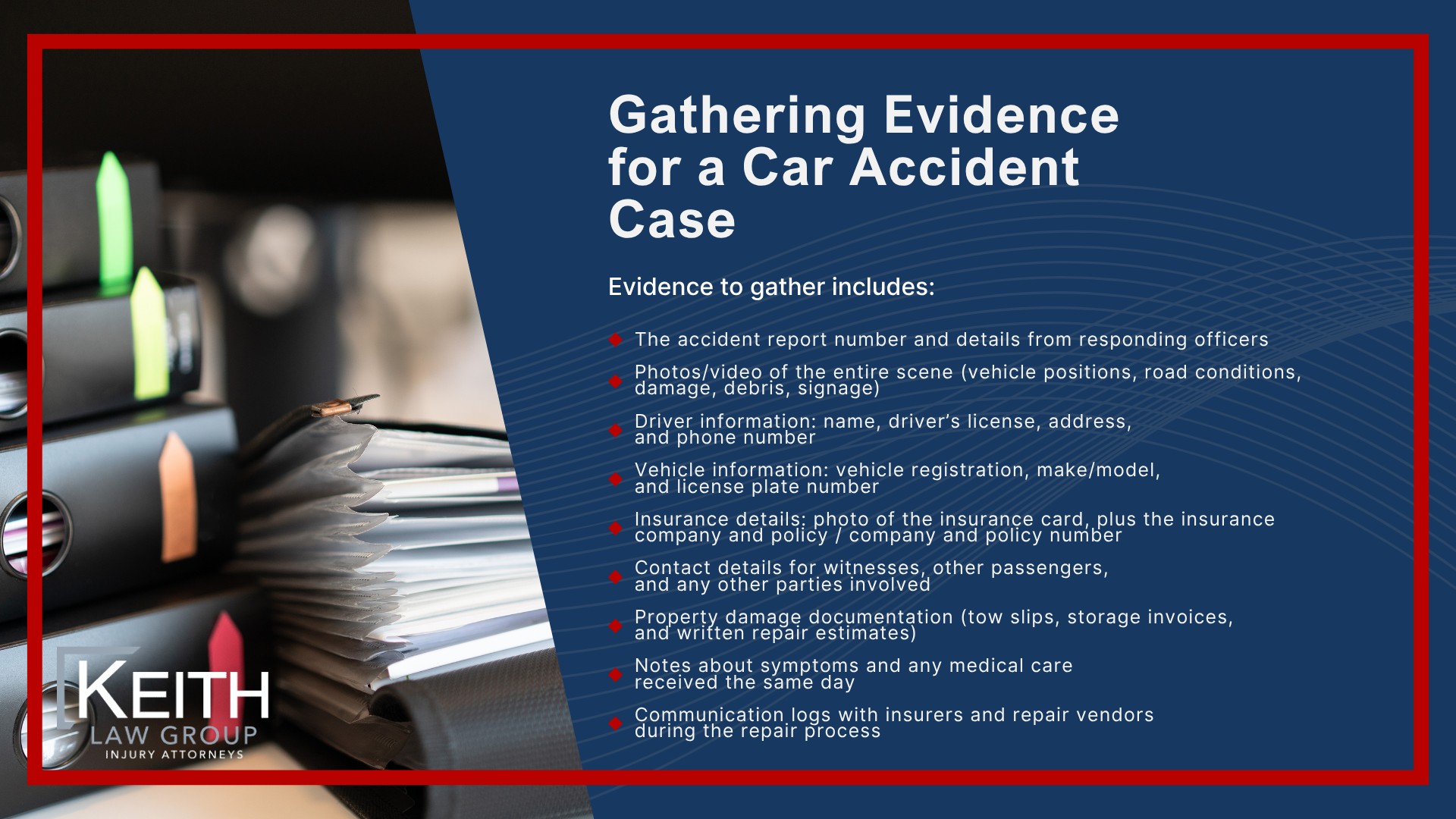
Evidence is what transforms a crash into a provable claim, and it starts with what you collect right away.
Turn on hazard lights, check for injuries, and call the police so police officers and responding officers can document the scene and create a report.
If it’s safe, photograph the entire scene before cars are moved, including roadway layout, debris, skid marks, traffic signs, and any visible damage.
Also document every vehicle involved (the license plate, license plate number, and condition of each car) because details change quickly once towing and repairs begin.
Exchange identifying information and coverage details so you can open a claim with your insurance using the correct company and policy number.
Evidence to gather includes:
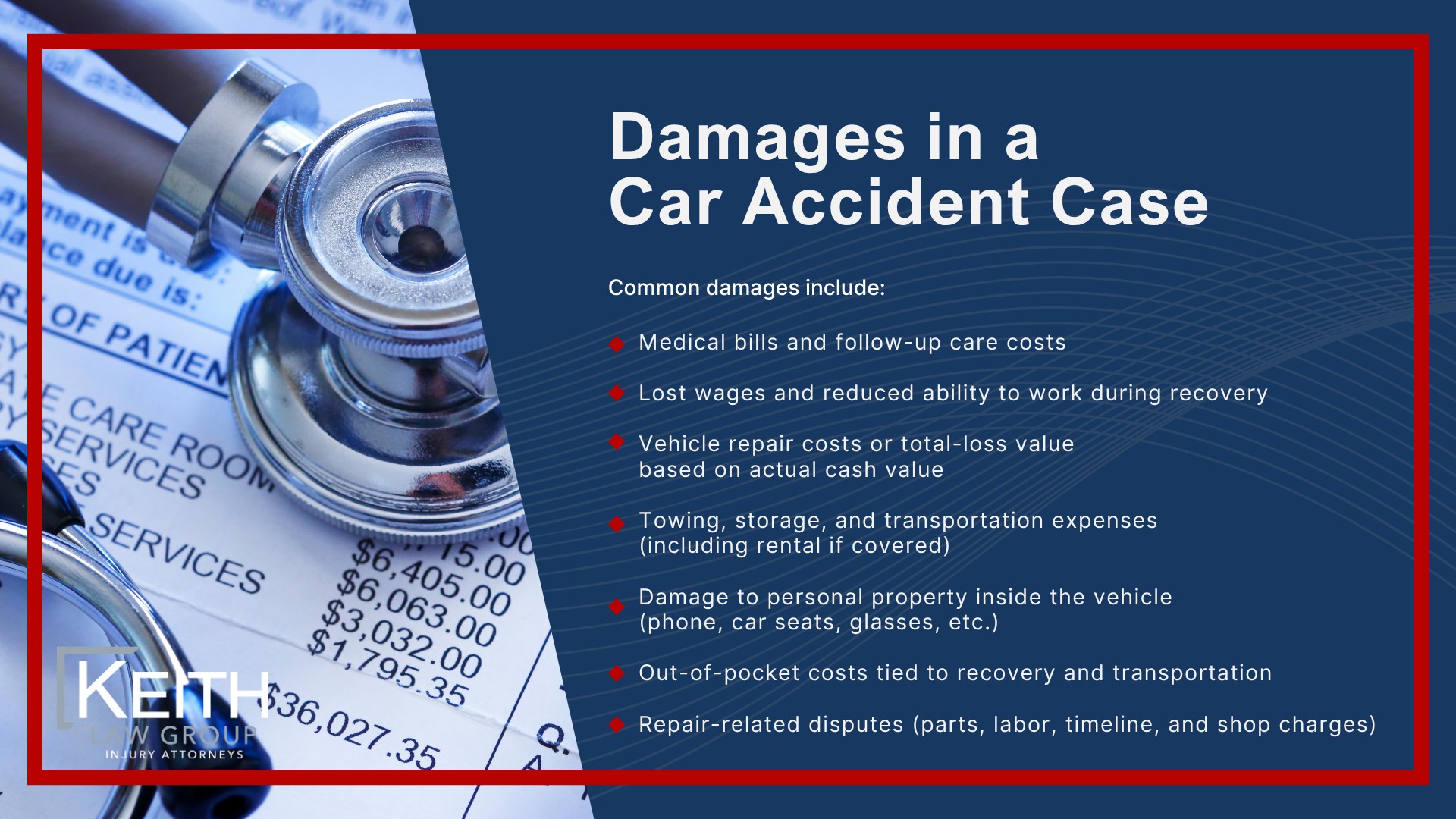
Damages include both injury-related losses and property-related losses, and you typically need documentation for each category.
Injury damages often include medical expenses and income disruption such as lost wages, while property damages include repair or replacement costs for your vehicle and any items damaged inside it.
If the car is fixable, the insurer may send you through the repair process with a designated repair facility or allow you to choose a repair shop, but disputes can arise over timelines, parts quality, and what the insurer will pay.
If the insurer declares the vehicle a total loss, it often bases payment on actual cash value, which can become a point of disagreement.
Your insurance policy may also include an appraisal provision, which is a process for resolving value disputes using a competent appraiser when the parties can’t agree.
Keeping proof early helps prevent further damage and reduces arguments about what was caused by the crash versus what happened afterward.
Common damages include:
Potential compensation depends on what you can prove through records, timelines, and credible documentation.
On the property side, compensation may cover repair costs through an approved repair facility or repair shop, or a total-loss payment based on actual cash value if the car cannot reasonably be repaired.
Disputes sometimes involve after market parts, whether certain repairs are necessary, or whether the estimate matches the real condition of the vehicle, especially when a vehicle is quickly towed and later vehicle repaired before all documentation is collected.
On the injury side, compensation may include medical costs and wage losses, but insurers typically require clear records tying treatment and time missed from work to the crash.
If there are multiple other parties or injuries to other passengers, the claim can become more complex, and documentation becomes even more important to keep the case organized and supported.
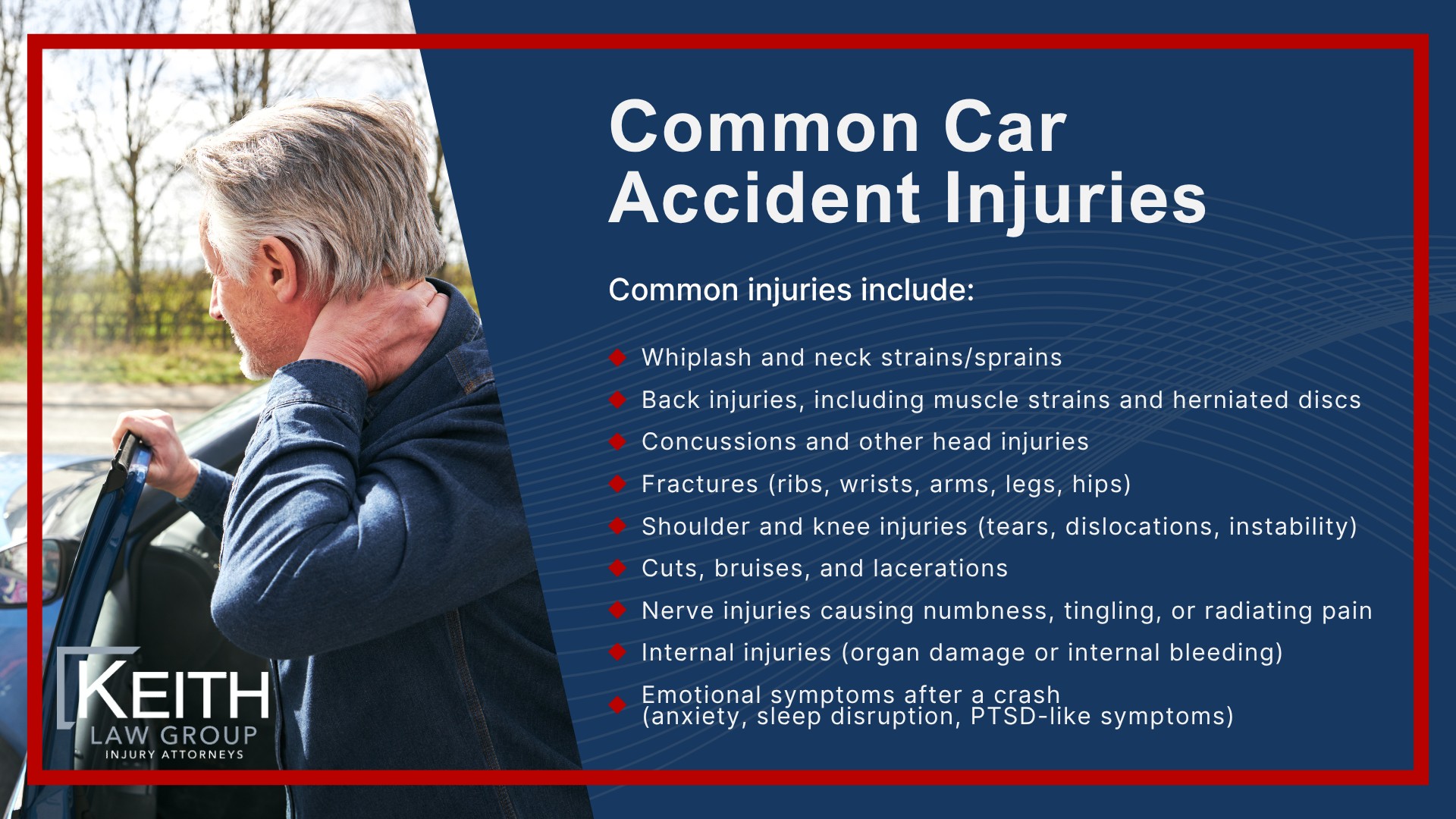
Even a low-speed fender bender can cause real injuries, and some symptoms don’t fully appear until hours or days after the crash.
Your well being comes first, so it’s important to get evaluated if you feel pain, dizziness, numbness, or any change from normal after an accident.
Medical documentation also protects your ability to pursue a claim, because it connects what you’re feeling to the collision and the treatment you needed.
In the same way you should document the scene for the insurance claim, you should also document your symptoms and follow-up care so the record stays consistent.
Common injuries include:
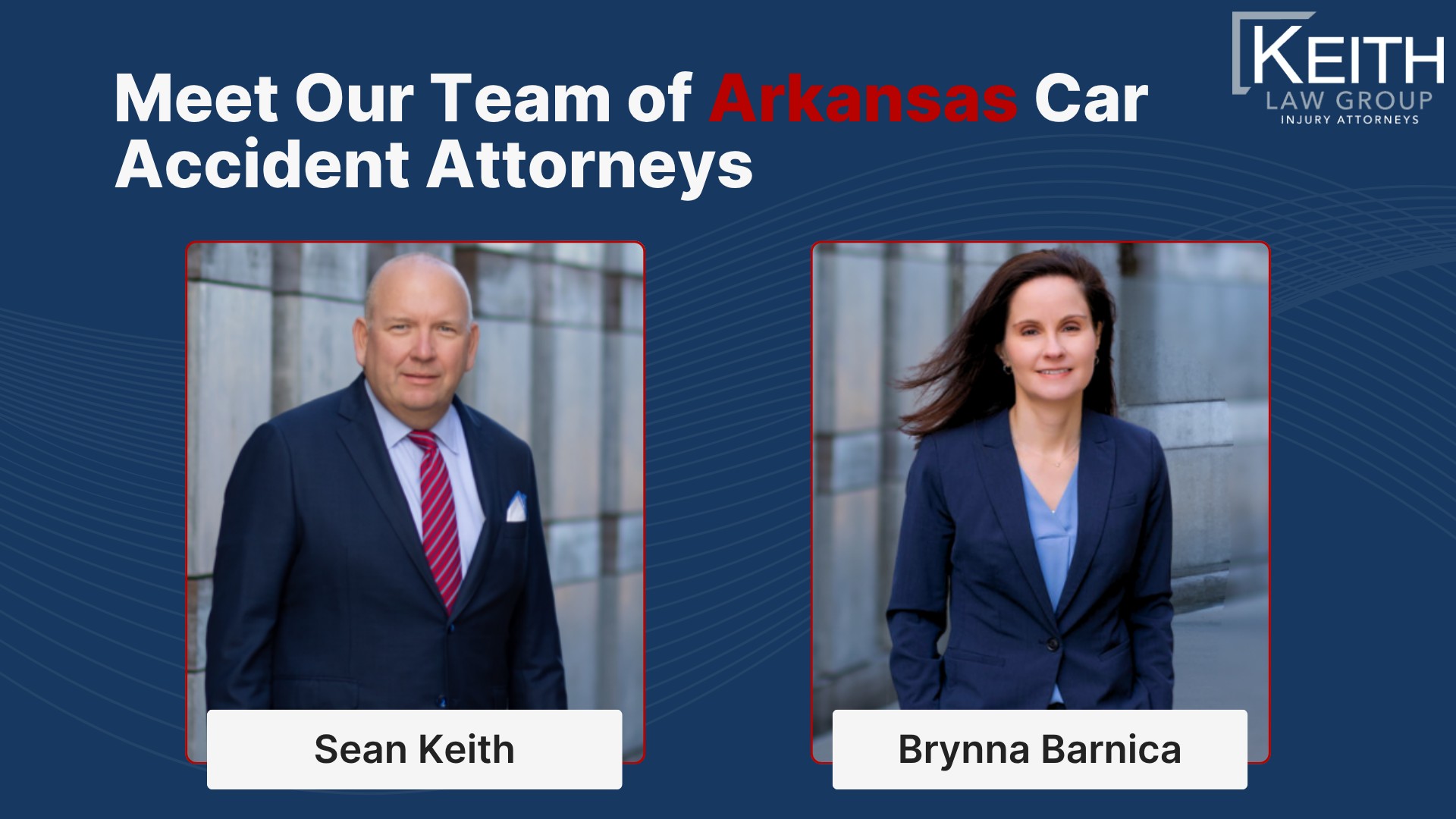
Keith Law Group is guided by a dedicated team with decades of combined experience representing accident victims across Arkansas.
The firm is led by Sean Keith, a nationally recognized trial lawyer and lifelong Arkansas resident with more than 30 years of legal experience.
Sean has handled a wide range of serious personal injury cases, including interstate and highway collisions, commercial truck crashes, and wrongful death claims, pursuing accountability and results throughout the state.
His proven track record includes multiple multimillion-dollar verdicts, and he has been recognized as a Top 100 Trial Lawyer for his work in high-stakes litigation.
Sean is also deeply involved in the Arkansas legal community, serving on the Arkansas Supreme Court Model Civil Jury Instructions Committee and previously serving as a Special Justice on the Arkansas Supreme Court after being appointed by Governor Asa Hutchinson in 2015.
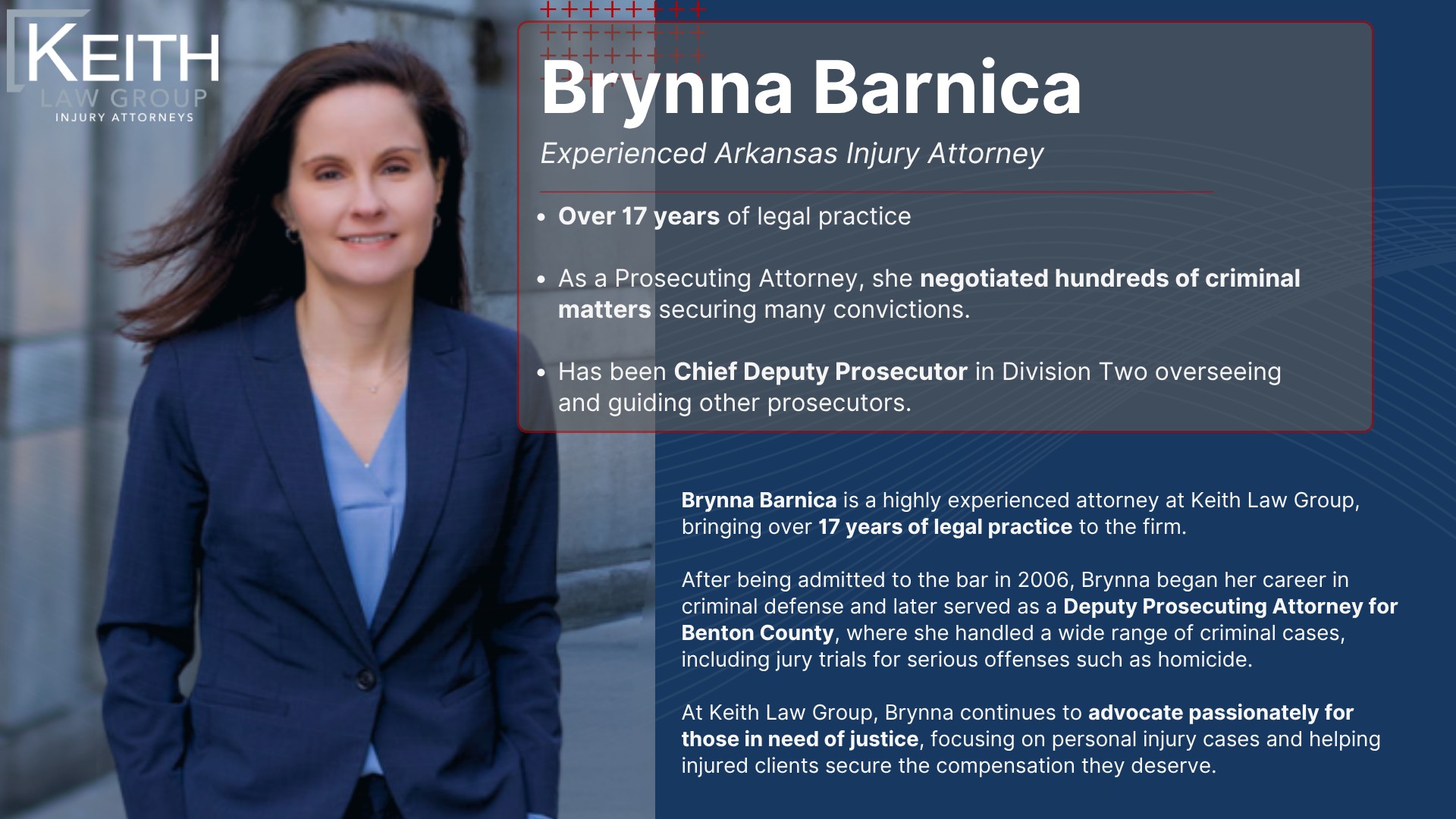
Brynna Barnica is another key attorney at Keith Law Group, bringing more than 17 years of courtroom experience to the team.
She began her career in criminal defense and later served as a Deputy Prosecuting Attorney in Benton County, where she built a strong reputation for disciplined preparation and effective trial work.
Today, she focuses on personal injury and interstate accident claims, helping injured Arkansans pursue fair compensation for medical bills, lost wages, and pain and suffering.
Both Sean and Brynna are graduates of the University of Arkansas School of Law and have a strong understanding of how Arkansas courts evaluate serious injury disputes.
That local courtroom experience is especially important in interstate crash cases, where injuries can be severe, evidence can disappear quickly, and insurance companies often fight hard to limit payouts.
You can hire a car accident attorney from Keith Law Group without paying upfront attorney’s fees.
Our experienced personal injury lawyers work on a contingency fee basis, which means we are paid only if we secure compensation for you through a settlement or verdict.
This fee structure allows accident victims to pursue a claim without adding financial pressure during an already difficult time.
We also advance many of the costs required to build the case, including investigation expenses, medical record retrieval, and accident reconstruction support when it’s needed.
Our attorneys evaluate the full scope of damages—medical bills, lost wages, property damage, and pain and suffering—so your claim reflects your real losses, not an insurer’s first offer.
The goal is straightforward: provide high-quality legal representation without financial risk or confusion about fees.
Contact a personal injury attorney or auto accident lawyer in Arkansas today for a free consultation to discuss your options and what it may take to pursue what you’re owed.
After an accident, following the same steps (prioritizing safety, calling police, and preserving proof) can help protect both your health and your case.
We encourage people to take pictures at the scene from different angles, because those images can clarify fault when stories conflict later.
We also help clients organize the information insurers require, including policy number, car insurance details, and the names of everyone involved, so the insurance process doesn’t stall.
If a vehicle is declared a total loss, or the insurer disputes coverage, we can explain what documentation matters and what options may apply under the available coverage.
Keith Law Group’s job is to protect your claim from common pitfalls (early statements, missing documentation, and rushed settlements) and to push for a result that reflects the real impact of the crash.
If you were injured and aren’t sure what to do next, contact our team so we can review your situation, explain the process, and help you protect your right to pursue compensation.
Contact Keith Law Group Today, or use the chatbot on this page to see if you qualify today.
Start with safety and medical needs, even if the crash looks minor.
Move to a safe location if you can, turn on your hazard lights, and call 911 so police can respond and create an accident report.
If you are able, take pictures of the entire scene from different angles before vehicles are moved, then exchange information with the other driver, including driver’s license number and insurance information.
After you leave the scene, report the crash to your insurer and begin the claim process, but be cautious with recorded statements until you understand what the adjuster is asking.
Yes.
Calling the police can still be helpful, even for a fender bender or a collision on private property, because it creates documentation and helps prevent disputes about what happened.
Police officers may not always complete a full report depending on the situation, but requesting a response can still establish a timeline and record basic facts.
If responding officers do not generate a report, you should document the scene thoroughly with photos, witness contacts, and notes about what each driver said.
When fault is disputed later, that early documentation can be the difference between a smooth claim and a drawn-out fight.
You should exchange identifying and insurance details so you can file a claim correctly and avoid delays.
Get the other driver’s name, phone number, driver’s license number, license plate number, and vehicle registration details, along with a photo of their insurance card showing the company and policy number.
Take pictures of both vehicles and the surrounding scene, because vehicle damage and positioning can change quickly once towing or repairs begin.
If there are other parties involved (other passengers, witnesses, or multiple vehicles) try to capture their names and contact information too.
If the insurance company declares a total loss, it will typically base payment on the vehicle’s actual cash value, not what it would cost to buy a brand-new replacement.
That number can be disputed, especially if the insurer’s valuation misses features, mileage adjustments, or recent maintenance, so keep your records and review the valuation carefully.
Some insurance policies include an appraisal provision that allows each side to use a competent appraiser to resolve a value disagreement.
Don’t assume the first offer is final.
Document the vehicle’s condition and ask for the valuation breakdown in writing.
Not every claim requires an attorney, but legal help can be important when injuries are serious, fault is disputed, multiple parties are involved, or the insurer pushes for a fast settlement before you know the full impact of the crash.
A lawyer can help preserve evidence before the vehicle is repaired, organize medical and wage documentation, and handle adjuster communications so your words aren’t used against you later.
Legal guidance can also help in property damage disputes over repair shop choices, after market parts, repair costs, or total loss valuation.
If you’re unsure, a quick review can clarify whether your claim is straightforward or whether you need support.