Types of Evidence in Arkansas Car Accident Cases

Legally Reviewed

This article has been written and reviewed for legal accuracy and clarity by the team of writers and attorneys at Keith Law Group and is as accurate as possible. This content should not be taken as legal advice from an attorney. If you would like to learn more about our owner and experienced injury lawyer, Sean T. Keith, you can do so here.

Keith Law Group does everything possible to make sure the information in this article is up to date and accurate. If you need specific legal advice about your case, contact us. This article should not be taken as advice from an attorney.

Gathering Evidence For An Arkansas Car Accident Cases

On this page, we explain the Types of Evidence For an Arkansas Car Accident Claim, what to collect, how it’s used, why timing matters, how an Arkansas car accident lawyer can assist you, and much more.

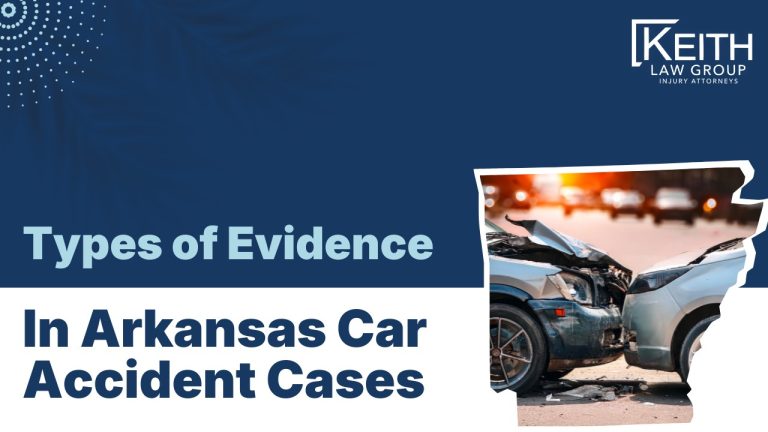
Types of Evidence in Arkansas Car Accident Cases

Different Types of Evidence in Arkansas Car Accident Cases

Evidence is the backbone of Arkansas car accident cases, and the strength of your proof often determines whether an insurance company takes your injuries seriously or tries to minimize what happened.

In many car accident cases, the first story the adjuster hears becomes the default narrative, and fixing an incomplete or inaccurate version later can be difficult.

The right evidence helps establish how the crash occurred, who caused it, and how the impact changed your life, medically, financially, and emotionally.

It can also protect you when the other driver disputes fault, when the police report is unclear, or when insurers argue your injuries were “pre-existing” or unrelated.

For an Arkansas car accident claim, timing matters: vehicles get repaired, video footage gets overwritten, and witnesses become harder to reach with each passing day.

Medical documentation matters just as much as crash evidence, because your records connect the collision to your diagnosis, treatment plan, and recovery limitations.

Photos, surveillance video, event data, and phone records can reveal details that aren’t obvious at the scene, especially in intersection or rear-end crashes where liability is contested.

Wage and employment records help show what you lost, not just what you felt, which becomes critical when you’re seeking compensation for time off work and reduced ability to earn.

An Arkansas car accident lawyer can pull these pieces together, identify gaps, and move quickly to preserve proof before it disappears.

A lawyer in Arkansas also knows how insurers evaluate claims and what documentation they rely on when deciding whether to pay fairly or fight.

If you were injured and aren’t sure what evidence you need, contact a car accident lawyer Arkansas to discuss your options and protect your claim before key proof is lost.

Contact Keith Law Group, or use the chatbot on this page today.

Table of Contents

Overview of Different Types of Arkansas Car Accident Evidence

In Arkansas car accident cases, evidence is what turns a crash into a provable claim, especially when fault is disputed or injuries are questioned.

Strong evidence helps establish how the collision happened, why the other party should be held responsible under personal injury law, and how the injuries changed your day-to-day life.

It also helps counter common defenses, like “you weren’t really hurt,” “your injuries were pre-existing,” or “the damage was minor.”

Medical proof is particularly important, so it’s critical to seek medical attention quickly and follow through with treatment.

It’s important to secure evidence early because video disappears, vehicles get repaired, and memories fade.

An experienced Arkansas car accident attorney can pull the right records, coordinate investigations, and present the evidence in a way that supports fair compensation.
Common types of evidence in Arkansas auto accidents include:

  • Police crash report and citations
  • Photos and video from the scene (vehicles, roadway, skid marks, weather, injuries)
  • Surveillance and dashcam footage
  • Witness statements and contact information
  • Vehicle damage documentation and repair estimates
  • Medical records and treatment notes (ER, urgent care, primary care, specialists, PT)
  • Medical cost documentation (medical bills, itemized statements, and medical expenses)
  • Employment and wage records (lost income and time missed from work)
  • Insurance policy information and claim communications
  • Cell phone records (when distracted driving is alleged and legally obtainable)
  • Vehicle data (event data recorder/“black box” information, when available)
  • Expert analysis (accident reconstruction, biomechanics, medical experts in complex cases)

Police Report and Scene Documentation

The crash report often anchors the early narrative in auto accidents, but it’s not the final word.

Photos, video, and roadway evidence can clarify what the report missed, like point of impact, signal timing issues, visibility problems, or inconsistent damage patterns.

Medical Records and Medical Billing Proof

For any personal injury claim, the most persuasive evidence is usually the treatment trail: diagnosis, imaging, clinical findings, and documented restrictions.

Medical records connect the crash to the injury, and medical bills help quantify the financial side of the harm in a way insurers recognize.

Witnesses, Video, and Vehicle Data

Independent witnesses and neutral video footage can resolve disputes quickly, especially in intersection collisions.

When available, vehicle data can confirm speed, braking, and other pre-crash behavior, useful when insurance companies argue you were at fault.
Steps To Take After a Car Accident in Arkansas

After a devastating accident, the priority is safety, medical care, and protecting your ability to pursue an injury claim.

If you can, check for injuries, move to a safer location, and call 911 so the crash is documented and help is on the way.

Even if you feel “okay,” seek medical attention and follow the treatment plan.

Early medical treatment creates a clear record of your physical injuries and reduces the chance an insurer argues you waited because you weren’t really hurt.

At the accident scene, collect what you can without escalating conflict, especially photos and witness statements, because memories fade and evidence disappears fast.

Avoid giving recorded statements to insurance companies until you understand what’s being asked and how it could affect your claim.

If you’re an injured party facing bills and time off work, a law firm can explain the process during a free initial consultation and how representation often works on a contingency fee basis (so the attorney’s fee is typically tied to recovery, not upfront payment).

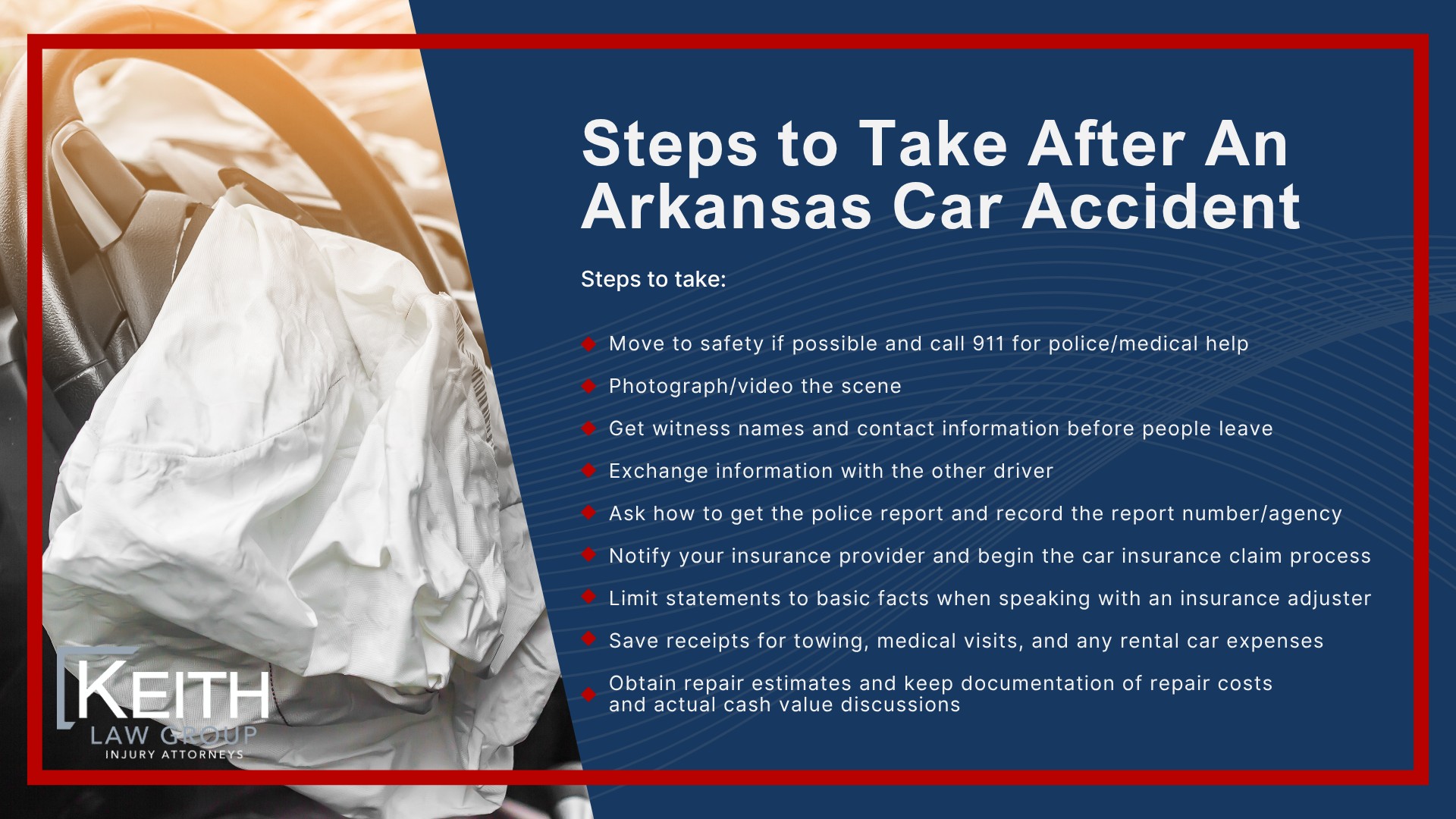
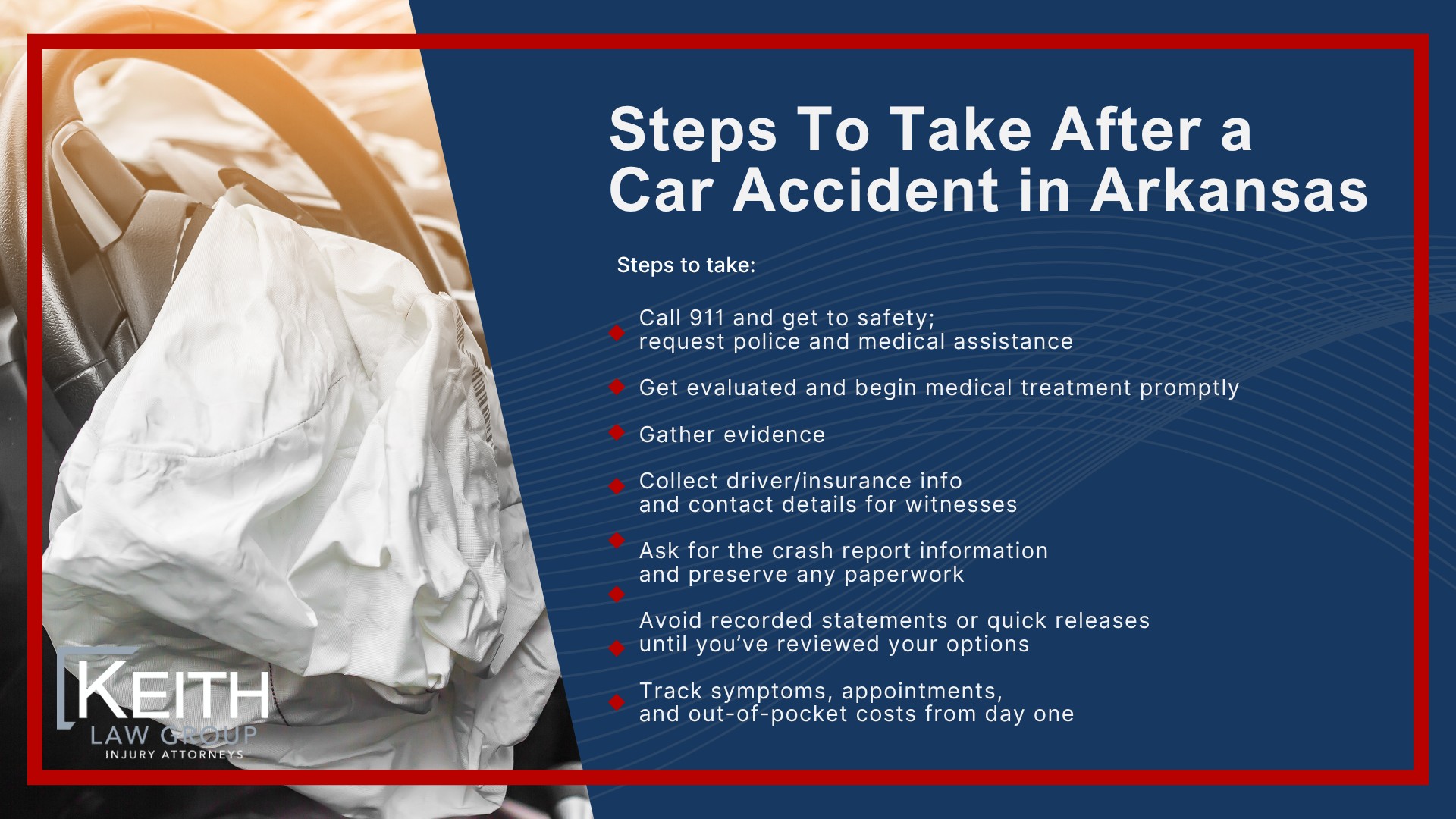
Steps to take:

  • Call 911 and get to safety; request police and medical assistance
  • Get evaluated and begin medical treatment promptly
  • Gather evidence (photos/video, vehicle damage, road conditions, injuries)
  • Collect driver/insurance info and contact details for witnesses
  • Ask for the crash report information and preserve any paperwork
  • Avoid recorded statements or quick releases until you’ve reviewed your options
  • Track symptoms, appointments, and out-of-pocket costs from day one

Damages in Car Accident Claims

“Damages” are the losses you claim after motor vehicle accidents, and they’re typically tied to what the crash cost you financially and what it took from your daily life.

In car accident cases, damages are proven with documentation: medical records, invoices, employment proof, and credible testimony about limitations.

Insurance carriers may dispute the amount, the connection to the crash, or whether the at fault driver is fully responsible, which is why thorough records matter.

An attorney’s job is to document losses and pursue compensation aimed at maximum compensation supported by the facts, without guessing or inflating numbers.

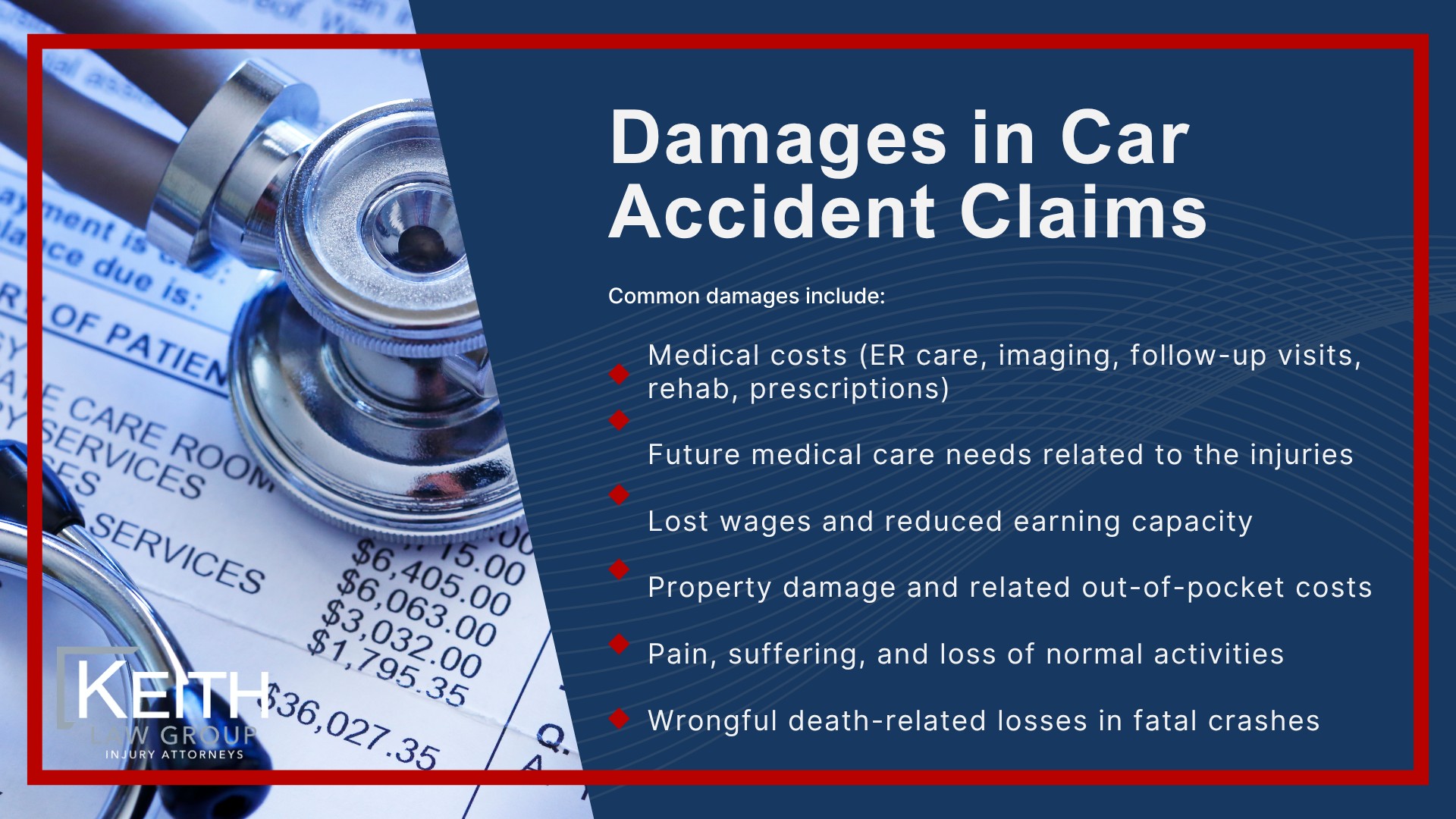
Common damages include:

  • Medical costs (ER care, imaging, follow-up visits, rehab, prescriptions)
  • Future medical care needs related to the injuries
  • Lost wages and reduced earning capacity
  • Property damage and related out-of-pocket costs
  • Pain, suffering, and loss of normal activities
  • Wrongful death-related losses in fatal crashes (wrongful death)

The Legal Process for Car Accident Lawsuits in Arkansas

Most claims start with investigation and documentation: your lawyer gathers records, preserves proof, and builds a liability narrative around what happened and why the other party should be responsible.

That includes obtaining medical records, reviewing bills, interviewing witnesses, and locking down evidence early, especially when fault is disputed or the insurer argues injuries weren’t caused by the crash.

Once the claim is supported, the attorney typically sends a demand package and negotiates with the insurer; if a fair resolution isn’t offered, the next step may be filing a lawsuit to formally pursue the claim in court.

Litigation usually involves pleadings, written discovery, depositions, and expert review, followed by mediation/settlement conferences and, if the case still doesn’t resolve, trial.

Throughout, quality representation should provide personal service and personal service that keeps you informed, because “clients equal access” is not just a slogan.

Your recovery and your case move faster when communication is consistent.

If you want help understanding your next step, request a free consultation so an attorney can explain what applies to your facts and whether any related issues (like medical malpractice tied to post-crash care) could change deadlines or strategy.

How Long Do I Have to File a Car Accident Claim in Arkansas?

In Arkansas, the deadline to file a lawsuit for most car-accident injuries is generally three years from when the claim accrues under Arkansas’s three-year limitations statute.

The same three-year period is commonly applied to vehicle property damage claims as well.

For fatal collisions, wrongful death claims are generally subject to a three-year deadline running from the date of death.

If your case involves medical malpractice (for example, a separate claim about negligent medical care after the crash), Arkansas sets a shorter deadline, typically two years for medical injury actions.

Because deadlines can turn on the specific facts, a free initial consultation can help confirm which limitation period applies and what steps you should take to protect your right to seek compensation.

Do You Qualify for an Arkansas Car Accident Lawsuit?

You may qualify for legal action if you were injured in a crash and your plaintiff’s injuries are supported by timely medical attention and documentation that connects the collision to your treatment.

In many cases, the trigger is a disputed liability story, when the insurer claims you caused the wreck, or a serious injury where the financial toll is clearly outpacing what insurance wants to pay.

Qualification often depends on specific circumstances, including whether there are identifiable responsible parties, whether fault can be supported by police reports and witness evidence, and whether your injuries required ongoing care.

A case may also involve multiple layers of liability, such as negligent drivers, employers, vehicle owners, or even government entities if a roadway condition or public vehicle played a role.

The practical question is whether the evidence and losses justify formal legal action, including costs of treatment, time off work, and other related costs that follow a crash.

Your claim may include both economic losses and non economic damages like physical pain and pain and suffering, which are evaluated based on the medical record and how the injury affected your daily life.

In rare situations, typically involving extreme misconduct, punitive damages may be discussed, but that depends on the facts and is not available in every case.

The fastest way to understand your legal options is an initial consultation where a lawyer reviews the core documents and explains whether a lawsuit is the right tool for your legal matter and what it would take to recover damages and recover compensation.

Meet Our Arkansas Car Accident Lawyers

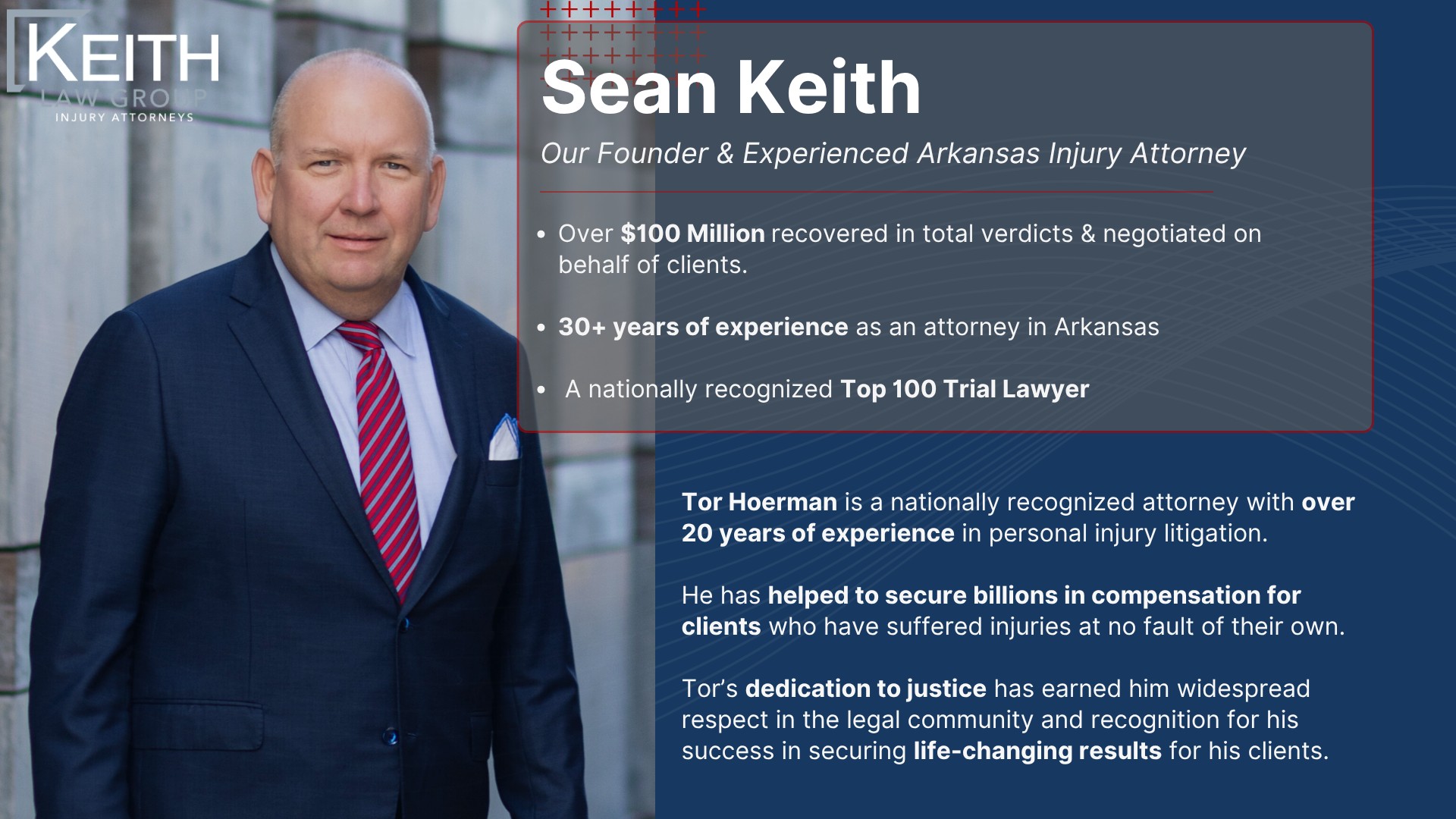
Keith Law Group is a personal injury law firm led by attorneys Sean T. Keith and Brynna Barnica, bringing nearly 50 years of combined experience handling personal injury claims across Arkansas.

Sean T. Keith is the founding attorney and lead counsel, with more than 30 years dedicated to representing injured people in car wrecks, tractor-trailer crashes, and product liability matters.

His work includes multimillion-dollar verdicts, and he has earned the AV Preeminent rating from Martindale-Hubbell and recognition as a Top 100 Trial Lawyer by The National Trial Lawyers.

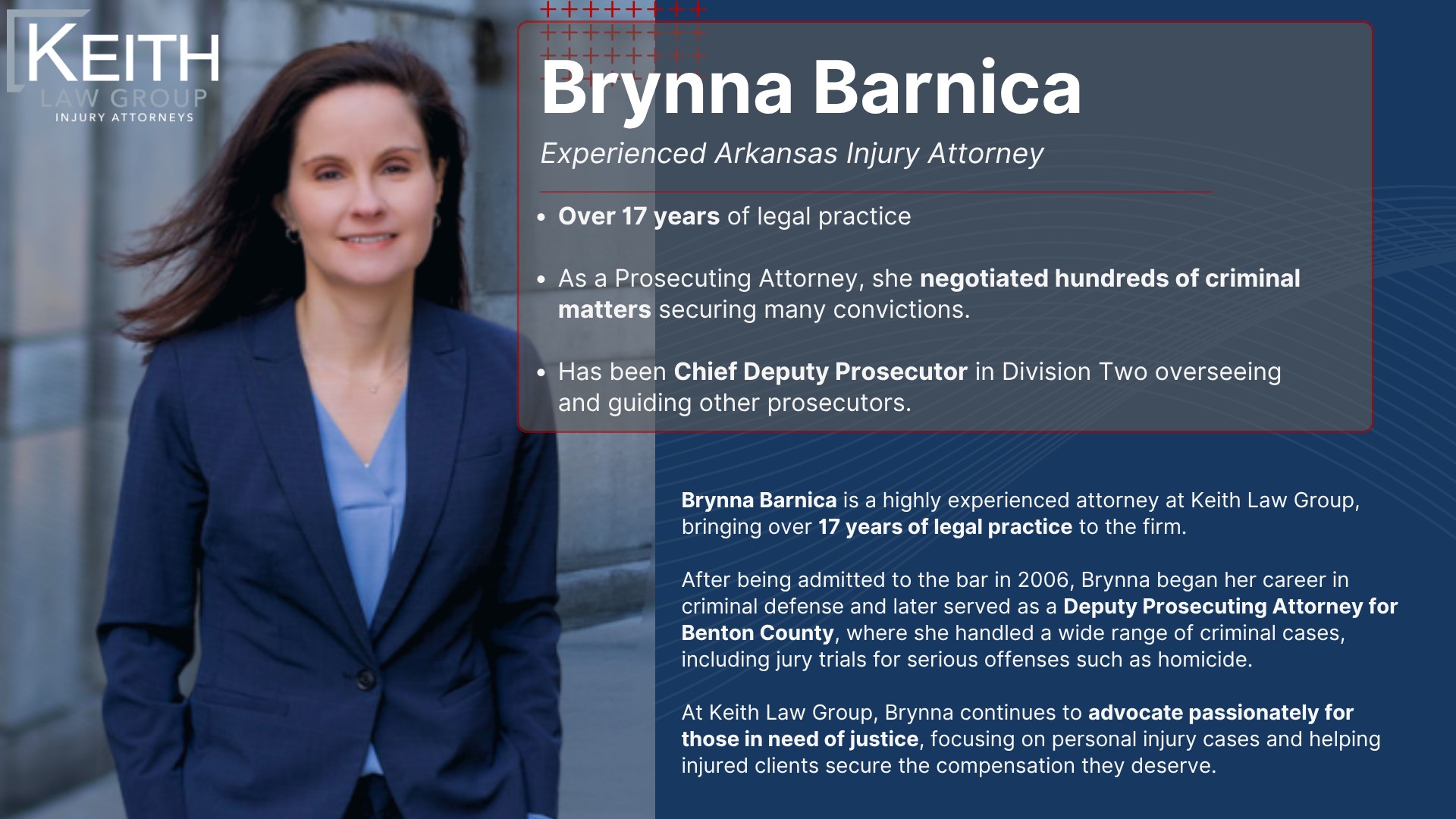
Brynna Barnica brings 17 years of experience to the team, including prior work as a defense lawyer and Deputy Prosecuting Attorney: perspective she now uses to advocate for crash victims in Arkansas personal injury matters.

As an experienced personal injury attorney, she applies a practical approach to investigation, negotiation, and trial preparation to strengthen each personal injury case.

Together, they lead a team of Arkansas personal injury lawyers committed to evidence-driven advocacy and clear communication from the first call through resolution.

If you need a personal injury lawyer who will take your situation seriously and build your claim around proof, Keith Law Group is ready to help.

How Much Does It Cost to Hire an Arkansas Car Accident Lawyer?

Keith Law Group represents clients on a contingency fee basis, which means you do not pay upfront attorney’s fees to start your personal injury lawsuit.

The firm is paid only if it recovers compensation through a settlement or verdict, making it easier to pursue a claim without adding financial strain during recovery.

This approach allows an injured person to work with an experienced personal injury lawyer even while facing medical bills, missed work, and other crash-related costs.

A personal injury attorney will typically focus on documenting the full impact of the wreck (medical treatment, lost wages, pain and suffering, and property damage) so the claim is supported under personal injury law.

If you’re dealing with insurance adjusters or unsure what evidence you need, our team can explain your options and the steps involved in building a strong claim.

Contact Keith Law Group today to speak with an experienced personal injury attorney and get a free consultation on your personal injury case.

Keith Law Group: Arkansas Car Accident Lawyers

Keith Law Group represents crash victims across Arkansas, including Little Rock and Fort Smith, with a dedicated team focused on building cases around proof and real-world impact.

Our skilled attorneys bring combined legal experience, trial experience, and a proven track record handling injury claims where insurers dispute fault, minimize treatment, or undervalue the harm.

We start by collecting the foundation documents (medical records, bills, police reports, and evidence of how the injury affected work and life) then we map those facts to the law and the available insurance coverage.

From there, we explain your options clearly, including when a settlement demand makes sense and when filing suit may be necessary to pursue the compensation you deserve.

If you’re dealing with mounting bills, lost time, and ongoing physical pain, we’ll walk you through what your claim could include, including economic losses and non economic damages like pain and suffering, based on your documentation.

For complex crashes involving multiple responsible parties or government entities, we focus on early investigation and deadlines so your rights are protected from the start.

If you want a straightforward next step, schedule an initial consultation for a free case evaluation and learn what it may take to recover compensation in your specific circumstances.

Contact Keith Law Group, or use the chatbot on this page to see if you qualify today.

Frequently Asked Questions

All Posts for the Car Accident Lawsuit Legal Guide

Choose Us For Your Personal Injury Case

Testimonials

We Will Fight For You!

Let Us Get The Compensation You Deserve