Car Accident Statute of Limitations Arkansas

Legally Reviewed

This article has been written and reviewed for legal accuracy and clarity by the team of writers and attorneys at Keith Law Group and is as accurate as possible. This content should not be taken as legal advice from an attorney. If you would like to learn more about our owner and experienced injury lawyer, Sean T. Keith, you can do so here.

Keith Law Group does everything possible to make sure the information in this article is up to date and accurate. If you need specific legal advice about your case, contact us. This article should not be taken as advice from an attorney.

Were You Injured in an Arkansas Car Accident?

If you were hurt in an Arkansas car accident, one of the most important questions is how long you have to take legal action and what happens if you miss the deadline.

Injuries can disrupt your life quickly, but insurance paperwork and medical treatment often move slowly, which can make it easy to lose track of critical time limits.

Insurance companies may push for a fast resolution, even when you’re still figuring out the full extent of your injuries and costs.

On this page, we explain Arkansas’s Car Accident Statute of Limitations, how it applies to injury and wrongful death claims, and why acting early helps preserve evidence and protect your rights.

If you’re unsure which deadline applies to your situation, Keith Law Group can review the basics with you through a free case evaluation using our website chat or a call with our team.

Car Accident Statute of Limitations in Arkansas

Our Arkansas Car Accident Lawyers Are Prepared to Assist You

Deadlines matter in injury cases, and the statute of limitations Arkansas sets the outside window for filing a lawsuit after a crash.

If you miss that deadline, you can lose the right to pursue compensation in court, no matter how serious the injuries are or how clear the other driver’s fault may be.

In most situations, the statute of limitations in Arkansas for car accident injuries is tied to the state’s general time limit for personal injury claims, but the exact deadline can depend on the facts and the type of claim being filed.

That’s why people searching what is the statute of limitations in Arkansas should focus on the details that change the analysis: when the injury claim “accrued,” whether the case involves a minor, whether a government entity is involved, or whether the claim is for wrongful death.

The Arkansas statute of limitations is also separate from insurance deadlines, which can require notice or documentation much sooner than the court filing deadline.

Even when you think you have time, waiting can weaken a case because video footage gets erased, vehicles are repaired, and witnesses become harder to locate.

An attorney can also help you avoid common traps, like signing releases too early or letting an insurer’s timeline dictate your decisions.

The statute of limitations personal injury Arkansas is a legal cutoff date, but it’s not a strategy.

Strong cases are built early.

If you’re trying to confirm the Arkansas statute of limitations personal injury deadline for your situation or you’re unsure how the Arkansas statute of limitations car accident rules apply, getting a clear answer now can protect your rights later.

Our team reviews the timeline, explains the next steps, and helps you act before the window closes.

Contact Keith Law Group today to speak with an attorney and get a free case evaluation so you don’t risk losing your claim to a deadline.

You can also use the chatbot on this page to see if you qualify today.

Table of Contents

Arkansas Car Accident Statute of Limitations

In most injury cases arising from someone else’s negligence, the Arkansas statute that commonly controls the deadline is Arkansas Code § 16-56-105, which sets a three-year limitations period for many civil actions, including the types of personal injury claims that frequently arise from traffic collisions.

In plain terms, that means many car-accident injury lawsuits must be filed within three years of when the claim “accrues” (typically the date of injury).

People sometimes refer to this as the Arkansas personal injury statute or the “three-year” rule for injury cases.

The key point is procedural: the statute of limitations is the deadline to file in court, and missing it can bar the claim even if liability seems clear.

How Long Do I Have to File?

For many crash-related injury claims, the deadline is generally three years under Arkansas Code § 16-56-105.

If the crash resulted in a death, Arkansas’s wrongful death statute generally requires filing within three years of the date of death (with limited exceptions tied to certain homicide convictions).

If your situation involves medical treatment issues after a crash and you’re evaluating medical malpractice as a separate claim, Arkansas’s medical-injury statute generally imposes a two-year deadline, and it specifies accrual as the date of the wrongful act “and no other time,” with a narrow exception for undiscovered foreign objects.

What To Do After A Car Accident in Arkansas

After a motor vehicle crash, your first priority is safety, but the next priority is protecting your legal right to pursue an insurance claim or legal action if another party caused the collision.

Call 911, request medical assistance, and make sure a report is created.

Early documentation helps establish when the injury occurred and what happened at the scene.

Get evaluated promptly, even if symptoms feel minor, because insurers often dispute claims when there are gaps in treatment or delayed reporting.

Collect basic evidence before vehicles are moved or repaired, and avoid arguing with the other driver, especially if emotions are high.

If the crash involved unusual circumstances (such as alleged intentional misconduct or events that lead to criminal charges) the civil claim may still exist, but the civil case will rely on its own proof and deadlines.

Most importantly, keep legal deadlines in mind: the Arkansas statute of limitations sets time limits for filing suit, and missing those limits can affect your ability to pursue compensation even if liability seems clear.

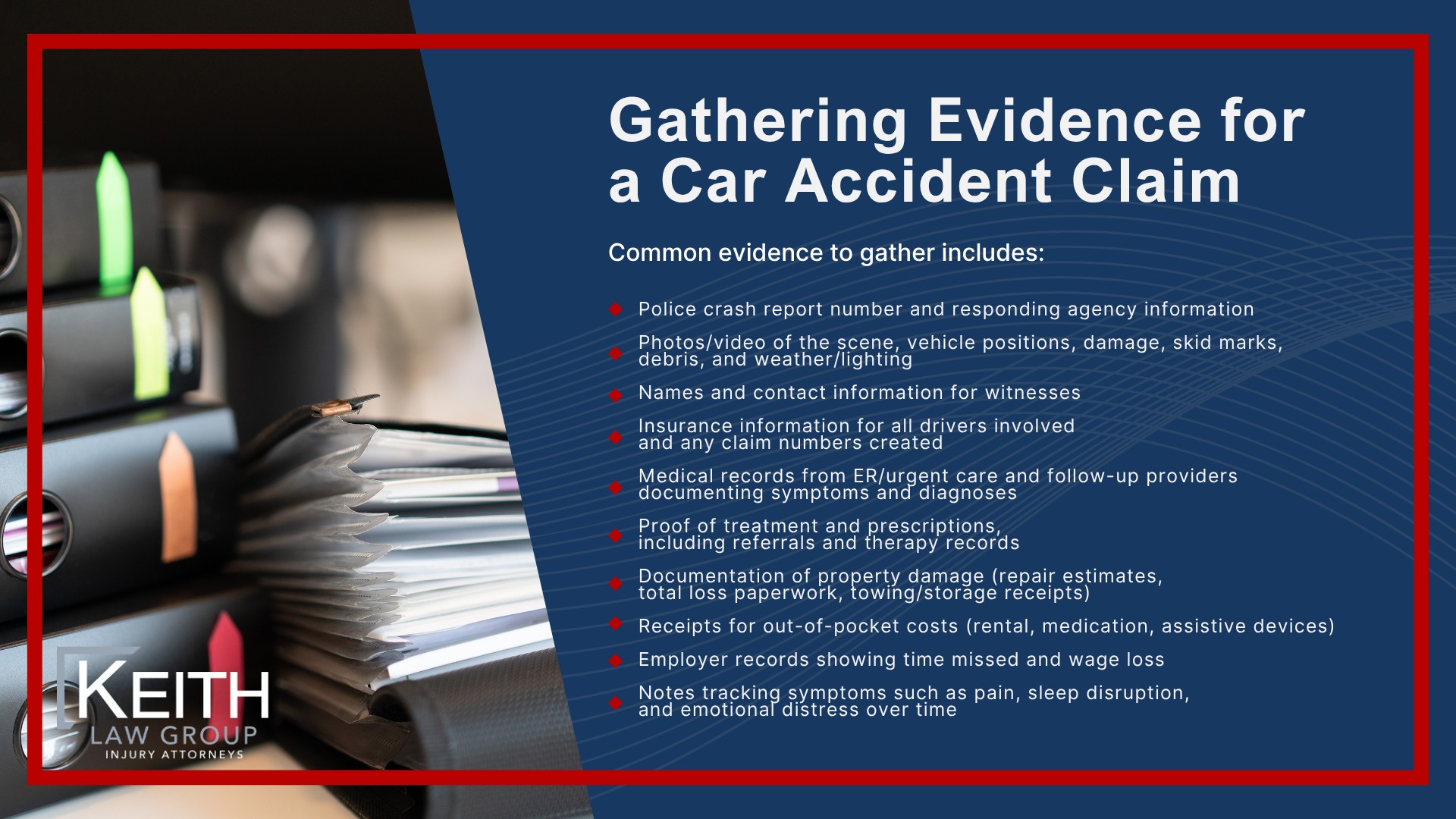
Gathering Evidence for a Car Accident Claim

Evidence is what supports an Arkansas claim under the state’s civil statute framework and helps show what happened, who is responsible, and what losses followed.

Strong documentation can also reduce disputes and improve judicial efficiency if a case is filed, because the facts are clearer and easier to prove.

Evidence matters in every Arkansas personal injury case, whether it’s a car wreck, a premises claim, or even other civil cases like product liability lawsuits, because you typically have to prove liability, causation, and damages with records and credible proof.

The earlier you collect and preserve evidence, the less likely you are to lose key details to repairs, overwritten footage, or fading memories.

If the injured party is overwhelmed, getting legal help early can make the process more manageable and keep the timeline on track.

Common evidence to gather includes:

  • Police crash report number and responding agency information
  • Photos/video of the scene, vehicle positions, damage, skid marks, debris, and weather/lighting
  • Names and contact information for witnesses
  • Insurance information for all drivers involved and any claim numbers created
  • Medical records from ER/urgent care and follow-up providers documenting symptoms and diagnoses
  • Proof of treatment and prescriptions, including referrals and therapy records
  • Documentation of property damage (repair estimates, total loss paperwork, towing/storage receipts)
  • Receipts for out-of-pocket costs (rental, medication, assistive devices)
  • Employer records showing time missed and wage loss
  • Notes tracking symptoms such as pain, sleep disruption, and emotional distress over time

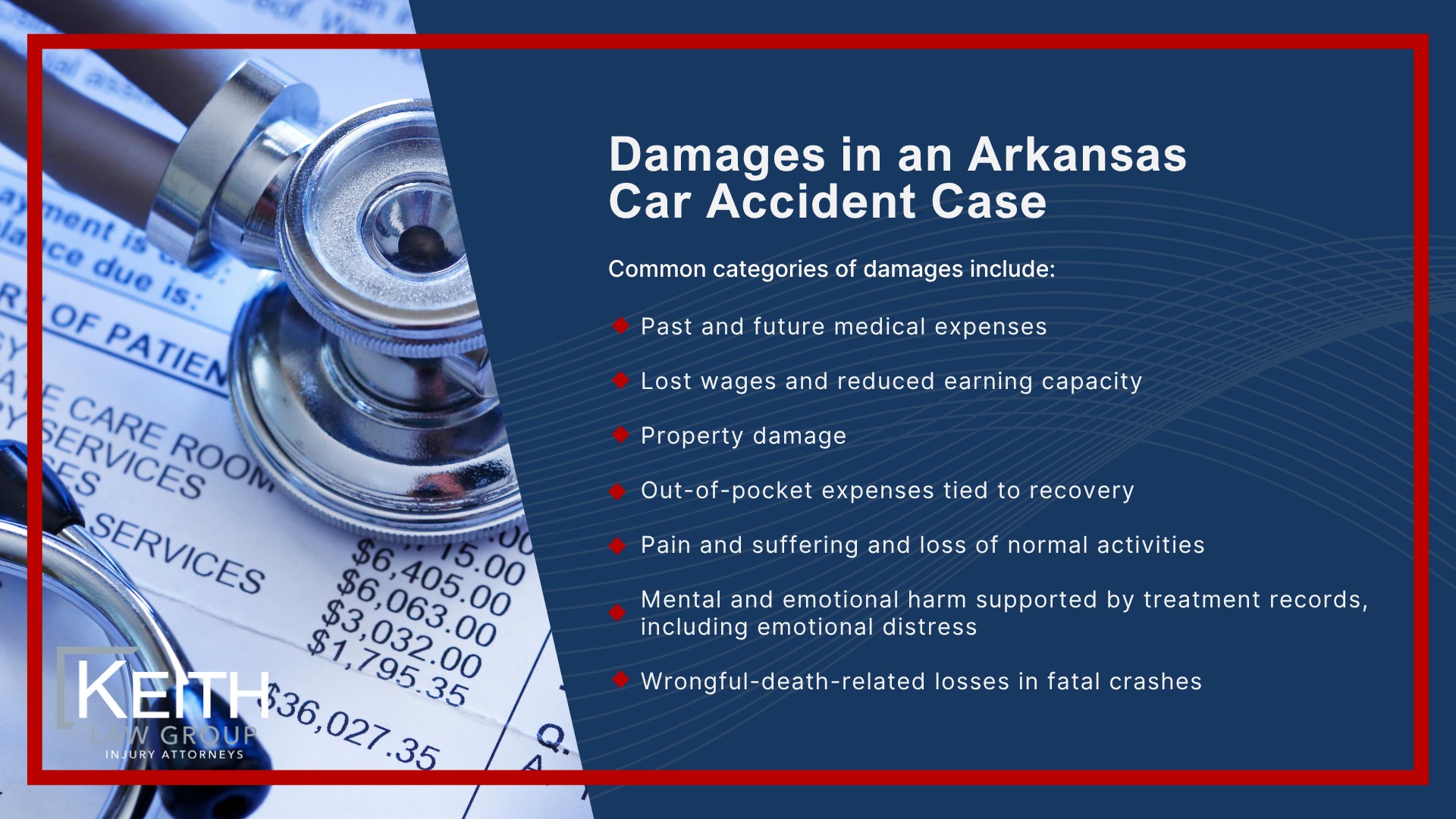
Damages in an Arkansas Car Accident Case

Damages are the losses an injured person seeks after a crash, and they typically include both financial harm and the personal impact of the injury.

In an Arkansas car accident case, damages are proven through documentation: medical records, billing, wage proof, and credible evidence showing how the injury changed daily life.

While the statute that sets deadlines is separate from the damages analysis, the limitations applies to your right to file suit: for many injury claims, the general rule is three years from when the injury occurred, so waiting can risk your claim even while costs keep rising.

If you’re unsure which deadline applies or what damages your documentation supports, legal help can clarify next steps before the window closes.

Common categories of damages include:

  • Past and future medical expenses (ER care, imaging, follow-ups, rehab)
  • Lost wages and reduced earning capacity
  • Property damage (repairs, total loss, towing, rental costs)
  • Out-of-pocket expenses tied to recovery (medications, transportation, equipment)
  • Pain and suffering and loss of normal activities
  • Mental and emotional harm supported by treatment records, including emotional distress
  • Wrongful-death-related losses in fatal crashes (when applicable)
The Legal Process for Arkansas Car Accident Cases

Most Arkansas car accident claims follow a predictable legal path, even though the circumstances of each accident are different.

The process usually starts with investigation and preservation of evidence, because the strength of a case depends on what can be proven, not just what was said at the scene.

Next comes the insurance phase, where an attorney gathers medical records, wage documentation, and liability proof, then submits a written demand to pursue compensation.

If the insurer refuses to pay a fair amount, the next step is filing a lawsuit in the proper court and jurisdiction, naming the at-fault defendant and explaining the factual and legal basis for the case in a written complaint.

After filing, the parties exchange information through discovery, which can include interrogatories, document requests, and depositions, followed by settlement talks or mediation.

Many cases resolve before trial, but being prepared to go to court matters when the defendant or insurer won’t move.

Throughout, deadlines matter: the limitations period can begin running on the date of the crash (or the date the injury legally accrues), and missing that window can bar the claim in most cases.

Some exceptions can apply, such as when the injured person is a minor, or in rare situations involving fraud, but you should not assume an exception applies without legal review.

If you’re in Little Rock or elsewhere in Arkansas, early contact with counsel helps protect evidence and keeps the case on track from the start.

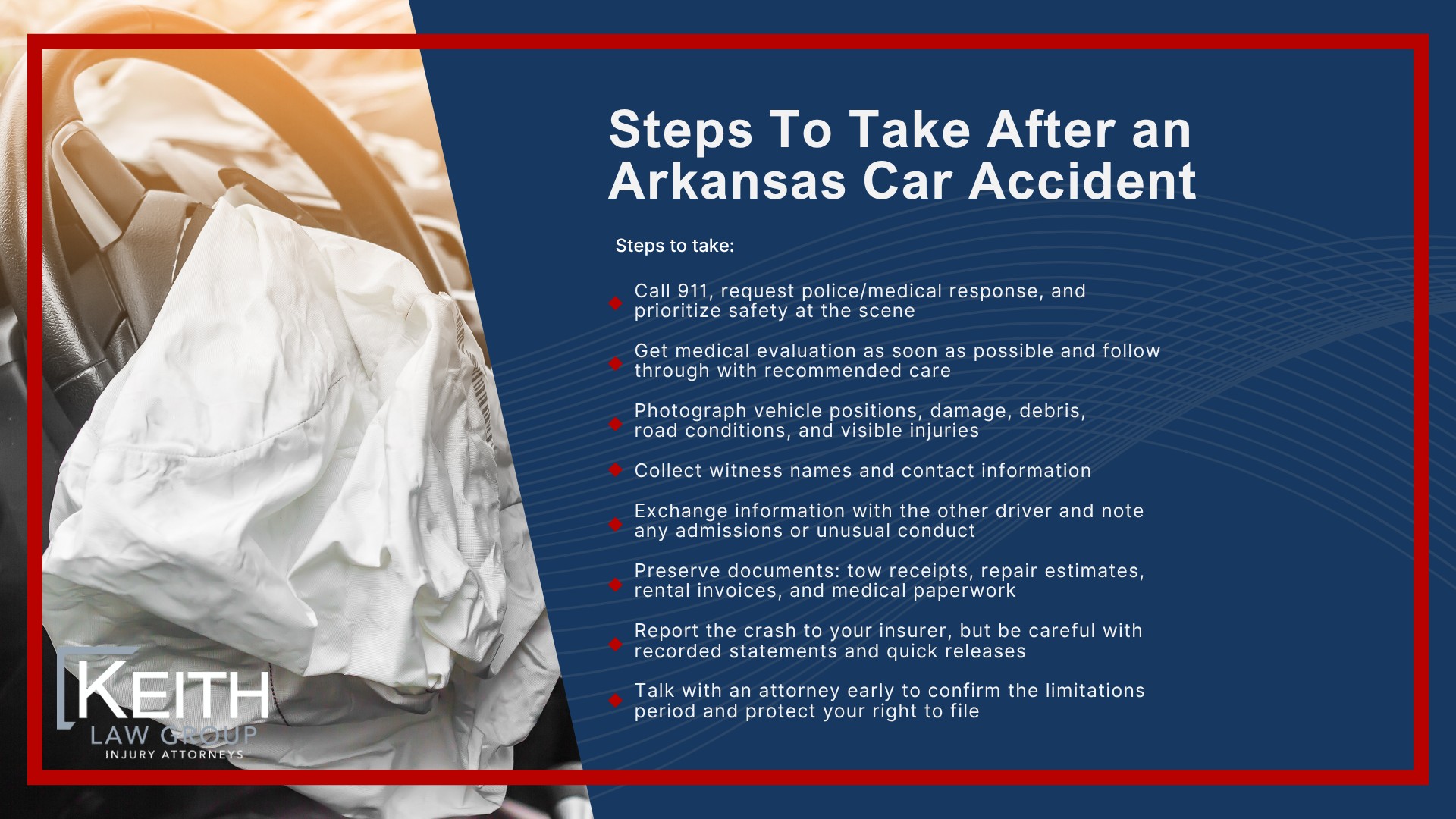
Steps To Take After an Arkansas Car Accident

In the hours and days after a crash, your focus should be safety, medical care, and protecting the evidence needed for a claim.

Take steps that create a clear record of what happened, what treatment you needed, and how the wreck affected your life.

Avoid doing anything that gives the insurer an excuse to argue the injuries weren’t serious or weren’t tied to the crash.

If you’re unsure what to do next, an attorney can explain the process and the deadlines that apply to your circumstances.

Steps to take:

  • Call 911, request police/medical response, and prioritize safety at the scene
  • Get medical evaluation as soon as possible and follow through with recommended care
  • Photograph vehicle positions, damage, debris, road conditions, and visible injuries
  • Collect witness names and contact information
  • Exchange information with the other driver and note any admissions or unusual conduct
  • Preserve documents: tow receipts, repair estimates, rental invoices, and medical paperwork
  • Report the crash to your insurer, but be careful with recorded statements and quick releases
  • Talk with an attorney early to confirm the limitations period and protect your right to file

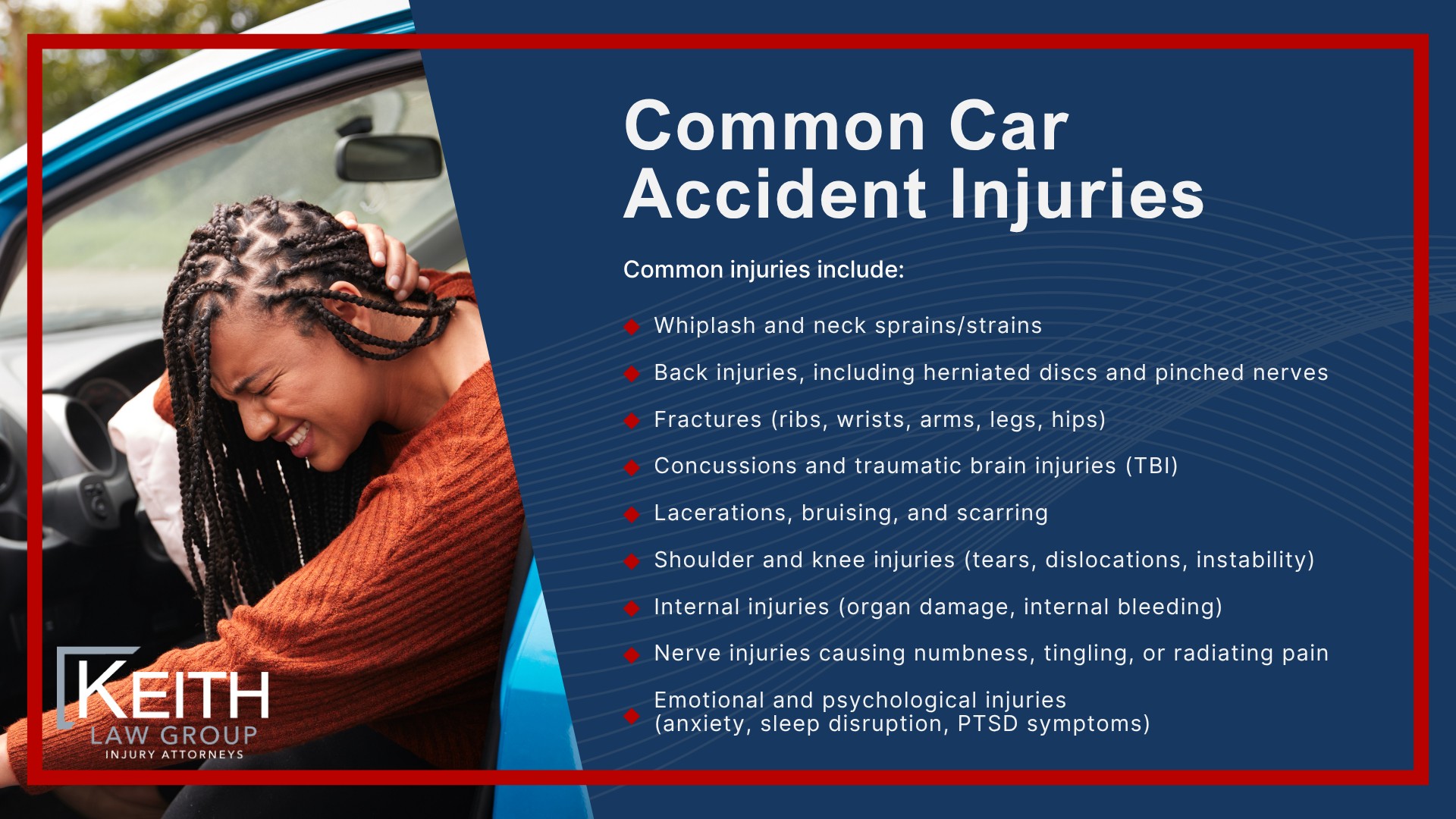
Common Car Accident Injuries

A car crash can cause injuries that are immediate and obvious, or delayed and harder to recognize in the first day or two.

The medical record matters because it connects the accident to diagnosis, treatment, and restrictions.

Injuries can also vary based on speed, impact angle, seatbelt use, and other details of the collision.

If symptoms worsen after the crash, document them and seek medical attention promptly so the timeline stays clear.

Common injuries include:

  • Whiplash and neck sprains/strains
  • Back injuries, including herniated discs and pinched nerves
  • Fractures (ribs, wrists, arms, legs, hips)
  • Concussions and traumatic brain injuries (TBI)
  • Lacerations, bruising, and scarring
  • Shoulder and knee injuries (tears, dislocations, instability)
  • Internal injuries (organ damage, internal bleeding)
  • Nerve injuries causing numbness, tingling, or radiating pain
  • Emotional and psychological injuries (anxiety, sleep disruption, PTSD symptoms)

Meet Our Team of Arkansas Car Accident Attorneys

Keith Law Group is driven by a dedicated team with decades of combined experience representing accident victims across Arkansas.

The firm is led by Sean Keith, a nationally recognized trial attorney and lifelong Arkansas resident with more than 30 years in practice.

Sean has handled a wide range of serious injury matters, including interstate and highway wrecks, commercial truck crashes, and wrongful death claims, pursuing accountability and meaningful results statewide.

His record includes multiple multimillion-dollar verdicts, and he has been named a Top 100 Trial Lawyer for his work in high-stakes litigation.

Sean also remains actively involved in the Arkansas legal community, serving on the Arkansas Supreme Court Model Civil Jury Instructions Committee and previously serving as a Special Justice on the Arkansas Supreme Court after being appointed by Governor Asa Hutchinson in 2015.

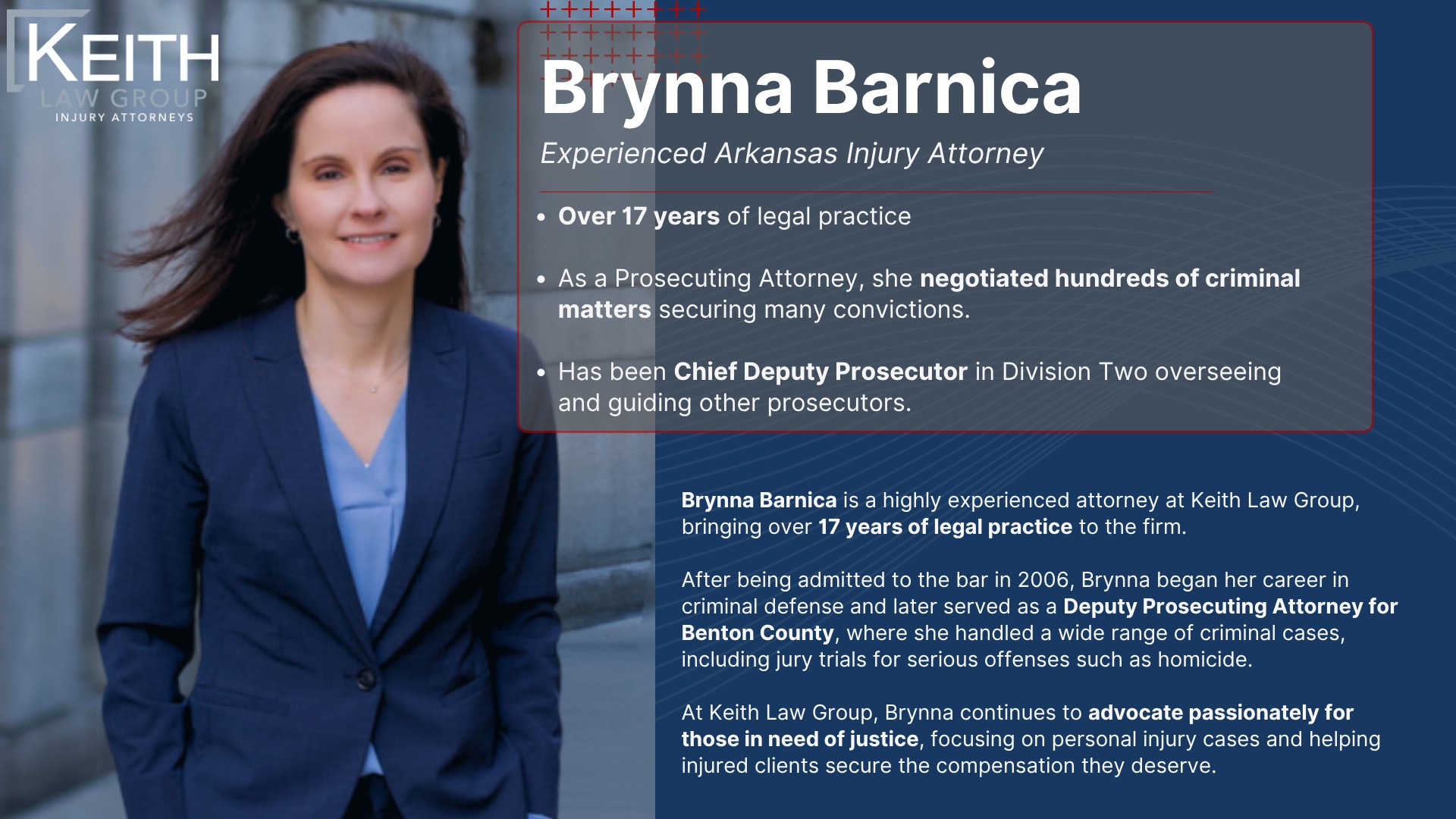
Brynna Barnica is also a key part of Keith Law Group, bringing more than 17 years of courtroom experience to the team.

She began her career in criminal defense and later served as a Deputy Prosecuting Attorney in Benton County, where she developed a reputation for strong trial skills and disciplined preparation.

Today, she focuses on personal injury and interstate accident matters, helping injured clients pursue fair compensation for medical bills, lost wages, and pain and suffering.

Both Sean and Brynna are graduates of the University of Arkansas School of Law and bring a deep understanding of how Arkansas courts evaluate serious injury disputes.

That local courtroom knowledge matters in major crash cases, where injuries can be severe, evidence can disappear quickly, and insurance companies often work aggressively to reduce payouts.

How Much Does It Cost To Hire A Car Accident Attorney From Keith Law Group?

You can hire a car accident attorney from Keith Law Group without paying upfront attorney’s fees.

Our experienced personal injury lawyers work on a contingency fee basis, meaning we are paid only if we obtain compensation for you through a settlement or verdict.

This arrangement allows accident victims to move forward with a claim without adding financial stress after a serious crash.

We advance many of the case costs necessary to build the claim, including investigation expenses, medical record collection, and accident reconstruction support when it’s needed.

Our attorneys evaluate the full scope of damages—medical bills, lost wages, property damage, and pain and suffering—so the claim reflects real losses rather than an insurer’s first offer.

The goal is straightforward: provide high-quality representation without financial risk or confusion about how fees work.

Contact a personal injury attorney or auto accident lawyer in Little Rock for a free consultation to discuss your options and what it may take to pursue what you’re owed.

How Can Our Arkansas Car Accident Attorney's Help You?

After a car accident, deadlines and documentation start running immediately, even while the injured person is focused on treatment and getting back to normal life.

A personal injury lawyer helps by identifying the correct filing deadline under Arkansas law, preserving evidence, and building personal injury claims around medical records, wage loss proof, and liability facts.

In many cases, a personal injury attorney ensures the timeline is protected by tracking the statute of limitations and handling insurance communications so you don’t get pushed into early releases or damaging recorded statements.

If the case can’t be resolved fairly, your lawyer can file a civil lawsuit and move the claim through the court process while you focus on recovery.

This matters in any personal injury case, but it’s especially important when injuries are serious, fault is disputed, or there’s a potential wrongful death claim.

If you’re unsure what applies to your situation, legal professionals can often review the basics quickly during a free consultation and explain your next steps.

Keith Law Group: Lawyers for Arkansas Car Accidents

Keith Law Group represents Arkansas crash victims with a practical, evidence-driven approach focused on results.

We investigate the wreck, organize medical and wage documentation, and present the case in a way insurers and defendants are forced to take seriously.

If settlement negotiations don’t produce fair compensation, we are prepared to file a lawsuit in the proper jurisdiction and litigate the case through discovery and trial when necessary.

We also help clients understand how the limitations period works, when it may begin running, what exceptions might apply, and why waiting is risky even if the deadline seems far away.

While many car accident claims fall under a three-year period in most cases, some legal topics have different time limits (for example, certain medical-injury issues are often discussed in the context of two years), which is why getting advice tailored to your date of injury is important.

If you were injured and want clear guidance on the next steps, contact Keith Law Group to discuss your options and what it may take to pursue compensation based on your circumstances.

You can also use the chatbot on this page.

Frequently Asked Questions

All Posts for the Car Accident Lawsuit Legal Guide

Choose Us For Your Personal Injury Case

Testimonials

We Will Fight For You!

Let Us Get The Compensation You Deserve