Home » Guides » Arkansas Car Accident Lawsuit Guide: Tips for Success » Car Accident Damages in Arkansas: Potential Compensation
Attorney Sean T. Keith has been a personal injury lawyer for 30+ years, a nationally recognized Top 100 Trial Lawyer, and top car accident lawyer & motor vehicle accident lawyer in Arkansas.
This article has been written and reviewed for legal accuracy and clarity by the team of writers and attorneys at Keith Law Group and is as accurate as possible. This content should not be taken as legal advice from an attorney. If you would like to learn more about our owner and experienced injury lawyer, Sean T. Keith, you can do so here.
Keith Law Group does everything possible to make sure the information in this article is up to date and accurate. If you need specific legal advice about your case, contact us. This article should not be taken as advice from an attorney.
If you were injured in a car accident in Arkansas and the crash wasn’t your fault, the next question is often what compensation may be available and what it takes to prove it.
Car accidents can leave you dealing with painful injuries, missed work, and medical bills that keep growing long after the wreck.
Insurance companies may focus on closing the claim quickly, not documenting the full impact on your life.
On this page, we will discuss common car accident damages in Arkansas, including medical costs, lost income, and pain-related losses, and explain how those damages are supported with evidence.
If you’re unsure what your claim could include, Keith Law Group can review your situation and help you understand your options through a free case evaluation using our website chat or a call with our team.
Our Arkansas car accident lawyers focus on building claims around proof, because car accident damages are only recoverable when they’re documented and tied to the crash.
After a collision, insurance companies often move quickly to limit what they pay, especially when injuries take time to fully show up.
The right approach starts with medical care, consistent follow-up, and a clear record of how the wreck affected your work, daily life, and long-term health.
In many cases, the biggest accident damages aren’t just the ER visit.
They’re the ongoing treatment, lost income, and limitations that follow.
Auto accident damages can include both financial losses and the human impact of pain, sleep disruption, and reduced ability to function.
A strong case also anticipates the arguments insurers use to reduce claims for car accident, such as questioning causation or calling treatment “unnecessary.”
Our team gathers medical records, bills, wage documentation, and supporting evidence to present a complete demand for car accident compensation.
We also explain what damages may apply in your situation and what insurers typically require before offering compensation from car accident settlements.
If your injuries are serious, the goal is to pursue car crash injuries compensation that reflects your real losses, not a quick payout that ignores future needs.
Contact Keith Law Group today to discuss compensation for car accidents and get a clear, evidence-based assessment of your options for compensation for car accident claims.
You can also use the chatbot on this page.
Car accident damages are the losses you can seek after an auto accident, and they typically include both financial harm and the personal impact of an injury.
In most cases, damages fall into economic losses (the bills and measurable costs) and non-economic losses (the human impact, like pain and limitations).
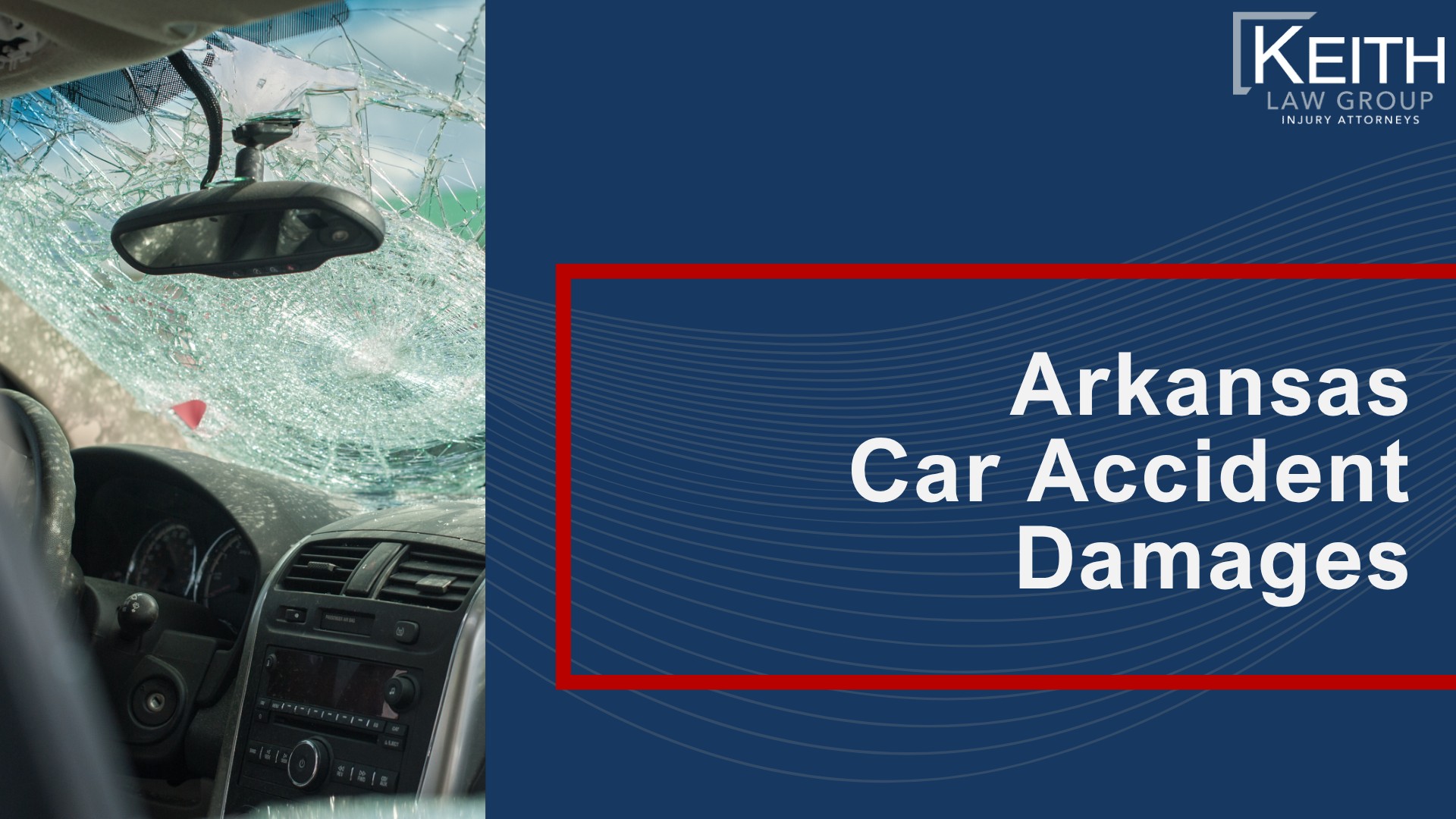
Insurance adjusters often dispute either the amount or the connection between the crash and your treatment, which is why documentation matters from day one.
Damages can also include property damage, repairs, total loss value, towing, and rental expenses, alongside injury-related costs.
In rare cases involving extreme misconduct, punitive damages may be at issue, but they depend on the facts and are not available in every claim.
Potential compensation in a personal injury claim is tied to what you can prove with records, timelines, and credible supporting evidence.
Your medical documentation should connect the car accident to diagnosis, treatment, and restrictions, while your employment proof shows the real impact on income.
Non-economic damages are often a major part of a serious case, especially when pain persists, sleep is disrupted, or the injury changes how you function day to day.
Some clients also experience anxiety, flashbacks, or post traumatic stress disorder, which can be addressed through treatment records and appropriate documentation.
When the crash results in a fatality, the claim may proceed as a wrongful death lawsuit, which has different categories of recoverable losses and requires careful case handling.
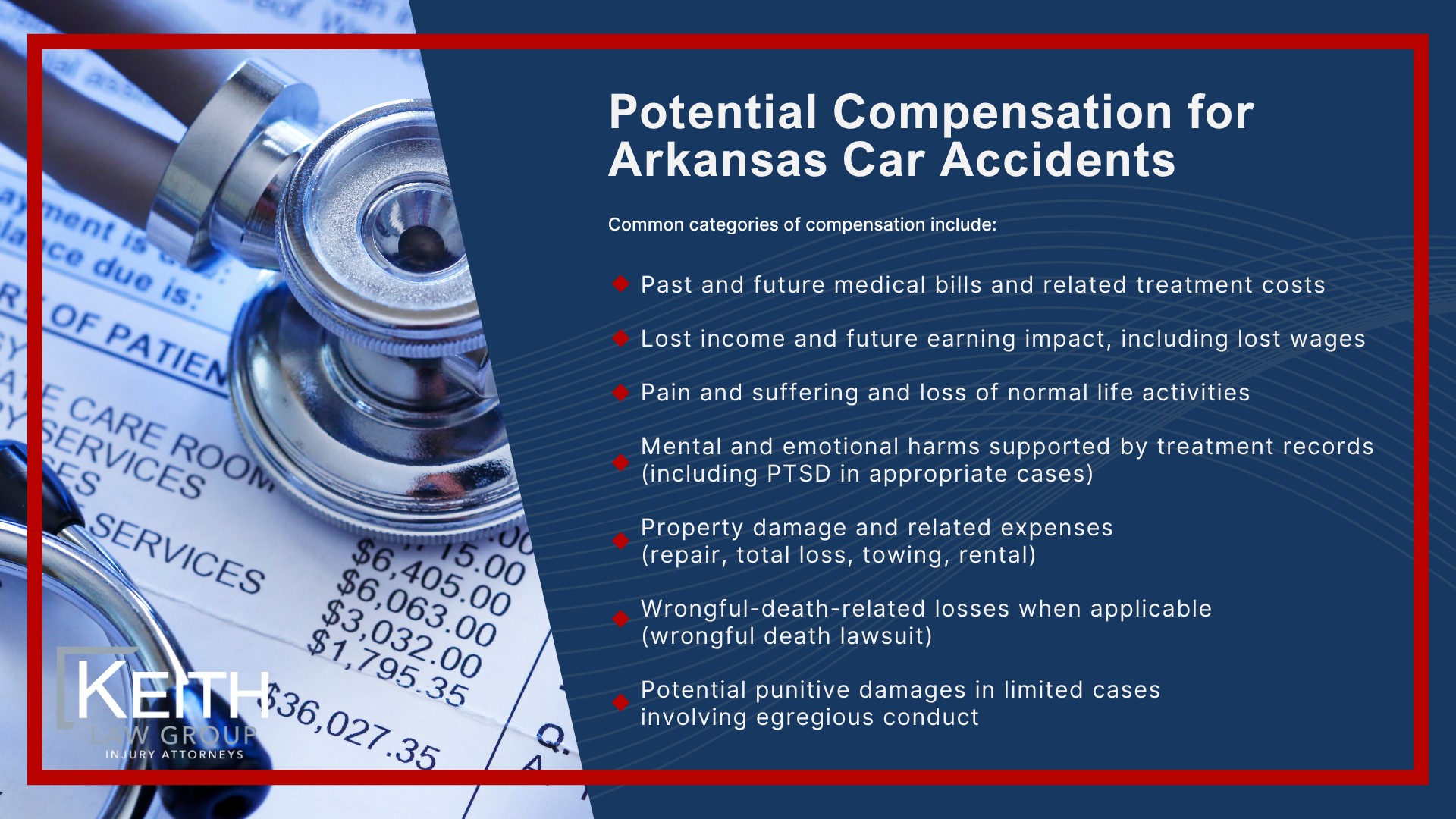
Common categories of compensation include:
We start by listening, then we build your car accident case around proof (medical records, billing, wage documentation, and liability evidence) so your claim is grounded in facts.
Your personal injury attorney will map a timeline, identify what’s missing, and move quickly to preserve evidence before it disappears.
We handle communications with insurers, respond to common defenses, and present a clear demand supported by documentation so the claim is evaluated on its merits.
If the insurance company still refuses to offer fair value, we’re prepared to escalate the matter through a personal injury lawsuit and pursue the claim in court.
We keep the process practical and transparent, so you understand your options and what’s needed at each step.
After a motor vehicle collision, your priorities are safety, medical care, and protecting your ability to pursue a claim if another party was responsible.
If you can, move to a safe location, call 911, and make sure law enforcement and medical responders are dispatched to the accident scene.
Get evaluated promptly, even if symptoms seem minor, because early medical treatment creates a clear timeline for car accident injuries and reduces the chance the insurer argues your condition is unrelated.
Document the scene with photos and video, including vehicle positions, road conditions, and visible injuries, and exchange insurance information with the at fault driver without debating fault.
If you’re facing financial losses, physical pain, and uncertainty about next steps, it’s reasonable to seek legal advice early so you don’t miss key evidence or deadlines.
A car accident attorney can help you understand what documentation matters, how to handle insurance contact, and what to do next to pursue a fair settlement and protect your path to car accident compensation.
Evidence is what turns a crash story into a provable personal injury case, especially when insurers question fault or the seriousness of injuries.
Start at the accident scene by photographing damage, debris, skid marks, and any impact points, and get contact information from witnesses while they’re still present.
Preserve proof of personal property loss as well (vehicle repair estimates, towing invoices, and receipts) because property damage compensation can be a significant part of an overall claim.
Your medical documentation matters just as much: medical records link the crash to your diagnosis, restrictions, and medical treatment, which is critical when you’re seeking both economic damages and non economic damages.
If liability is disputed, an experienced attorney can gather additional evidence (traffic camera footage, business surveillance, crash reports, and expert analysis) to show how the at fault party caused the collision.
Strong evidence supports maximum compensation because it reduces guesswork and gives insurers fewer openings to deny or minimize your claim.
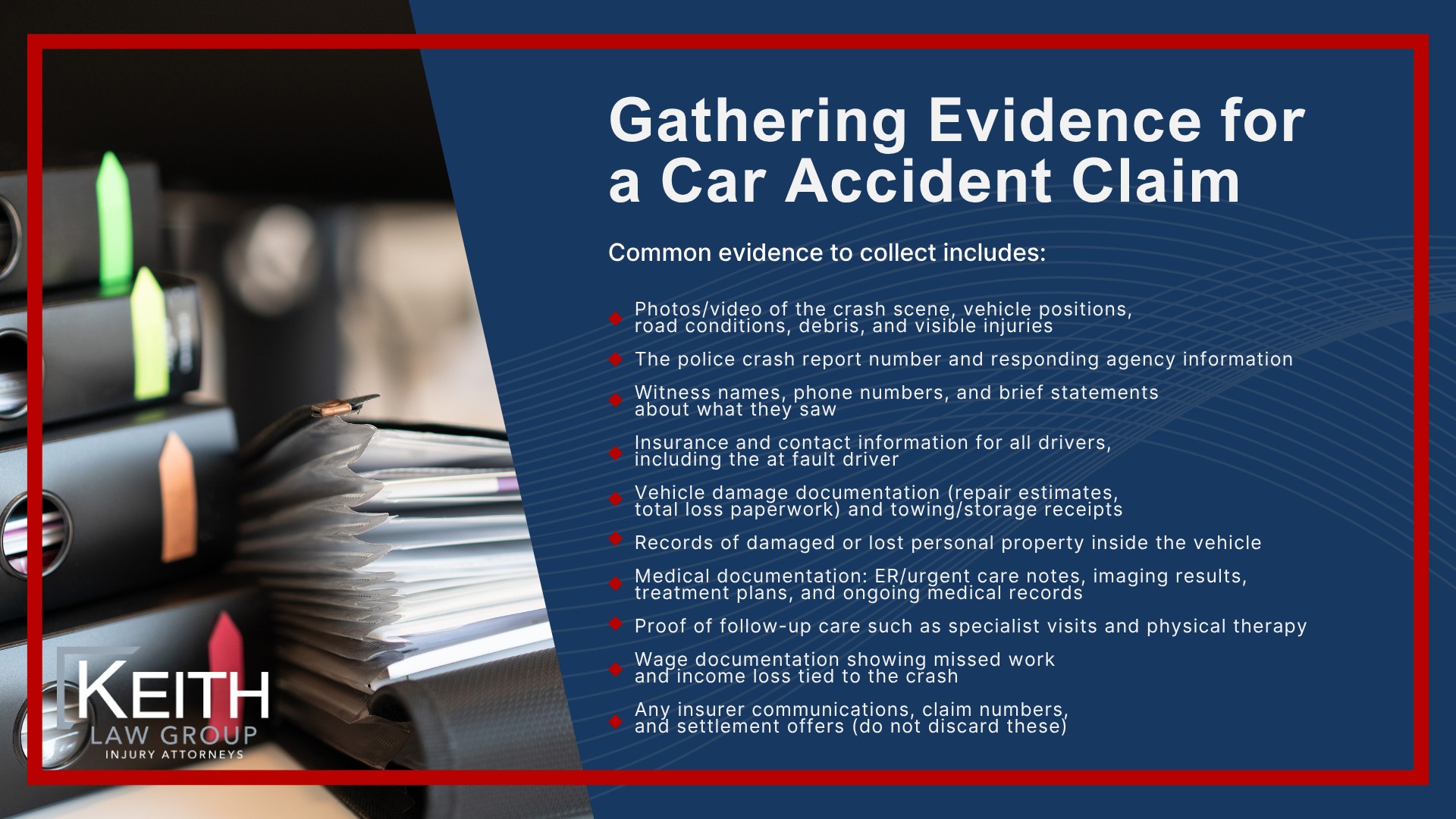
Common evidence to collect includes:
Prompt care is not just about health, it also protects your claim by creating contemporaneous documentation of symptoms, diagnoses, and treatment progression.
When accident victims delay care, insurers often argue the injury wasn’t serious, wasn’t caused by the crash, or was made worse by failure to follow medical advice.
Consistent medical treatment, follow-up visits, and referrals (like imaging, specialist consults, or physical therapy) help show what was required to stabilize and improve your condition.
These ops of record matter when you seek financial recovery for measurable costs, including wage loss and future care, and when you claim emotional distress and physical pain under non-economic damages.
Mitigation simply means doing what is reasonable to prevent your injuries from worsening, such as attending appointments, taking prescribed medication, and following restrictions.
If the crash involved extreme conduct, like reckless driving that could be argued as gross negligence, the records can also become important in evaluating additional legal theories.
And when a collision results in a fatality, documentation becomes essential for a wrongful death suit, because the claim must establish the cause of death, the losses suffered, and the connection to the crash.
If you’re unsure what to do next or how to document care properly, a car accident attorney can guide you through the process and help you recover compensation without letting the insurance company define your case.
Most Arkansas car accident cases start with documentation and investigation, identifying the parties involved, preserving evidence, and confirming what insurance coverage is available.
Your attorney will gather police reports, medical records, wage documentation, and proof of costs like towing or a rental car, then build a timeline that explains how the accident caused your injuries and financial losses.
A demand package is typically sent to the insurance carrier, and negotiations often begin with a settlement offer from an insurance adjuster who may try to dispute fault, downplay injuries, or limit payment.
If the insurer refuses to pay fair compensation, the next step may be filing suit to formally pursue damages, followed by discovery (written questions, document requests, depositions) and, often, mediation before trial.
Most cases resolve before trial, but a credible trial posture matters when the other side won’t move.
In rare cases involving intentional misconduct or conduct alleged to be grossly negligent, additional legal issues may arise, but they depend on the circumstances surrounding the crash and the proof available.
What you do in the first hours and days can shape the claim, especially when insurers start building their narrative immediately.
Get to safety, call 911, and make sure the crash is documented so there is a clear record of what happened and who was involved.
Seek medical evaluation promptly and follow through with treatment so your injuries and medical costs are documented early and consistently.
Preserve evidence (photos, witness info, and receipts) because vehicles get repaired, footage gets overwritten, and memories fade.
Notify your insurer and report the collision, but be careful about recorded statements until you understand how those statements may affect liability and damages.
If you’re worried about bills, time off work, or next steps, a free consultation can provide clear guidance on what to collect and how to protect your right to seek compensation.
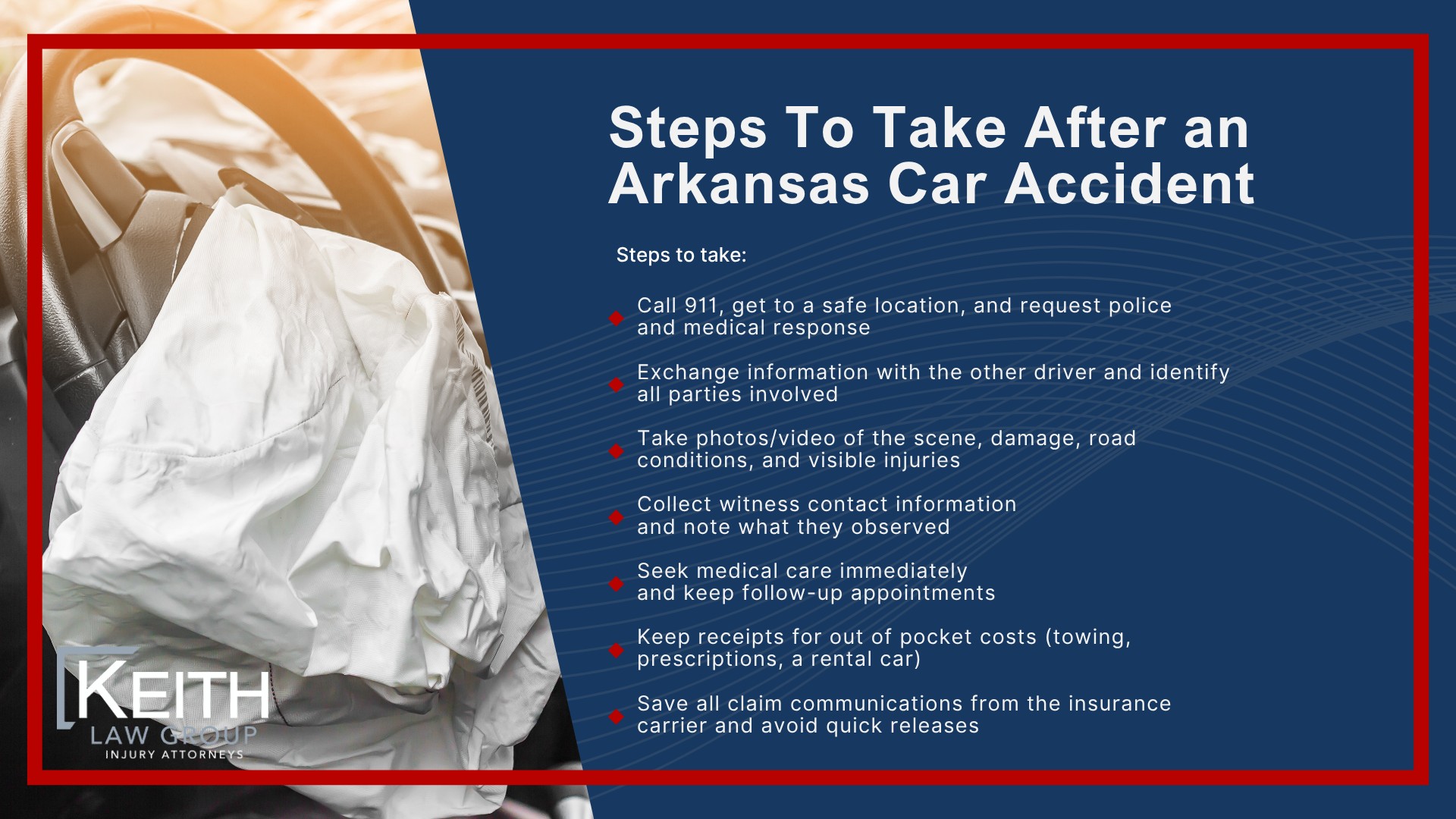
Steps to take:
In Arkansas, the deadline to file a lawsuit for most car accident injury claims is generally three years from the date the claim accrues under the state’s limitations statute.
The practical problem is that waiting can still hurt your case even if the deadline hasn’t passed.
Evidence disappears, witnesses become harder to reach, and records get harder to assemble.
Some cases involve additional deadlines or notice requirements depending on the other party, so the safest approach is to confirm timing early.
A free consultation can help you verify the correct deadline for your situation and what steps you should take now to preserve the claim.
Car crashes can cause injuries that range from painful but temporary to life-changing, and symptoms don’t always show up at the accident scene.
Some people feel “fine” at first, then develop worsening pain, stiffness, headaches, dizziness, or numbness over the next day or two as adrenaline fades.
That delay is one reason prompt evaluation matters: early records help connect the accident caused harm to the treatment that follows.
Severe impacts can also trigger longer-term problems, including chronic pain and psychological effects that require ongoing care.
When injuries are serious, the physical and financial consequences often overlap, driving up medical costs, increasing time away from work, and complicating recovery.
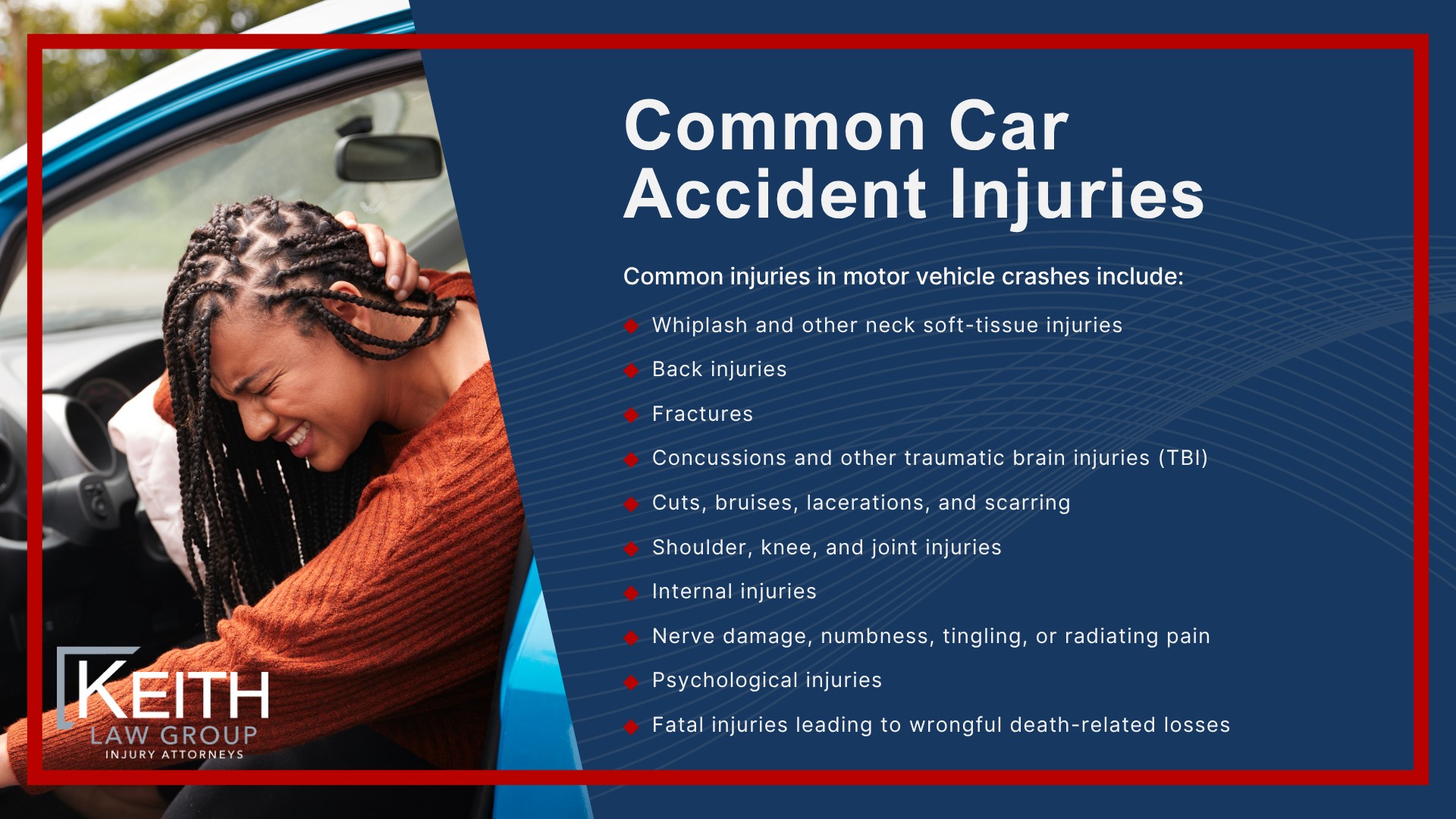
Common injuries in motor vehicle crashes include:
After a motor vehicle accident, the insurance company’s goal is to control the narrative and limit payouts, even when a car accident victim is dealing with real injuries and disruption.
An experienced car accident attorney helps by taking over the investigation, preserving evidence, and building a documented car accident claim that ties your injuries and losses to the crash.
That includes ordering medical records and bills, collecting wage documentation for lost wages, and confirming liability through reports, photos, witnesses, and other proof.
A personal injury lawyer also handles the back-and-forth with insurance companies, so you don’t get pressured into a quick settlement or pushed into making statements that can be used against your insurance claim.
If a car accident victim suffers serious harm, like a long recovery, disability, or post traumatic stress disorder, your lawyer can show how those effects translate into compensable losses.
If the case can’t be resolved fairly, a car accident lawyer can file a car accident lawsuit and pursue the claim in court, using evidence, experts, and testimony to support the full value of your damages.
Keith Law Group helps injured people pursue compensation by building cases around proof: liability evidence, treatment records, wage documentation, and a clear timeline of losses.
We handle cases on a contingency fee basis, which means you generally do not pay upfront legal fees; attorney compensation is typically tied to a recovery.
Our team works to document the full impact of the crash, including lost income, ongoing medical costs, and the real-world burden of out of pocket expenses like prescriptions, towing, and replacement costs for damaged property.
We also evaluate coverage issues and negotiate with the insurance adjuster from a position of strength, so a low initial settlement offer doesn’t define your outcome.
If the insurer won’t offer fair value, we’re prepared to escalate the case through litigation and pursue a compensation award supported by the evidence.
Contact Keith Law Group for a free consultation to discuss your options, your coverage questions, and what it may take to seek fair compensation based on the circumstances of your crash.
You can also use the chatbot on this page.
In Arkansas, car accident damages generally fall into two broad categories: economic losses and non-economic losses.
Economic damages include measurable costs like medical bills, follow-up care, prescriptions, physical therapy, and lost wages, as well as property damage and other out-of-pocket expenses tied to the crash.
Non-economic damages often cover pain, limitations, emotional distress, and the ways the injury disrupts daily life, but they still need to be supported by medical records and consistent treatment history.
In serious cases, families may also pursue wrongful-death-related losses when a fatal crash occurs.
Insurance companies typically start with documentation—your medical records, billing statements, and proof of lost income—then apply their own internal formulas to estimate a settlement value.
The adjuster may also look at insurance coverage limits, prior medical history, and whether they believe the treatment was necessary or related to the crash.
That process often undervalues long-term symptoms or delayed diagnoses, especially when injuries take time to fully show up.
A lawyer can help by presenting a complete demand package that reflects your real losses, not just the insurer’s lowest evaluation.
To pursue compensation from a car accident, you usually need evidence showing both liability and damages.
Liability evidence includes police reports, photos or video, witness statements, and anything that explains how the other driver caused the wreck.
Damages evidence includes medical records, itemized bills, treatment recommendations, and wage documentation showing time missed from work or reduced earning ability.
The stronger the evidence, the harder it is for the insurer to argue that the crash didn’t cause your injuries or that your losses are overstated.
Yes, and it’s common for injuries to feel minor in the first hours after a crash, then worsen as adrenaline fades.
The key is to get evaluated promptly and follow through with recommended treatment so your records reflect the progression of symptoms.
Insurance companies often use delays in care to argue the injury wasn’t serious or wasn’t caused by the wreck, even when the injury is legitimate.
If symptoms evolve, keep your providers updated so the medical timeline remains clear and consistent.
You should consider speaking with a lawyer early if your injuries required medical treatment, you missed work, fault is disputed, or the insurer is pressuring you to accept a quick settlement.
Early guidance helps preserve evidence, document out-of-pocket costs (like towing, rental cars, and prescriptions), and avoid mistakes in recorded statements or paperwork.
Most firms offer a free consultation, and many handle cases on a contingency fee basis so you don’t pay upfront.
Even a short conversation can clarify what damages may apply and what proof you’ll need to support your claim.