175 Reviews
5.0
★★★★★

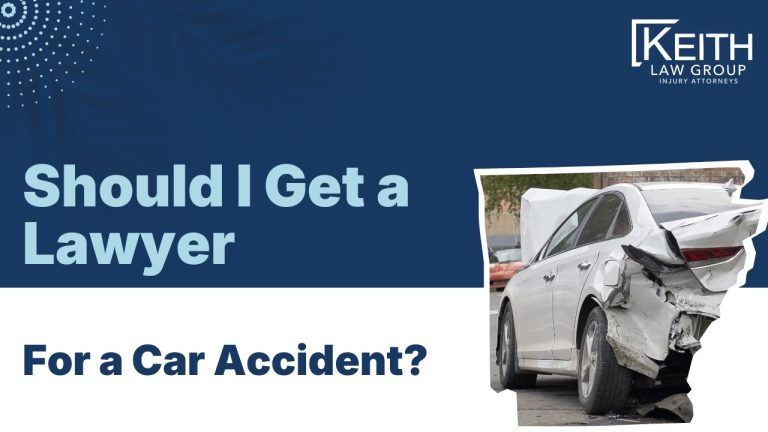
Should I Get a Lawyer for a Car Accident?

Benefits of Hiring a Car Accident Attorney for Your Case

Should I get a lawyer for a car accident?” is a question our car accident lawyers are asked all too often.

If you’ve been injured in a car crash through no fault of your own, or if your loved one has tragically passed away after a car accident, it is highly recommended to contact a law firm to help you seek compensation.

The Arkansas car accident lawyers at Keith Law Group provide top-tier legal services to car accident victims, helping hold responsible parties accountable, manage the claims process, and secure compensation you deserve.

Should I Get a Lawyer for a Car Accident

Should You Hire a Lawyer to Help You Pursue Compensation After a Car Accident?

After a car wreck, victims are often dealing with injuries, medical treatment, vehicle damage, and early contact from the insurance company.

Medical bills may begin to accumulate while injuries are still being evaluated, and questions about the at fault driver or insurance coverage may arise as the accident is reviewed.

In these circumstances, many car accident victims begin considering a practical concern: should I get a lawyer for a car accident?

The question often arises when the outcome of a car accident claim becomes uncertain due to injuries, disputed liability, or settlement discussions with the insurance company.

Situations involving serious injuries, disagreements about fault, or complicated insurance coverage can affect how damages such as medical bills, lost wages, and property damage are evaluated after a motor vehicle accident.

In these situations, having experienced car accident lawyers or personal injury lawyers involved can prevent mistakes that may affect the value of the claim.

Lawyers can document the full cost of medical treatment, challenge attempts by the insurance company to shift blame to the injured driver, and push back when settlement offers do not reflect the real impact of a motor vehicle accident.

Role of Legal Representation in Car Accident Claims

A car accident claim often begins while the injured person is still dealing with medical treatment, vehicle damage, and early contact from an insurance company.

Insurers usually start reviewing the crash soon after it is reported, examining police reports, statements from the drivers involved, and any information that may affect liability.

When those issues arise, insurers often rely on documentation and recorded statements to evaluate how responsibility and financial losses may be assigned.

That’s why evidence collected soon after the crash can influence how those questions are resolved.

A lawyer can gather critical evidence, such as police reports and witness testimony, which might otherwise be difficult to access.

These records help clarify how the collision occurred and how losses like medical bills, lost wages, and property damage relate to the accident.

Communication with insurers can also affect how a claim develops.

Attorneys manage all communications with insurance companies, preventing accidental self-incriminating statements that could devalue your claim.

Legal representation in a car accident claim may involve:

  • Reviewing police reports, witness statements, and medical records tied to the accident
  • Examining documentation related to medical bills, lost wages, and property damage
  • Addressing questions raised by the insurance company about liability or injury claims
  • Negotiating settlement offers that reflect documented losses
  • Preparing the case for legal action if negotiations do not result in fair compensation

When You Should Hire a Lawyer After a Car Accident

After a motor vehicle accident, many people initially try to handle the insurance claim themselves.

Problems often appear when the insurance company questions who the at fault driver was or when injuries begin affecting work, medical care, and the value of the car accident claim.

Hiring a lawyer after a car accident is advisable if you sustained injuries, liability is disputed, or insurance companies offer low settlements.

Delaying hiring a car accident lawyer can negatively impact your claim.

This becomes especially important when crashes involve serious injuries, disputes about fault, problems with insurance coverage, or collisions involving commercial trucks and multiple vehicles involved.

Serious Car Accident Injuries

Serious injuries are one of the most common reasons people seek legal guidance after a crash, especially when the harm requires ongoing medical treatment or follow-up care.

Some injuries are immediately visible, while others develop hours or days after car crashes, particularly in high-impact collisions such as head on collisions.

Head injuries, including concussions, can occur in crashes and may cause headaches, memory issues, or longer-term cognitive problems.

Traumatic brain injuries (TBI) can occur in car accidents, leading to cognitive, emotional, and physical impairments.

Blunt force trauma in accidents can result in internal injuries, such as damage to the liver or lungs, requiring immediate medical intervention.

Other common car accident injuries include:

  • Broken bones and fractures caused by the impact of the collision
  • Spinal cord damage or herniated discs that may affect movement or sensation
  • Soft tissue injuries, including sprains, strains, or deep bruising

Even minor injuries may worsen without proper care.

In crashes linked to distracted driving or severe impact, a car accident attorney may later review medical records to determine how the injuries developed.

Lastly, psychological trauma, including emotional distress, anxiety, and post-traumatic stress disorder (PTSD), can result from car accidents.

Disputes Over Fault and Liability

In some car accident cases, the drivers involved provide different accounts of how the collision occurred.

A driver identified as the at-fault driver may deny responsibility or argue that another driver contributed to the crash.

When fault is disputed, attorneys may review evidence such as police reports, witness statements, accident scene photographs, and vehicle damage to evaluate how the collision likely occurred.

These situations frequently arise in multi vehicle accidents, where several vehicles involved make it difficult to determine how the crash occurred.

Investigators often review police reports, witness statements, and accident scene photos to understand the sequence of events at the accident scene.

In complex crashes, accident reconstruction experts may examine vehicle damage, impact angles, and roadway conditions to rebuild the sequence of events and explain how the collision occurred when driver accounts or police reports do not fully explain the accident.

Insurance Coverage Disputes

Insurance coverage disputes often arise after a motor vehicle accident when the available coverage does not fully address losses connected to an insurance claim, including medical bills, vehicle repairs, or other financial impacts.

Many states require drivers to maintain liability coverage at levels set by state law.

Those limits may be $25,000 per injured person, $50,000 per accident for injuries, and $25,000 for property damage, amounts that may not cover the full costs involved in serious car accident cases.

If the at-fault driver lacks insurance or has insufficient coverage, a lawyer can help navigate claims through your own insurance policy, including situations involving uninsured motorist coverage.

Coverage disputes commonly arise in situations involving:

  • Drivers carrying coverage limited to statutory liability limits
  • Crashes involving underinsured drivers
  • Denied or delayed insurance claims from an insurance provider
  • Disagreements over benefits available under an insurance policy

Insurance companies review the insurance policy, medical documentation, and repair estimates when determining a settlement amount in an insurance claim.

In some situations, the settlement offered may not fully address documented medical expenses, lost wages, or property damage, particularly when the available insurance coverage is limited.

Crashes Involving Commercial Vehicles or Multiple Parties

Some crashes involve vehicles operated for work or several drivers at the same time.

A motor vehicle accident involving commercial trucks, delivery vans, or rideshare vehicles can introduce additional liability questions beyond those seen in typical car accident cases.

These collisions may involve more than one party connected to the vehicle’s operation, such as:

  • Companies operating commercial trucks or delivery fleets
  • Employers whose vehicles were being used for work duties
  • Rideshare companies connected to the trip
  • Maintenance contractors responsible for vehicle condition

When a crash involves commercial vehicles or several business entities, determining who is legally responsible may require reviewing vehicle ownership, employment relationships, and operational control over the vehicle, issues that are often examined by experienced car accident attorneys.

Filing an Insurance Claim After a Car Accident

Filing an insurance claim is usually the first formal step after a crash.

For many people asking whether they should get a lawyer for a car accident, the claim stage is where disputes with the insurance provider first appear.

You should report the accident to your insurance company as soon as possible to ensure your claim is valid.

After the report is made, the insurance provider begins reviewing the claim under the terms of the insurance policy and applicable policy limits.

Insurers typically request documentation connected to the crash and the losses reported in the claim.

Insurance companies typically review:

  • Insurance information exchanged between the drivers involved
  • Police reports describing how the crash occurred
  • Repair estimates and photographs documenting property damage
  • Medical documentation related to accident-related medical expenses

Insurance companies may present a settlement offer after reviewing these materials.

You should be cautious about accepting any settlement offers from insurance companies without consulting a lawyer first.

When settlement offers do not fully reflect documented losses, a lawyer may review the claim and explain available legal options before any agreement is signed.

Establishing Fault in a Car Accident Case

Establishing fault in a motor vehicle accident involves examining how each driver acted before and during the collision.

In many car accident cases, drivers involved in the crash may provide different explanations of what happened.

The central question is whether the conduct of the other driver amounted to negligence and contributed to the accident.

Accident claims generally examine four elements of negligence:

  • Duty of care: drivers must operate vehicles safely and follow traffic laws intended to protect others on the road.
  • Breach of duty: a driver violates that duty through conduct such as speeding, distracted driving, or failing to yield the right of way.
  • Causation: the unsafe conduct contributes to the collision involving the other driver.
  • Damages: the crash results in injuries, vehicle damage, or financial losses that may form the basis of a personal injury case.

Compensation Available After a Car Accident

A car accident claim may include both financial losses and non-economic harm caused by the crash.

Some damages are tied to bills, wage records, and repair estimates.

Others relate to physical pain, lasting limitations, and the effect the injuries have on daily life.

Medical Expenses

Medical expenses often form a large part of a car accident claim.

These damages may include emergency treatment, hospital care, follow-up visits, diagnostic testing, prescription medication, physical therapy, and other treatment required because of the collision.

In serious cases, claims may also include the projected cost of future medical care.

Lost Wages

A crash may leave an injured person unable to work during recovery.

Claims for lost wages may include missed income, used leave, and, in more serious cases, reduced earning capacity if the injuries affect the person’s ability to return to the same work.

Property Damage

Property damage usually includes the cost of repairing or replacing the vehicle involved in the collision.

It may also include damage to other personal property inside the vehicle at the time of the crash.

Pain and Suffering

Pain and suffering damages address the physical pain, discomfort, and disruption caused by accident-related injuries.

These damages may reflect limits on movement, sleep disruption, ongoing symptoms, and the effect of the injuries on normal daily activities.

Serious or catastrophic injuries, like broken bones or permanent disability, typically involve higher compensation that insurance companies contest vigorously.

Wrongful Death Claims

If a loved one dies in a car accident, certain surviving family members may pursue a wrongful death claim for compensation.

These damages may include funeral and burial expenses, medical bills incurred before death, loss of financial support, and loss of companionship or guidance.

Accident victims often have little information about how claims are valued.

Early settlement offers from insurers may lead some drivers to accept less than the amount needed to recover compensation that reflects the full scope of their losses and what may qualify as maximum compensation in the claim.

Understanding Contingency Fees for Car Accident Lawyers

Many people hesitate to contact a lawyer after a crash due to concerns about legal fees.

Medical bills, repair costs, and lost income already create financial pressure, so the idea of paying a lawyer upfront can discourage accident victims from seeking legal advice.

Most personal injury lawyers operate on a contingency fee basis, receiving payment only if they win your case.

Under this arrangement, the lawyer does not charge hourly fees or require an advance payment to begin working on the claim.

Instead, the attorney’s fee is taken as a percentage of the settlement or court award obtained at the end of the case.

If no compensation is recovered, the lawyer generally does not collect attorney fees for the work performed.

Keith Law Group offers a free consultation, allowing injured drivers to discuss the facts of the accident and better understand their legal options before making any decision about hiring a lawyer.

Contact an Experienced Car Accident Lawyer

In many cases, the answer to whether you should get a lawyer for a car accident becomes clear when injuries, disputed fault, or insurance settlement discussions begin affecting the claim.

Insurance companies often review liability, medical records, and repair estimates quickly, and those evaluations may influence how a car accident claim develops.

A car accident lawyer can review accident evidence, examine medical documentation, and address settlement discussions with the insurance company when the losses connected to the crash are questioned or undervalued.

If you are considering legal help after a motor vehicle accident, you may speak with an experienced car accident lawyer at Keith Law Group by calling (479) 326-7734 for a free consultation to discuss the claim and the options that may be available moving forward.

Frequently Asked Questions

Published by:
Share

This article has been written and reviewed for legal accuracy and clarity by the team of writers and attorneys at Keith Law Group and is as accurate as possible. This content should not be taken as legal advice from an attorney. If you would like to learn more about our owner and experienced injury lawyer, Sean T. Keith, you can do so here.

Keith Law Group does everything possible to make sure the information in this article is up to date and accurate. If you need specific legal advice about your case, contact us. This article should not be taken as advice from an attorney.

Other Car Accident Lawsuit Resources
All
FAQs
Injuries & Conditions
Legal Help
Other Resources
Settlements & Compensation
You can learn more about other Car Accident Lawsuit resources below:
15 Common Car Accident Causes in Arkansas & Prevention Tips
Arkansas Auto Accidents: How to File a Car Insurance Claim
Arkansas Car Accident Compensation Types & Laws to Know
Arkansas Car Accident Lawsuit Guide: Tips for Success
Arkansas DUI Accident Lawsuits: Laws, Damages, & Safety Tips
Arkansas Hit and Run Accident Guide: Laws & Tips to Know
Average Arkansas Car Accident Settlements & Tips to Maximize Yours
Car Accident Damages in Arkansas: Potential Compensation
Car Accident Reporting in Arkansas
Car Accident Statute of Limitations Arkansas
Finding the Best Car Accident Attorney in Arkansas for Your Case
Hit and Run Car Accident Lawsuits in Arkansas
How Much Can Someone Sue for a Car Accident in Arkansas
How to File a Police Report After a Car Accident in Arkansas
How to Get a Police Report After a Car Accident in Arkansas
Statute of Limitations: Car Accident Claims in Arkansas
Steps to Take After a Car Accident in Arkansas
T-Bone Car Accident Lawsuits in Arkansas: Things to Know
Types of Evidence in Arkansas Car Accident Cases
Understanding Car Accident Insurance Claims in Arkansas
Understanding the Arkansas Car Accident Settlement Process
Who Pays for My Medical Bills After a Car Accident in Arkansas

Other Car Accident Lawsuit Resources

All
FAQs
Legal Help
Other Resources
Settlements & Compensation