The strength of your dog bite claim depends on what you can prove.
Evidence is how you show what happened, who was responsible, and how the dog bite injury changed your life.
In Arkansas, liability comes down to proving negligence or prior knowledge of aggression.
To build a solid case and establish the property owner’s negligence, you need the right documentation.
Having it can make the difference between a denied claim and a fair settlement.

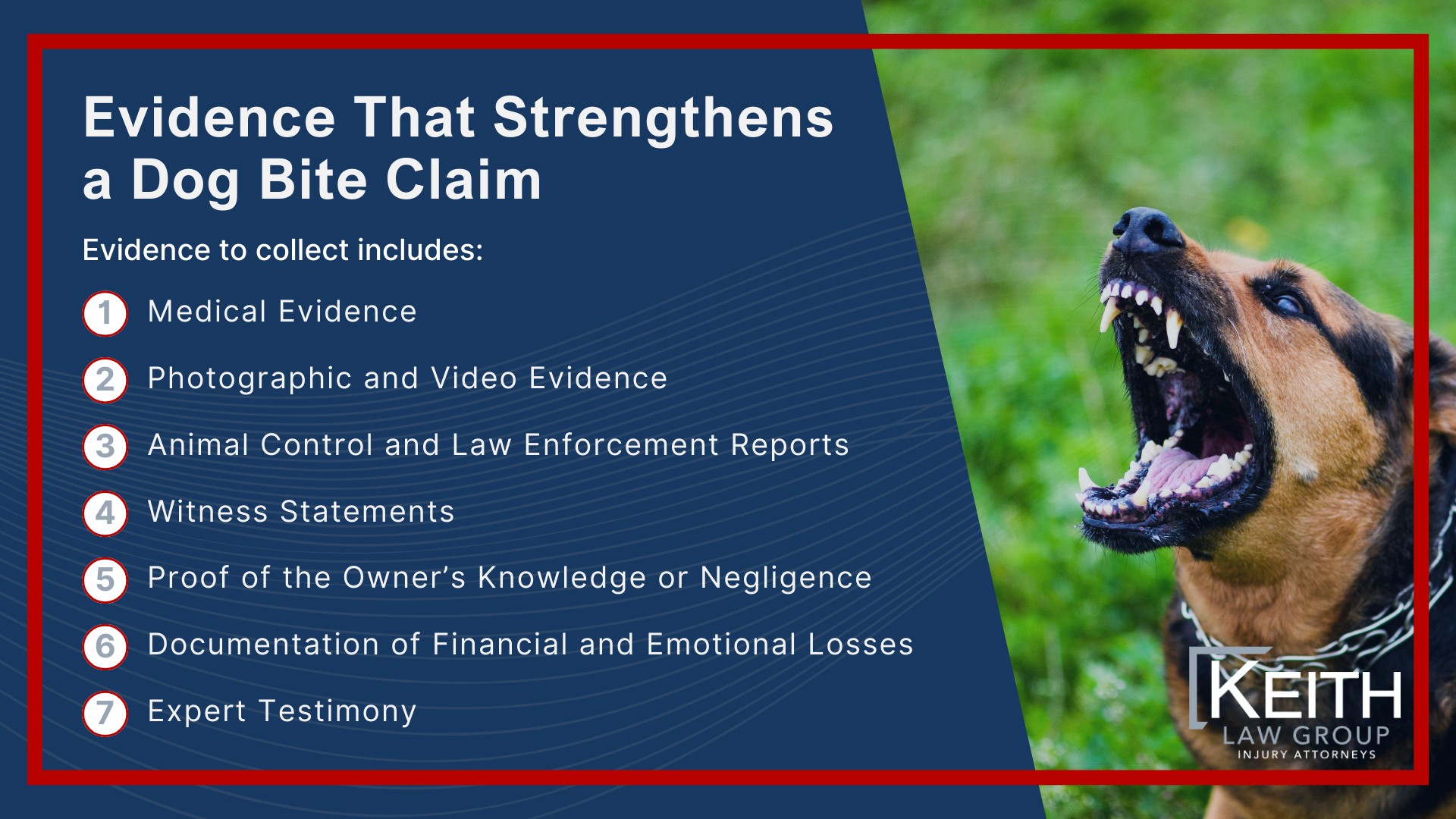
Evidence to collect includes:
- Medical Evidence
- Photographic and Video Evidence
- Animal Control and Law Enforcement Reports
- Witness Statements
- Proof of the Owner’s Knowledge or Negligence
- Documentation of Financial and Emotional Losses
- Expert Testimony
1. Medical Evidence
Medical treatment records are the foundation of every dog bite case.
Emergency room charts, doctor’s notes, and hospital bills confirm that you were bitten, when the bite occurred, and how serious it was.
These records also document severe injuries, infection, nerve damage, and scarring that may develop later.
If you need surgery or physical therapy, that information helps calculate both your medical expenses and future care costs.
2. Photographic and Video Evidence
Clear photos help prove how the attack occurred and how the wounds progressed.
So take pictures of your injuries immediately after the bite and throughout healing.
You’ll also want to include shots of the location, the dog owner’s property, and anything that shows how the animal escaped or attacked, such as a broken fence or open gate.
If there is surveillance footage from a doorbell camera or nearby business, ask for a copy as soon as possible.
Visual evidence can counter any claim that the victim provoked the dog or exaggerated the injuries.
3. Animal Control and Law Enforcement Reports
Official records carry significant weight.
When you report the dog bite incident to animal control or the police, officers document details such as the dog’s breed, vaccination status, and prior complaints.
Those records can confirm that the responsible party knew or should have known their pet had aggressive behavior.
They also establish the date and location of the attack, which are essential for insurance and legal purposes.
4. Witness Statements
Independent witnesses can describe how the attack occurred, what the dog was doing before the bite, and how you reacted afterward.
Their statements help show that the event happened the way you described it.
If the owner claims you entered private property or provoked the dog, a witness can provide an unbiased account.
Written statements or sworn testimony from neighbors, postal workers, or bystanders can be especially persuasive when proving owner negligence.
5. Proof of the Owner’s Knowledge or Negligence
Because Arkansas follows the one-bite rule, proving the owner’s awareness of the dog’s aggression is key.
Evidence can include:
- Prior citations
- Complaints filed with animal control
- Veterinarian’s records of the dog
- Communication where the owner admits past problems
6. Documentation of Financial and Emotional Losses
Evidence isn’t limited to the injury itself. Keep pay stubs, medical bills, and receipts to document lost wages, treatment costs, and travel expenses for appointments.
If you are suffering from post-traumatic stress disorder (PTSD) or emotional distress, records from counseling or therapy sessions can help establish the impact on your daily life.
These details support claims for pain and suffering, psychological injuries, and reduced quality of life.
7. Expert Testimony
In complex dog bite cases, your lawyer may work with medical specialists or animal behavior experts.
Doctors can explain how the injury caused lasting damage, while veterinarians or trainers can testify about the dog’s temperament and whether the owner acted responsibly.
Expert opinions help clarify facts for insurance companies or a jury, especially when liability is disputed.