A bicycle accident can leave victims feeling overwhelmed, injured, and unsure of what steps to take next.
Taking the right actions immediately after the accident can protect your health, preserve critical evidence, and strengthen your claim.
While your safety and recovery should always come first, following these steps can help ensure your rights are upheld.

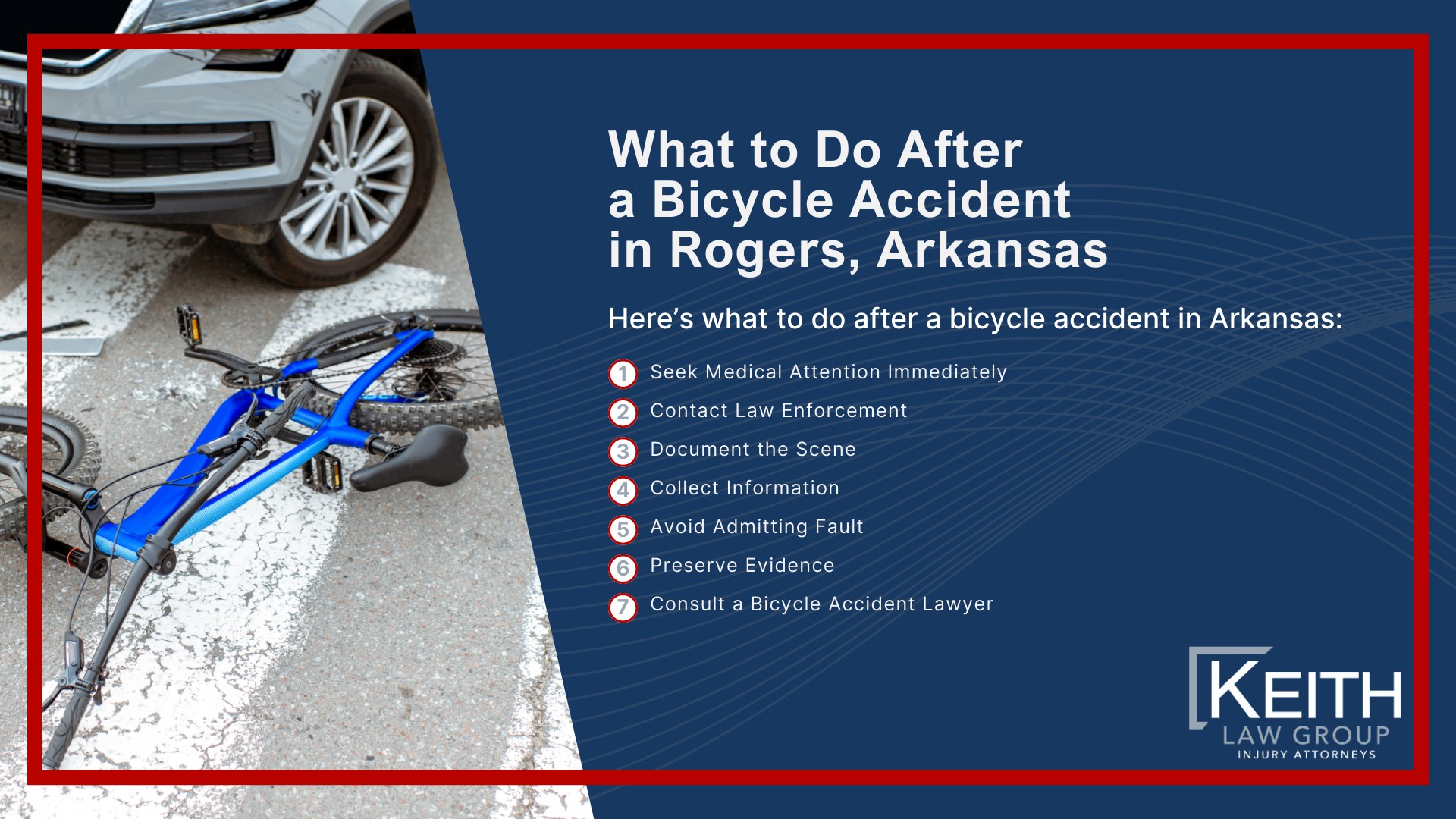
Here’s what to do after a bicycle accident in Arkansas:
- Seek Medical Attention Immediately – Even if injuries seem minor, get checked by a medical professional to address hidden or delayed symptoms.
- Contact Law Enforcement – Report the accident to the police and request an official accident report for your records.
- Document the Scene – Take photos of the accident site, your injuries, and any damage to your bicycle or other property.
- Collect Information – Exchange contact and insurance details with the driver involved and gather witness information if possible.
- Avoid Admitting Fault – Refrain from discussing fault at the scene or with insurance companies without legal guidance.
- Preserve Evidence – Keep medical records, repair estimates, and any other documents related to the accident.
- Consult a Bicycle Accident Lawyer – Speak with an experienced attorney to protect your rights and pursue fair compensation.
Taking these steps can help ensure that your legal claim is strong and that you receive the support and compensation you need to recover.
Common Evidence in a Bicycle Accident Lawsuit
Evidence plays a vital role in proving liability and securing compensation in a bicycle accident lawsuit.
Properly collected and preserved evidence can demonstrate the negligence of the at-fault party and the extent of your injuries and damages.
Without strong evidence, it can be challenging to hold the responsible party accountable and recover the full amount you are entitled to.
An experienced bike accident lawyer can help you gather and retain critical evidence.
Evidence in a bicycle accident case may include:
- Police Reports – Official documentation of the accident and any fault determinations.
- Photographs and Videos – Visual evidence of the accident scene, damage to your bicycle, road conditions, and injuries.
- Medical Records – Documentation of injuries sustained and related treatments or rehabilitation.
- Witness Statements – Testimonies from individuals who observed the accident.
- Helmet and Clothing Damage – Evidence of the impact’s severity and the conditions during the crash.
- Surveillance or Dashcam Footage – Recordings capturing the accident or the events leading up to it.
- Accident Reconstruction Reports – Expert analysis to determine how the collision occurred and who is at fault.
- Correspondence with Insurers – Records of communications and settlement offers from insurance companies.
- Bicycle Repair Estimates – Proof of damage and costs associated with repairing or replacing your bike.
- Traffic Citations – Any tickets issued to the at-fault party for violating traffic laws.
Having the right evidence can make a significant difference in the strength of your case and the outcome of your claim.
Bike accident attorneys can help gather and present this evidence effectively.
Damages in Bicycle Accident Cases
Damages in a bicycle accident case refer to the financial compensation awarded to victims to address the physical, emotional, and financial harm caused by the crash.
These damages aim to cover both tangible losses, such as medical bills and property damage, and intangible losses, like pain and suffering.
Understanding the types of damages available is essential to ensuring that you recover the full compensation you deserve.
Bike crash attorneys can help you assess and calculate the total damages in your case.
Types of damages in a bike crash case may include:
- Medical Expenses – Costs for emergency care, surgeries, hospital stays, medications, and ongoing treatments.
- Future Medical Expenses – Estimated costs for long-term care, rehabilitation, and future treatments related to the injuries.
- Lost Wages – Compensation for income lost due to missed work or a reduced ability to earn in the future.
- Pain and Suffering – Non-economic damages for the physical pain and emotional distress caused by the accident.
- Property Damage – Reimbursement for repair or replacement of your bicycle and other personal belongings.
- Loss of Enjoyment of Life – Damages for the inability to participate in hobbies, activities, or everyday pleasures.
- Permanent Disability or Disfigurement – Compensation for long-term or permanent impacts on your quality of life.
- Out-of-Pocket Expenses – Reimbursement for transportation, home modifications, or other accident-related costs.
- Punitive Damages – Awarded in cases involving egregious negligence or intentional harm by the at-fault party.
Accurately identifying and calculating these damages is crucial to building a strong claim.
An experienced bicycle lawyer will help you account for all losses in order to seek maximum compensation.