
172 Reviews
5.0
★★★★★

Rogers Nursing Home Abuse Lawyer

Need Help from an Experienced Nursing Home Abuse Attorney? Contact Us

A Rogers nursing home abuse lawyer from Keith Law Group helps families pursue justice when a nursing home resident is harmed by abuse, neglect, or unsafe conditions.

Elder abuse in nursing homes can leave victims with painful injuries, declining health, emotional trauma, and a loss of dignity that affects every part of their daily life.

Keith Law Group is currently reviewing claims from nursing home residents and family members who suspect abuse, neglect, or wrongful death in Arkansas facilities.

Our Lawyers Represent Nursing Home Residents and Family Members in Civil Lawsuits

Nursing home abuse and neglect can leave families shocked, angry, and desperate for answers, especially when the harm occurs in a place that was supposed to provide safety and care.

Whether the incident happened in a nursing home or an assisted living facility, Arkansas families may have the right to pursue a nursing home lawsuit when a resident is harmed by misconduct or systemic failures.

Abuse can take many forms, including physical abuse, sexual abuse, emotional abuse, and financial abuse, and it often occurs alongside serious neglect that puts vulnerable residents at risk.

Nursing home patients may also suffer injuries from preventable issues like medication errors, untreated infections, or dangerous falls caused by understaffing.

Under federal and state laws, residents have protections that require facilities to provide appropriate care and safeguard them from nursing home abuse or neglect.

If your family member suffered serious injuries or died because a facility failed to meet its legal obligations, you may have grounds to pursue legal options, including a wrongful death claim.

These cases require documentation, investigation, and strategic advocacy to prove liability and damages.

An experienced attorney from Keith Law Group can review what happened, explain your options, and fight for accountability and compensation.

Contact Keith Law Group today for a free consultation to find out if you qualify for a nursing home abuse claim.

You can also use the chat feature on this page to get in touch with our nursing home abuse lawyers.

Our Nursing Home Abuse Lawyers Have Decades of Experience

Keith Law Group represents nursing home residents and surviving family members throughout Arkansas in cases involving abuse, neglect, and preventable death.

Founder Sean T. Keith has more than 30 years of trial experience and has built this law firm around serious litigation against facilities and corporations that failed to protect vulnerable adults.

Sean has handled nursing home abuse and neglect claims involving elopement, unsafe supervision, and systemic failures that place residents at risk.

In one widely reported case, Keith Law Group filed suit after a 74-year-old woman with Alzheimer’s left an assisted living memory care facility in Bella Vista and was found deceased days later.

That case ended in a $2 million settlement, reflecting the firm’s ability to pursue meaningful results when nursing home care fails in the most devastating ways.

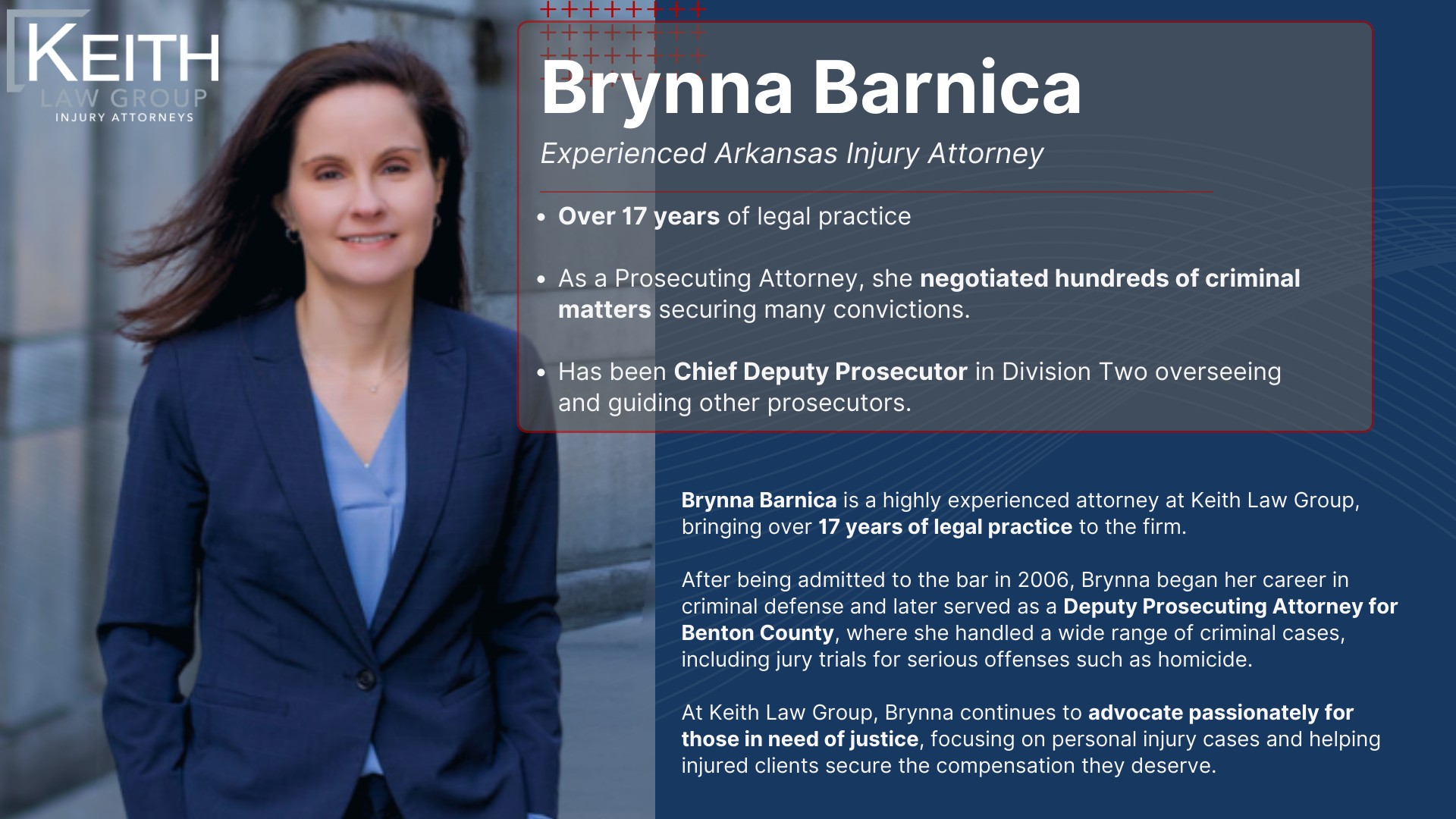
Brynna Barnica brings more than 17 years of courtroom experience, including years as a Deputy Prosecuting Attorney, and she applies that trial skill to high-stakes injury and wrongful death cases.
Together, our legal team prepares every case with the expectation of legal action, building trial-ready claims designed to secure financial compensation and support families seeking justice under Arkansas law.

Who Can File a Nursing Home Abuse Claim in Akransas?

In Arkansas, a nursing home abuse claim is typically filed by the injured resident, but the law also allows certain representatives to act when the resident cannot protect his or her own interests.

If the resident is incapacitated, a legally appointed guardian or someone with proper authority may bring the claim on the resident’s behalf.

When abuse or neglect results in death, the claim may proceed as a wrongful death action, which Arkansas law states is brought by the personal representative of the deceased person (or, in some situations, eligible heirs if no representative exists).

Because these cases can involve both personal injury and wrongful death legal theories, an attorney can help determine the correct party to file and how the claim should be structured under Arkansas law.
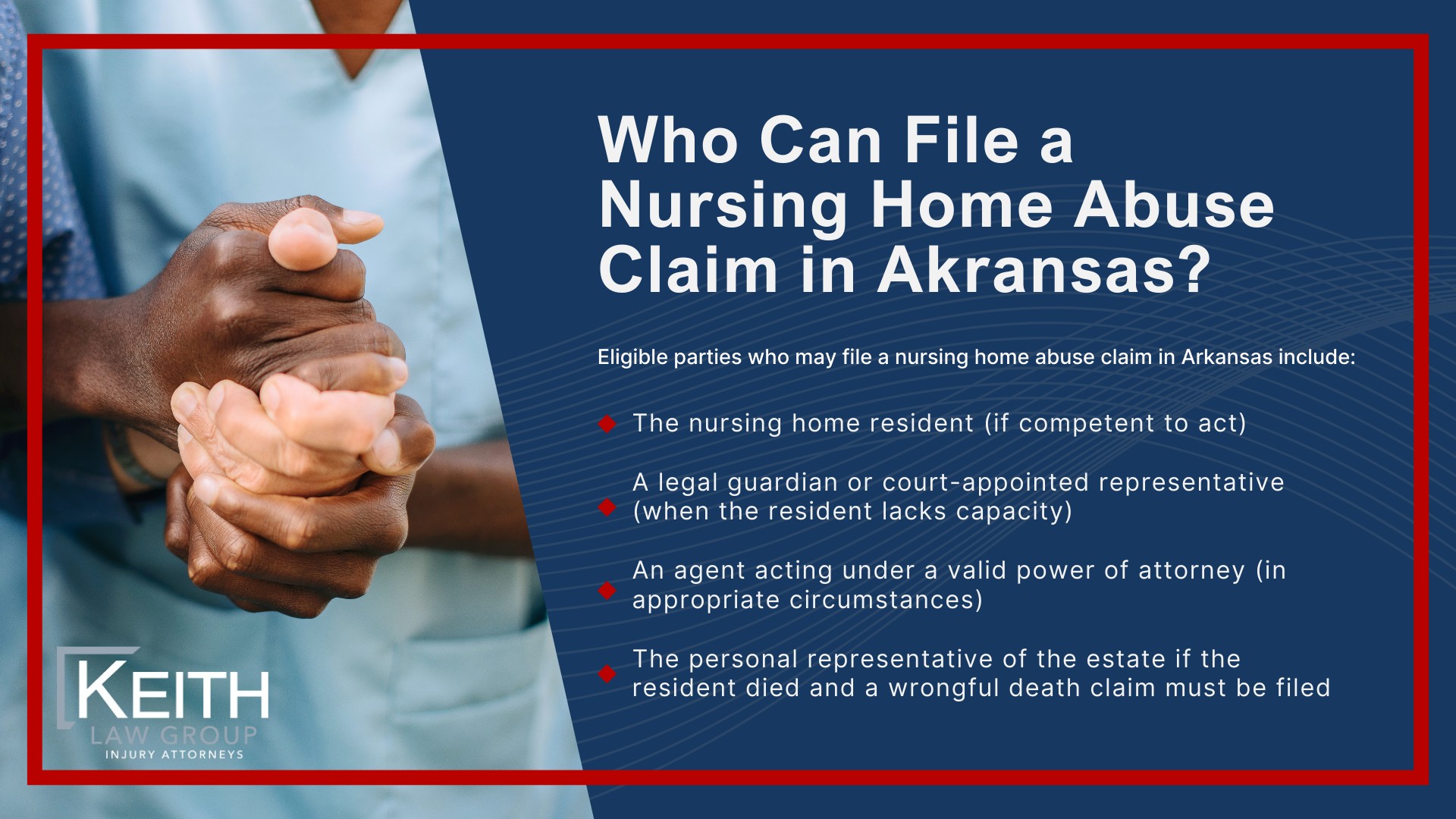
Eligible parties who may file a nursing home abuse claim in Arkansas include:

  • The nursing home resident (if competent to act)
  • A legal guardian or court-appointed representative (when the resident lacks capacity)
  • An agent acting under a valid power of attorney (in appropriate circumstances)
  • The personal representative of the estate if the resident died and a wrongful death claim must be filed

Why Families Choose Keith Law Group for Nursing Home Abuse Cases

When nursing home abuse occurs, families need a law firm that responds quickly, investigates thoroughly, and treats the case with the seriousness it deserves.

Keith Law Group brings decades of trial experience to claims involving neglect, abuse, and wrongful death in Arkansas long-term care facilities.

Our personal injury attorneys focus on building strong, evidence-driven cases designed to hold a negligent nursing home accountable under state and federal standards.

We handle nursing home abuse cases on a contingency fee basis, which means clients pay no attorney’s fees unless compensation is recovered.

Families turn to Keith Law Group because they want direct attorney involvement, clear communication, and representation that is prepared for litigation when a facility refuses to take responsibility.
Families choose Keith Law Group because we:

  • Investigate abuse and neglect claims with urgency, preserving evidence before it disappears
  • Work with medical and elder-care experts to document injuries and facility failures
  • Identify all liable parties, including owners, operators, and management companies
  • Handle insurer communications and push back against blame-shifting tactics
  • Prepare every case for trial-level pressure, not quick settlements that fall short
  • Offer free consultations and represent clients on a contingency fee basis
Common Types of Nursing Home Abuse and Neglect

Nursing home abuse can take many forms, and it often happens behind closed doors in a nursing home setting where residents rely on others for daily care.

Some cases involve direct violence, while others stem from neglect that leaves residents without basic medical care, supervision, or dignity.

Families are often shocked to learn that harm can occur even in facilities that advertise a safe environment and professional staff.

In many elder abuse cases, the warning signs appear slowly (weight loss, emotional withdrawal, unexplained bruising, or repeated hospital visits).

Neglect can also lead to predictable hazards such as nursing home falls, untreated infections, and worsening mobility issues that place residents at risk of severe health issues.

Identifying the type of abuse involved is often the first step toward proving liability and preventing further physical harm.

Common types of nursing home abuse and neglect include:

  • Physical abuse, including hitting, pushing, restraining, or rough handling
  • Psychological abuse, such as intimidation, humiliation, threats, or isolation
  • Sexual abuse, including unwanted contact or assault against vulnerable residents
  • Financial exploitation, including theft, coercion, or misuse of accounts and property
  • Neglect, such as missed hygiene care, dehydration, malnutrition, or unsanitary conditions
  • Medical neglect, including medication errors, untreated injuries, and failure to respond to symptoms
  • Failure to supervise, leading to falls, wandering, or preventable injuries
  • Improper use of restraints, including physical restraints or overmedication for convenience

Many of these harms are preventable when facilities maintain adequate staffing, proper training, and consistent supervision.

Abuse may be committed by staff members, but it can also occur when management fails to address known risks or ignores complaints from residents and families.

In serious cases, neglect can result in infections, pressure injuries, broken bones, or rapid medical decline requiring hospitalization.

Some residents are unable to report what happened due to dementia or fear of retaliation, which is why family observation and documentation is critical.

A strong nursing home abuse claim focuses on the facility’s duty to protect residents, provide appropriate care, and maintain conditions that support safety and dignity.

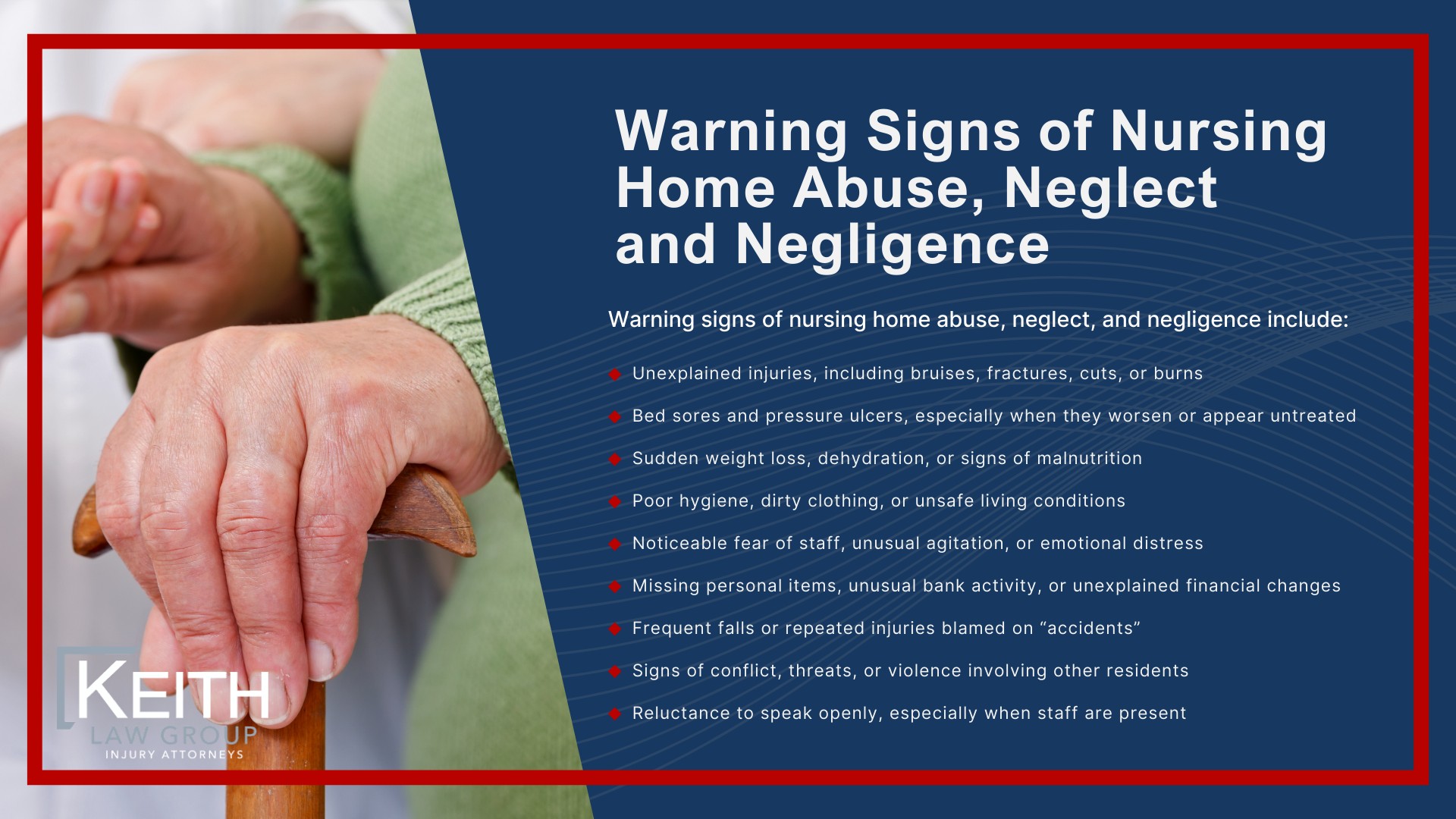
Warning Signs of Nursing Home Abuse, Neglect and Negligence

Abuse and neglect are often hidden in a nursing facility, especially when residents depend on staff for basic needs and cannot speak up for themselves.

Families should take concerns seriously when they notice sudden changes in health, hygiene, behavior, or living conditions.

Many abuse victims show subtle signs first, such as withdrawal, fear of staff, or visible anxiety during visits.

Paying attention to patterns, especially repeated injuries, medical decline, or signs of emotional distress, can help families intervene before the harm becomes worse.

Warning signs of nursing home abuse, neglect, and negligence include:

  • Unexplained injuries, including bruises, fractures, cuts, or burns
  • Bed sores and pressure ulcers, especially when they worsen or appear untreated
  • Sudden weight loss, dehydration, or signs of malnutrition
  • Poor hygiene, dirty clothing, or unsafe living conditions
  • Noticeable fear of staff, unusual agitation, or emotional distress
  • Missing personal items, unusual bank activity, or unexplained financial changes
  • Frequent falls or repeated injuries blamed on “accidents”
  • Signs of conflict, threats, or violence involving other residents
  • Reluctance to speak openly, especially when staff are present

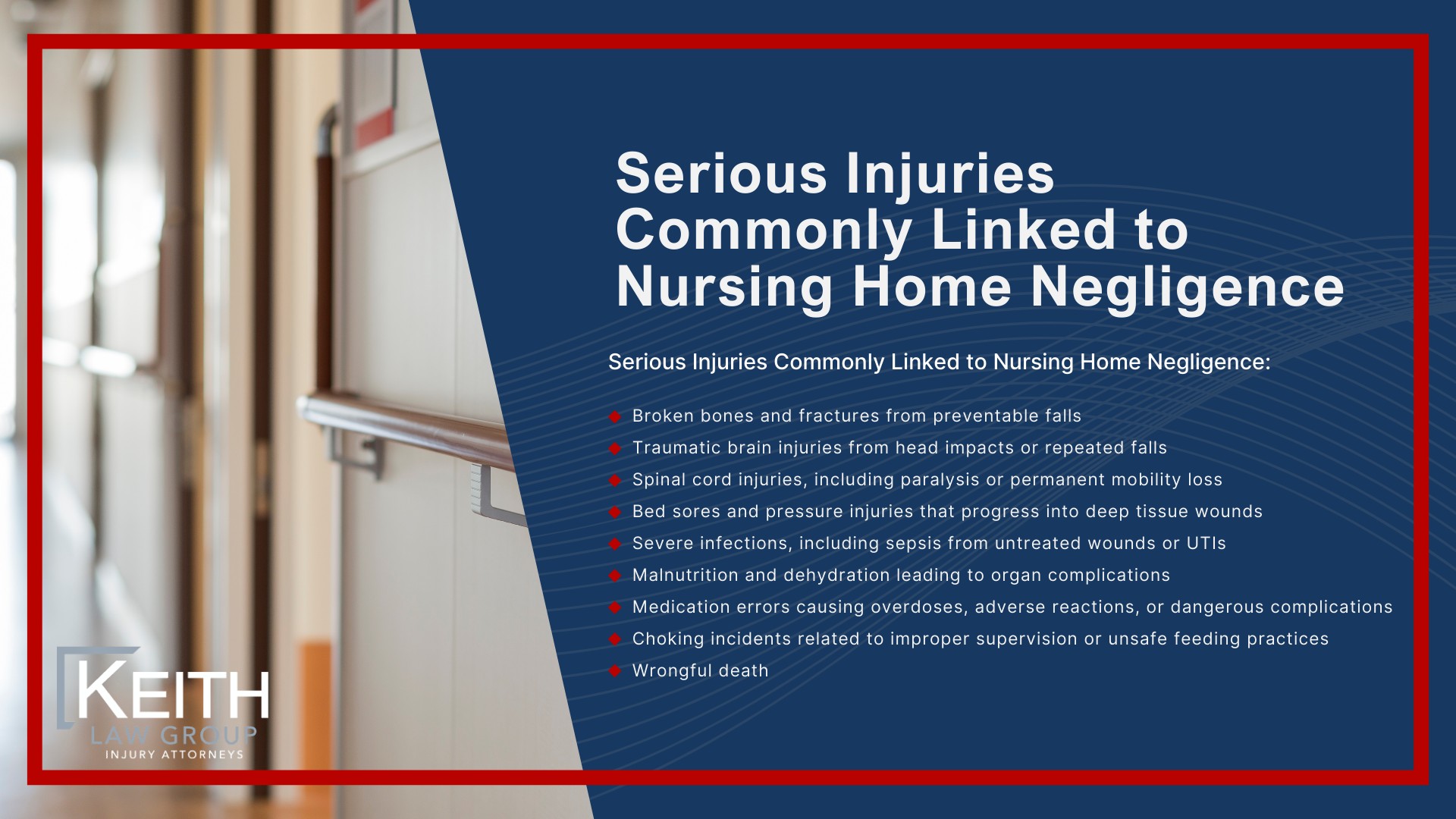
Serious Injuries Commonly Linked to Nursing Home Negligence

Many nursing home residents who have been abused or neglected suffer injuries that are preventable with proper staffing, supervision, and medical attention.

When a nursing home fails to follow basic safety standards, residents may experience rapid decline, permanent disability, or life-threatening complications.

These injuries often occur after falls, medication mistakes, untreated infections, or delayed emergency response.

Some residents are too frail to recover fully, meaning a single incident can cause long-term loss of mobility and independence.

In other cases, neglect leads to worsening wounds, dehydration, or sepsis that requires hospitalization.

Families should understand that serious harm can develop quickly when care routines break down or staff ignore warning signs.

The injuries below are commonly tied to abuse, neglect, and systemic failures in long-term care facilities.

Serious injuries commonly linked to nursing home negligence include:

  • Broken bones and fractures from preventable falls
  • Traumatic brain injuries from head impacts or repeated falls
  • Spinal cord injuries, including paralysis or permanent mobility loss
  • Bed sores and pressure injuries that progress into deep tissue wounds
  • Severe infections, including sepsis from untreated wounds or UTIs
  • Malnutrition and dehydration leading to organ complications
  • Medication errors causing overdoses, adverse reactions, or dangerous complications
  • Choking incidents related to improper supervision or unsafe feeding practices
  • Wrongful death

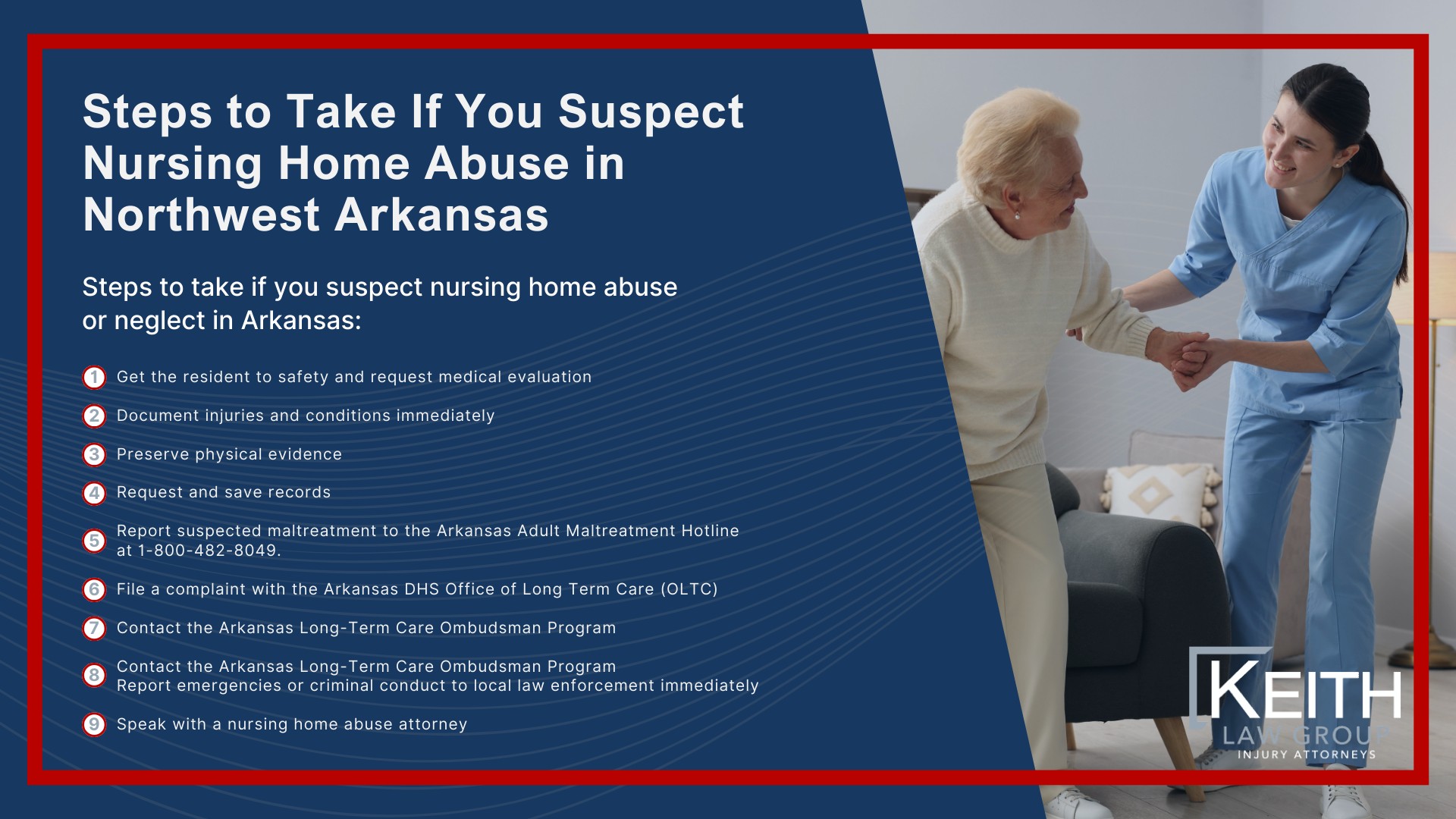
Steps to Take If You Suspect Nursing Home Abuse in Northwest Arkansas

When families discover abuse or neglect inside a skilled nursing facility, the shock is often immediate and overwhelming.

Many people blame themselves for not noticing sooner, even though warning signs can be subtle and facilities often control the narrative.

It’s also common for residents to minimize what happened out of fear, confusion, or dependence on the very staff who harmed them.

The first priority is safety, and the next is building a record that shows what occurred and how the facility failed.

Treatment from medical professionals not only protects the resident’s health but also creates documentation that can later support a claim.

Preserving evidence early can prevent facilities and insurers from disputing the timeline, the injuries, or the conditions that led to harm.

With the right steps, families can protect their loved one and put themselves in a stronger position for an initial consultation with an attorney.

Steps to take if you suspect nursing home abuse or neglect in Arkansas:

  1. Get the resident to safety and request medical evaluation by medical professionals, including emergency care if needed.
  2. Document injuries and conditions immediately with photos and video (bruising, bed sores, hygiene, unsafe room conditions, restraints, etc.).
  3. Preserve physical evidence, including clothing, bedding, and any items involved in the incident.
  4. Request and save records, including incident reports, care plans, medication logs, staffing information, and medical records from hospitals or outside providers.
  5. Report suspected maltreatment to the Arkansas Adult Maltreatment Hotline at 1-800-482-8049.
  6. File a complaint with the Arkansas DHS Office of Long Term Care (OLTC), the agency that investigates complaints involving long-term care facilities.
  7. Contact the Arkansas Long-Term Care Ombudsman Program for help advocating for the resident and addressing facility problems.
  8. Report emergencies or criminal conduct to local law enforcement immediately, especially in cases involving assault, sexual abuse, or serious injuries.
  9. Speak with a nursing home abuse attorney to evaluate legal options and preserve evidence before the facility can alter records or shift blame.

Families often feel powerless in the early hours and days after discovering harm, but taking decisive steps can change the trajectory of the case.

Nursing home abuse claims are strongest when the story is supported by documentation, witnesses, and consistent medical evidence.

With the right legal guidance, families can protect their loved one’s dignity and pursue accountability through a structured case strategy starting at the initial consultation.

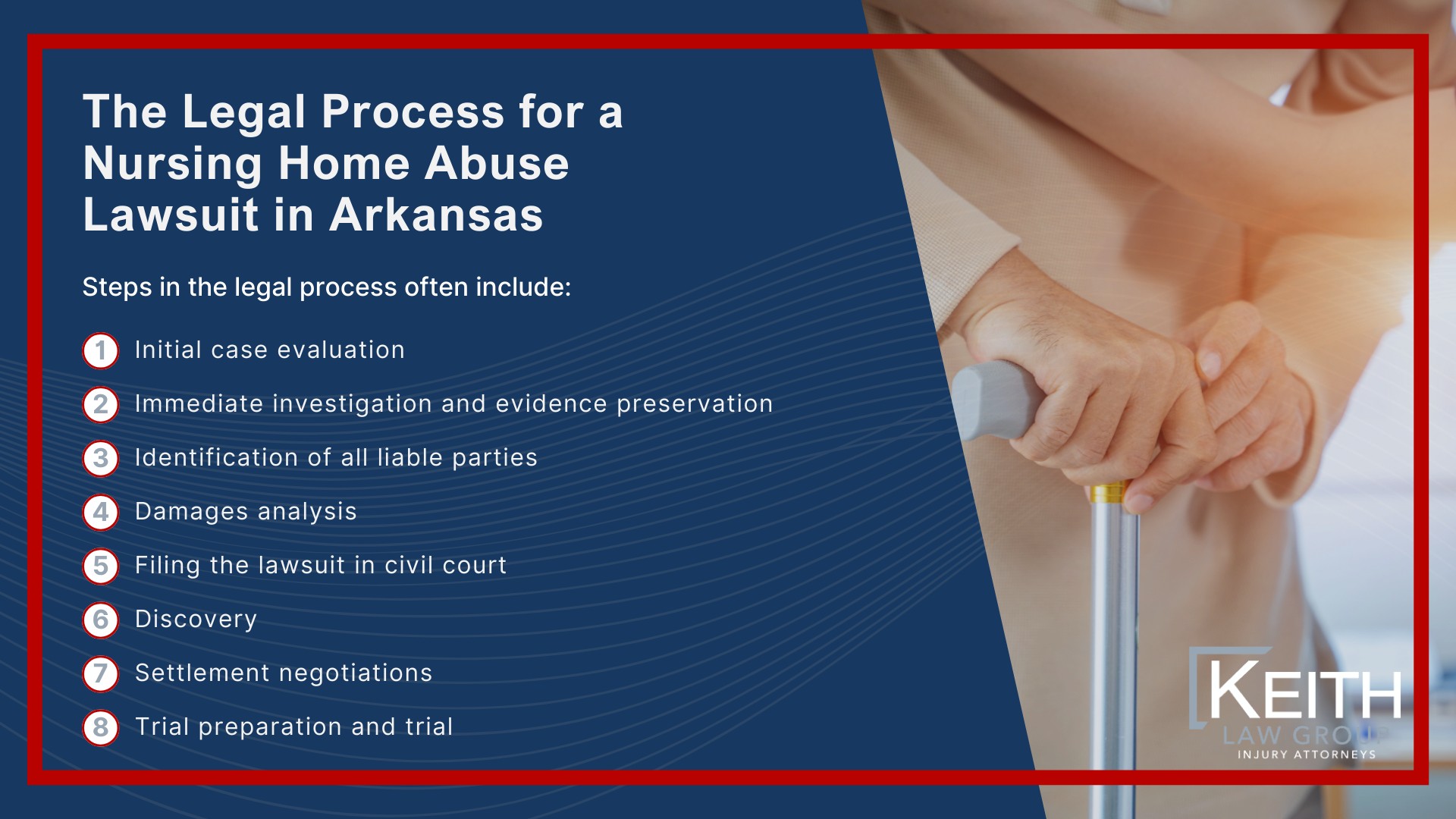
The Legal Process for a Nursing Home Abuse Lawsuit in Arkansas

A nursing home abuse lawsuit in Arkansas is built on a mix of state residents’ rights protections, civil negligence principles, and federal nursing home safety rules.

Arkansas law requires long-term care facilities to adopt and honor a formal statement of residents’ rights, including protections tied to safety, dignity, and proper care.

When a facility violates those obligations through abuse or neglect, families may pursue legal action under Arkansas civil law and, in fatal cases, the wrongful death statute.

Arkansas also has a dedicated Maltreatment Act that creates a reporting and investigation framework for suspected abuse or neglect in long-term care facilities, which can generate important evidence and documentation for a lawsuit.

On top of state law, federal nursing home regulations require facilities participating in Medicare or Medicaid to protect residents from abuse, neglect, and exploitation and to report allegations within strict timelines.

A strong case uses these legal standards to prove the facility knew or should have known about the dangerous condition and failed to protect the resident.

Steps in the legal process often include:

  1. Initial case evaluation to determine eligibility, identify legal theories, and preserve deadlines.
  2. Immediate investigation and evidence preservation, including medical records, incident reports, photos, and witness interviews.
  3. Identification of all liable parties, such as facility owners, operators, management companies, staff members, or third-party contractors.
  4. Damages analysis, including medical costs, long-term care needs, pain and suffering, and, when applicable, wrongful death losses.
  5. Filing the lawsuit in civil court, supported by evidence showing violations of residents’ rights and failure to meet required standards of care.
  6. Discovery, where both sides exchange documents, take depositions, and obtain internal records such as staffing logs and training policies.
  7. Settlement negotiations or mediation, often involving insurers and defense counsel who dispute liability or minimize damages.
  8. Trial preparation and trial, if the facility refuses to accept responsibility or offer a fair resolution.

Proving Liability in an Arkansas Nursing Home Abuse Case

Proving liability in an Arkansas nursing home abuse case requires showing that a facility or staff member failed to meet the legal duty of care owed to a resident.

This duty is rooted in basic negligence principles and strengthened by Arkansas residents’ rights laws and federal rules requiring facilities to protect residents from abuse, neglect, and exploitation.

Liability can be based on direct misconduct, such as physical abuse, or systemic failures such as understaffing, poor supervision, and missed medical care.

A key issue is often whether the facility knew or should have known about a dangerous condition, repeated misconduct, or a resident’s risk factors and failed to act.

Evidence such as medical records, wound care documentation, incident reports, and staffing logs can demonstrate patterns of neglect and support claims that the harm was preventable.

In some cases, liability extends beyond individual staff members to owners, operators, management companies, and contractors responsible for policies, training, and oversight.

Nursing home lawyers also use expert testimony to explain how the facility’s conduct fell below accepted standards and how that failure led directly to the resident’s injury or death.

When liability is proven clearly, families are in a stronger position to secure compensation and hold the facility accountable in civil court.

Nursing Homes and Insurance Companies Often Deny Wrongdoing: How?

Nursing homes and insurance companies rarely admit fault, even when injuries appear clearly preventable.

Instead, they often try to reframe the incident as unavoidable or unrelated to the facility’s conduct.

These defenses are designed to reduce liability, limit payouts, and discourage families from taking legal action.

Knowing the most common tactics can help families recognize when a facility is trying to avoid accountability.

Common denial tactics include:

  • Claiming the injury was caused by natural aging, frailty, or a pre-existing condition
  • Stating the resident “fell on their own” or the incident was unavoidable
  • Arguing the resident refused care or failed to follow staff instructions
  • Minimizing injuries or blaming them on unrelated medical issues
  • Failing to document key details or using incomplete incident reports
  • Shifting blame to outside providers, hospitals, or family members
  • Delaying responses, withholding records, or pressuring families into quick settlements

Do You Qualify for a Nursing Home Neglect or Abuse Lawsuit?

You may qualify for a nursing home neglect or abuse lawsuit if a resident suffered harm that could have been prevented through proper care, supervision, or basic safety practices.

These cases often involve injuries such as falls, bed sores, medication errors, dehydration, infections, or physical abuse.

To pursue a claim, you typically must show that the facility owed a duty of care, failed to meet that duty, and that the failure caused measurable injury or death.

If a resident cannot speak for themselves due to cognitive decline, family members or legal representatives may still have the right to take action.

An experienced elder abuse attorney can review the facts, explain your legal options, and help determine whether the facility’s conduct meets the standard for liability under Arkansas law.

With the support of personal injury lawyers who handle nursing home cases, families are better positioned to pursue a fair settlement or take the case to trial when a facility refuses to accept responsibility.

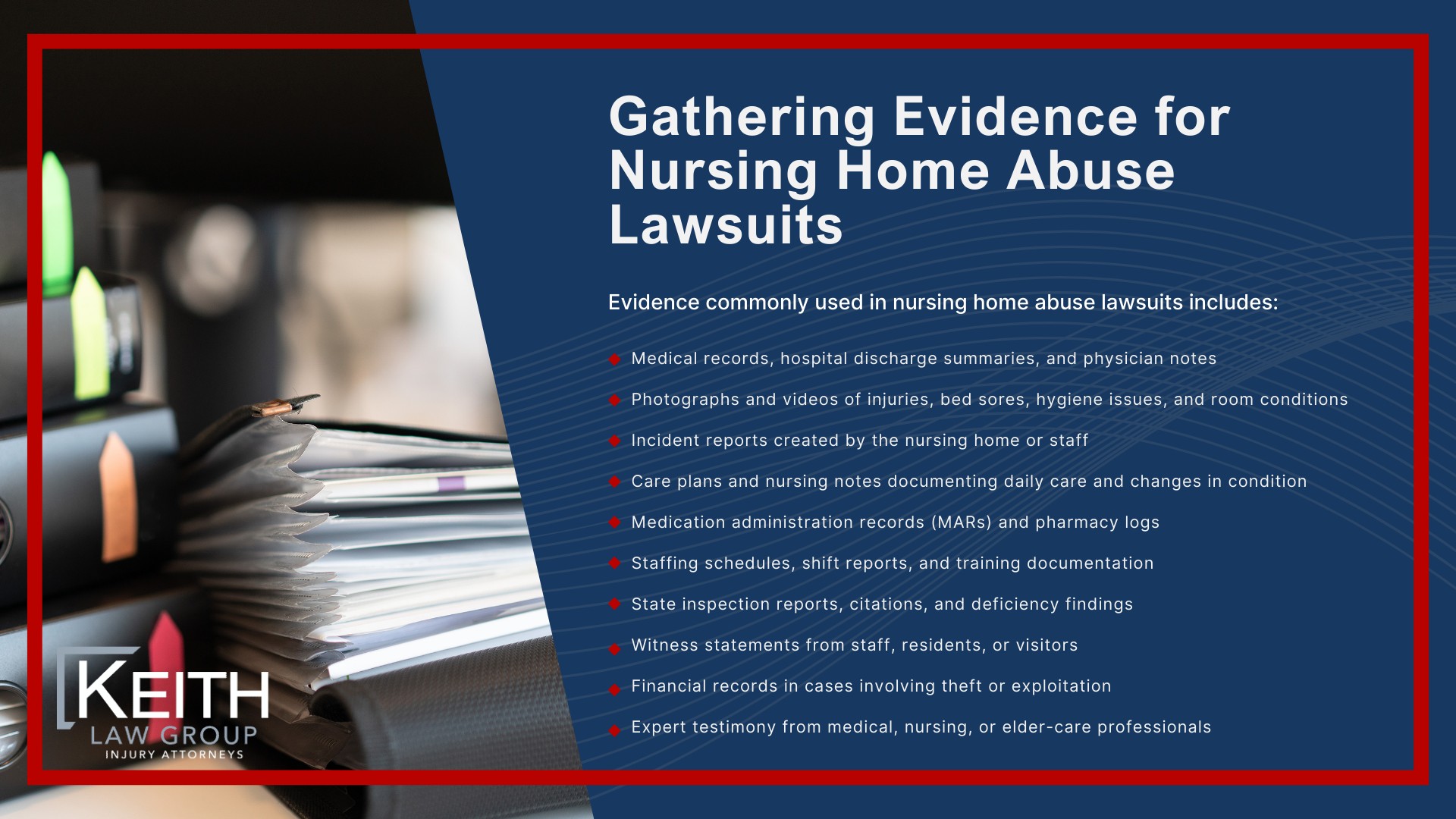
Gathering Evidence for Nursing Home Abuse Lawsuits

Strong evidence is the foundation of a successful nursing home abuse lawsuit because it proves both what happened and how the facility failed to protect the resident.

Many cases depend on records controlled by the nursing home, which makes early legal involvement important to prevent delays, missing documentation, or altered narratives.

Evidence also helps connect the resident’s injuries to neglect or abuse, rather than allowing the defense to blame age, illness, or pre-existing conditions.

The earlier families begin documenting conditions and requesting records, the stronger the case is likely to be.

Evidence commonly used in nursing home abuse lawsuits includes:

  • Medical records, hospital discharge summaries, and physician notes
  • Photographs and videos of injuries, bed sores, hygiene issues, and room conditions
  • Incident reports created by the nursing home or staff
  • Care plans and nursing notes documenting daily care and changes in condition
  • Medication administration records (MARs) and pharmacy logs
  • Staffing schedules, shift reports, and training documentation
  • State inspection reports, citations, and deficiency findings
  • Witness statements from staff, residents, or visitors
  • Financial records in cases involving theft or exploitation
  • Expert testimony from medical, nursing, or elder-care professionals

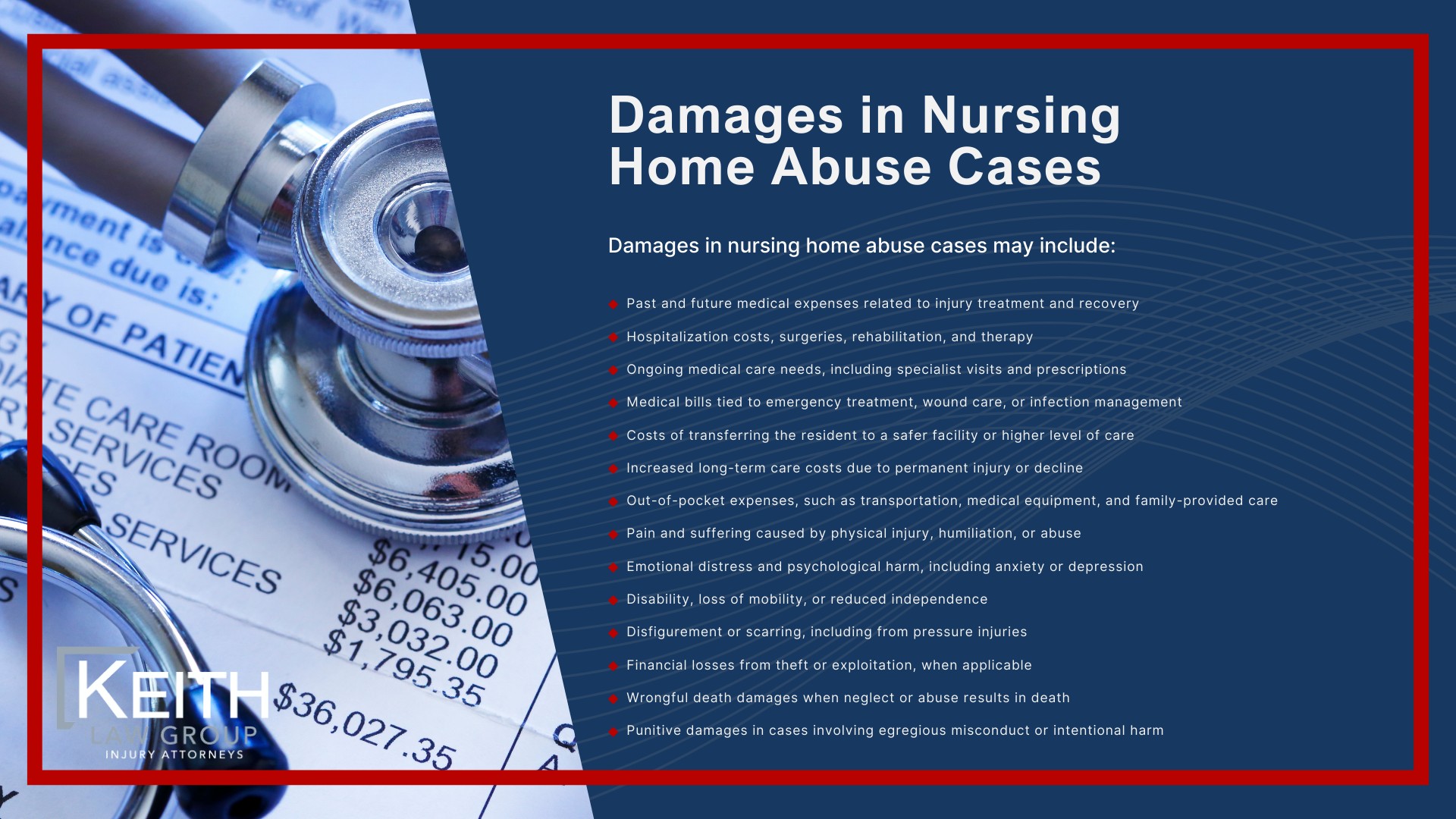
Damages in Nursing Home Abuse Cases

Damages in nursing home abuse cases are meant to compensate residents and families for the financial and personal harm caused by neglect, abuse, or unsafe conditions.

Lawyers assess damages by reviewing medical bills, treatment records, care needs, and the resident’s long-term prognosis to determine the true scope of loss.

This calculation also considers the impact on quality of life, pain and suffering, and the cost of future care when injuries cause lasting limitations.

By building a detailed damages profile, attorneys can advocate for maximum compensation through settlement negotiations or trial.

Damages in nursing home abuse cases may include:

  • Past and future medical expenses related to injury treatment and recovery
  • Hospitalization costs, surgeries, rehabilitation, and therapy
  • Ongoing medical care needs, including specialist visits and prescriptions
  • Medical bills tied to emergency treatment, wound care, or infection management
  • Costs of transferring the resident to a safer facility or higher level of care
  • Increased long-term care costs due to permanent injury or decline
  • Out-of-pocket expenses, such as transportation, medical equipment, and family-provided care
  • Pain and suffering caused by physical injury, humiliation, or abuse
  • Emotional distress and psychological harm, including anxiety or depression
  • Disability, loss of mobility, or reduced independence
  • Disfigurement or scarring, including from pressure injuries
  • Financial losses from theft or exploitation, when applicable
  • Wrongful death damages when neglect or abuse results in death
  • Punitive damages in cases involving egregious misconduct or intentional harm

Arkansas Nursing Home Residents Have Legal Rights

Nursing home residents in Arkansas do not lose their legal rights when they enter a long-term care facility.

State and federal laws require nursing homes to provide a safe environment, respect resident dignity, and deliver appropriate medical care and supervision.

When a facility violates those obligations, families have the right to demand accountability through formal complaints and civil legal action.

These protections exist because elder abuse and neglect are not “part of aging,” and no resident should be treated as disposable.

If you suspect wrongdoing, the law gives you tools to protect your loved one and pursue justice.

Keith Law Group: Hire an Experienced Nursing Home Attorney Today

No family should have to wonder whether their loved one is safe in a nursing home or assisted living facility.

When a facility fails to protect a resident from abuse, neglect, or preventable medical harm, taking legal action can be the only way to force accountability and secure the resources your family needs moving forward.

Keith Law Group brings decades of trial experience to nursing home cases across Arkansas, and we prepare every claim with the seriousness it demands.

If you suspect nursing home abuse or neglect, don’t wait for the situation to get worse.

Contact Keith Law Group today for a free case evaluation and speak directly with an experienced nursing home attorney about your legal options.

Frequently Asked Questions

Published by:
Share

This article has been written and reviewed for legal accuracy and clarity by the team of writers and attorneys at Keith Law Group and is as accurate as possible. This content should not be taken as legal advice from an attorney. If you would like to learn more about our owner and experienced injury lawyer, Sean T. Keith, you can do so here.

Keith Law Group does everything possible to make sure the information in this article is up to date and accurate. If you need specific legal advice about your case, contact us. This article should not be taken as advice from an attorney.